

Engaging in light physical activity during menstruation can significantly reduce cramps, bloating, and fatigue. Period exercises are specific, low-intensity workouts tailored to support your body’s changing hormonal needs throughout your cycle. While it is incredibly common to feel tired and simply want to rest, staying gently active improves blood circulation and releases natural endorphins that act as painkillers. This article covers the most effective period exercises to help you manage menstrual discomfort safely while maintaining your overall health and fitness journey.
Key Highlights / Quick Facts
- Light to moderate exercise during menstruation is perfectly safe and highly beneficial for pain management.
- Endorphins released during physical activity act as your body’s natural painkillers to fight cramps.
- Walking and gentle yoga are considered the most effective options for reducing period pain.
- Avoid high-intensity interval training (HIIT) and heavy weight lifting on the days your flow is heaviest.
- Staying properly hydrated before, during, and after a workout prevents menstrual fatigue and headaches.
- Wearing comfortable, breathable cotton activewear helps prevent chafing and discomfort when using sanitary pads.
- Always listen to your body and stop immediately if you experience severe pain, dizziness, or unusually heavy bleeding.
What Are Period Exercises and Why Do They Matter During Menstruation?
Period exercises are modified, gentle workout routines specifically designed to accommodate the physical and hormonal changes a woman experiences during menstruation. These workouts focus on flexibility, light cardiovascular movement, and relaxation rather than intense physical strain or building muscle mass. They matter deeply because hormonal shifts during your cycle trigger the release of chemicals called prostaglandins, which cause the uterine muscles to contract and create painful cramps.
Engaging in appropriate period exercises helps counteract these symptoms by boosting circulation to the pelvic region and lower back. This increased blood flow helps relax the uterine muscles, allowing them to stretch more easily and reducing the intensity of cramps. Furthermore, these exercises promote mental well-being by reducing the emotional stress, anxiety, and mood swings often associated with menstruation.
Can You Exercise During Periods Safely?
Yes, you can exercise safely during your period. In fact, medical professionals and gynecologists actively encourage maintaining a regular fitness routine throughout your menstrual cycle. The key to exercising safely during menstruation is lowering your workout intensity and modifying your regular routines to match your current energy levels.
You do not need to pause your fitness journey completely, but you should prioritize physical comfort over hitting personal bests. Staying active helps metabolize prostaglandins faster, which is why active women often report milder menstrual cramps. Choosing the right period exercises can make your cycle much more manageable, provided you listen to your body and take rest days when you feel genuinely depleted.
Walking During Periods: The Easiest Period Exercise for Cramps and Fatigue
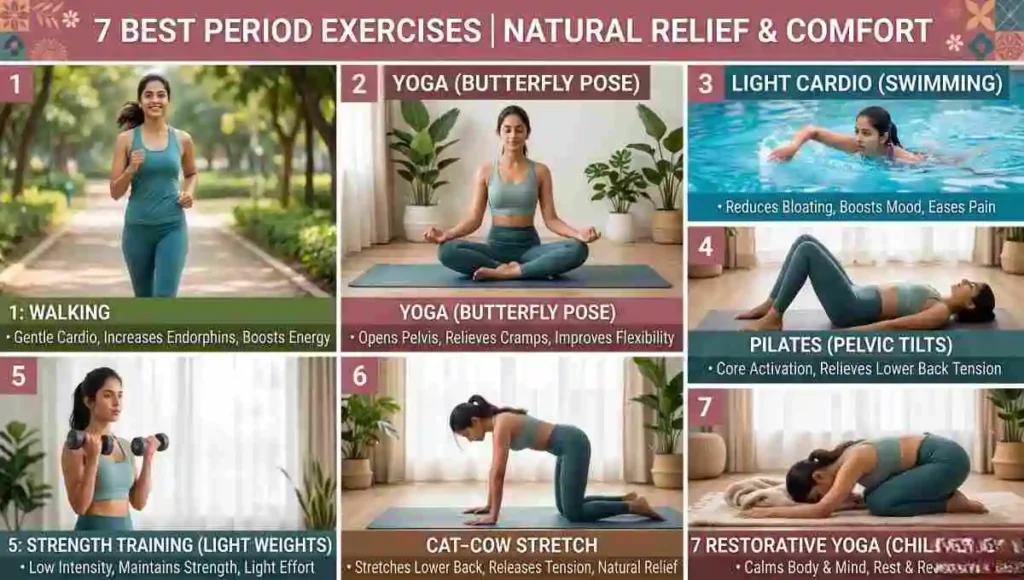
Walking is one of the most accessible and effective activities to incorporate into your daily routine during menstruation. It requires no special gym equipment and provides a gentle cardiovascular workout that does not put undue physical stress on your body. A simple, brisk 30-minute walk in fresh air can increase endorphin production, which naturally blocks pain receptors in the brain and reduces abdominal cramps.
Additionally, walking helps combat the deep lethargy and fatigue that often accompany the first few days of your cycle. It keeps your joints mobile and improves digestion, which is particularly helpful if you suffer from menstrual diarrhea or constipation.
Yoga for Period Pain Relief: Best Stretching Exercises During Menstruation
Yoga is highly recommended for women experiencing severe menstrual cramps, pelvic heaviness, and lower back pain. Certain yoga poses focus directly on opening the pelvic region and gently stretching the tight abdominal muscles. Poses like the Child’s Pose (Balasana), Butterfly Pose (Baddha Konasana), and Supine Twist are excellent period exercises for releasing trapped physical tension.
These gentle movements stimulate blood flow, calm the central nervous system, and help reduce the emotional stress associated with premenstrual syndrome (PMS). However, you should generally avoid inverted poses like headstands or shoulder stands during your period, as they can cause pelvic congestion and discomfort for many women.
Light Cardio Period Exercises to Reduce Bloating and Improve Mood
Light cardiovascular exercises are a practical way to tackle water retention and uncomfortable bloating during your cycle. Activities such as slow-paced cycling on a stationary bike, light aerobics, or easy swimming can safely elevate your heart rate without exhausting your muscles. Sweating through light cardio helps your body flush out excess water and sodium, reducing the overall feeling of heaviness.
Furthermore, continuous cardio activities stimulate the production of serotonin and dopamine. These are the brain chemicals responsible for balancing your mood, fighting off menstrual irritability, and providing a natural energy boost to help you get through your day.
Pilates and Core-Focused Period Exercises for Better Comfort
Pilates is a low-impact exercise methodology that focuses primarily on core strength, muscular flexibility, and controlled breathing. Engaging in modified Pilates acts as a highly beneficial addition to your period exercises by stabilizing the pelvic floor and supporting the lower back. Gentle core activation helps reinforce the muscles surrounding the uterus, potentially reducing the severity of deep cramping.
It is important to avoid intense abdominal crunches or extreme planks during your heaviest flow days. Instead, focus on gentle pelvic tilts, spinal stretches, and breathing exercises that relieve downward pressure on your pelvic organs.
Strength Training During Periods: Should You Lift Weights While Menstruating?
You can certainly continue strength training during your period, but you may need to consciously reduce the weight and overall intensity. During the first few days of menstruation, estrogen and progesterone levels drop significantly, which can leave you feeling physically weaker and less coordinated.
If you choose to lift weights, opt for lighter dumbbells and higher repetitions rather than attempting heavy compound lifts like deadlifts. Focus strictly on maintaining proper form and avoid heavy exercises that place excessive, direct strain on your lower back and delicate abdominal muscles.
Pelvic Floor and Lower Back Exercises That May Help Menstrual Discomfort
Lower back pain is a very common, radiating symptom caused by strong uterine cramping. Specific period exercises targeting the lower back and pelvic floor can offer significant, natural relief. Gentle pelvic floor stretches, such as the kneeling hip flexor stretch or a simple cat-cow stretch, help loosen tight ligaments in the pelvic region.
Bridge poses are also highly beneficial for strengthening the glutes and stretching the lower back simultaneously. Performing these targeted movements slowly, paired with deep and intentional breathing, can greatly ease muscle stiffness and improve your posture during your cycle.
Which Period Exercises Should You Avoid During Heavy Bleeding or Severe Cramps?
While regular movement is generally beneficial, certain high-stress exercises can worsen your symptoms during heavy bleeding days. It is strongly advisable to avoid high-intensity interval training (HIIT), heavy weightlifting, and exhausting endurance running. These strenuous activities can increase bodily inflammation and drastically exacerbate menstrual fatigue.
Furthermore, jumping exercises, intense plyometrics, and aggressive abdominal workouts can put extra mechanical pressure on an already sensitive uterus, increasing pain levels. Stick strictly to lower-intensity activities and stretching routines until your flow naturally lightens and your baseline energy returns.
How to Adjust Your Workout Routine During Different Phases of the Menstrual Cycle
Your body’s energy levels and hormonal balance fluctuate significantly throughout the four distinct phases of your menstrual cycle. During the menstrual phase (days 1-5), focus strictly on restorative, low-impact period exercises like walking and gentle yoga. As you enter the follicular phase (days 6-14), your estrogen levels begin to rise, making it the perfect time for high-energy workouts like running, dancing, and strength training.
During the short ovulation phase, your energy typically peaks, allowing for maximum exertion. However, as you move into the luteal phase (days 15-28), progesterone rises and energy declines again, signaling a smart return to moderate activities like swimming or Pilates.
Common Mistakes to Avoid While Doing Period Exercises
One of the most dangerous mistakes women make is actively pushing through severe, sharp pain just to complete a scheduled workout. Ignoring your body’s distress signals can lead to severe exhaustion and worsen your menstrual cramps. Another frequent error is failing to stay properly hydrated. Dehydration can trigger severe headaches and increase muscle stiffness, especially in hot or humid climates.
Finally, wearing restrictive, tight, or unbreathable clothing can cause severe discomfort and skin chafing. Always opt for loose, breathable cotton activewear to ensure proper ventilation and comfort when using menstrual hygiene products.
When to Stop Exercising During Periods and Consult a Doctor
While period exercises are widely considered safe and healthy, there are clear medical indicators that mean you should stop immediately. If you experience sudden, sharp pelvic pain, extreme dizziness, a racing heartbeat, or shortness of breath, cease your workout right away.
You should also consult a qualified gynecologist or healthcare provider if your periods are consistently so painful that they prevent you from exercising or performing basic daily activities. Severe, debilitating pain or unusually heavy bleeding could be a medical sign of underlying conditions like endometriosis, polycystic ovary syndrome (PCOS), or uterine fibroids, which require professional diagnosis and treatment.
Frequently Asked Questions (FAQs)
Does exercising during your period increase bleeding?
No, exercising does not actually increase your overall menstrual flow or cause you to lose more blood. However, physical activity can cause the blood to exit the uterus faster due to increased movement and intra-abdominal pressure, making it seem like a heavier flow temporarily.
Can period exercises delay my next cycle?
Light to moderate exercise will not delay your period or disrupt a healthy cycle. However, excessive athletic training, extreme physical stress, and sudden, severe weight loss can disrupt your hormonal balance and cause missed or delayed periods (a condition known as amenorrhea).
Is it okay to do squats during menstruation?
Yes, bodyweight squats are generally safe and can help gently stretch the pelvic region. However, you should avoid lifting heavy weights while squatting if you are already experiencing lower back pain, pelvic heaviness, or severe abdominal cramps.
What is the best time of day to exercise during periods?
The best time depends entirely on your personal energy levels and daily schedule. Many women prefer morning workouts to boost their endorphins and energy for the day, while others prefer gentle evening yoga stretches to help them relax and sleep better.
Can I swim while on my period?
Yes, swimming is a fantastic, low-impact exercise that is highly effective for relieving cramps and joint pain. Using a tampon or a menstrual cup will allow you to swim safely, comfortably, and hygienically without any issues.
Read More: Heavy Period Bleeding: Causes, Symptoms & Treatments
