

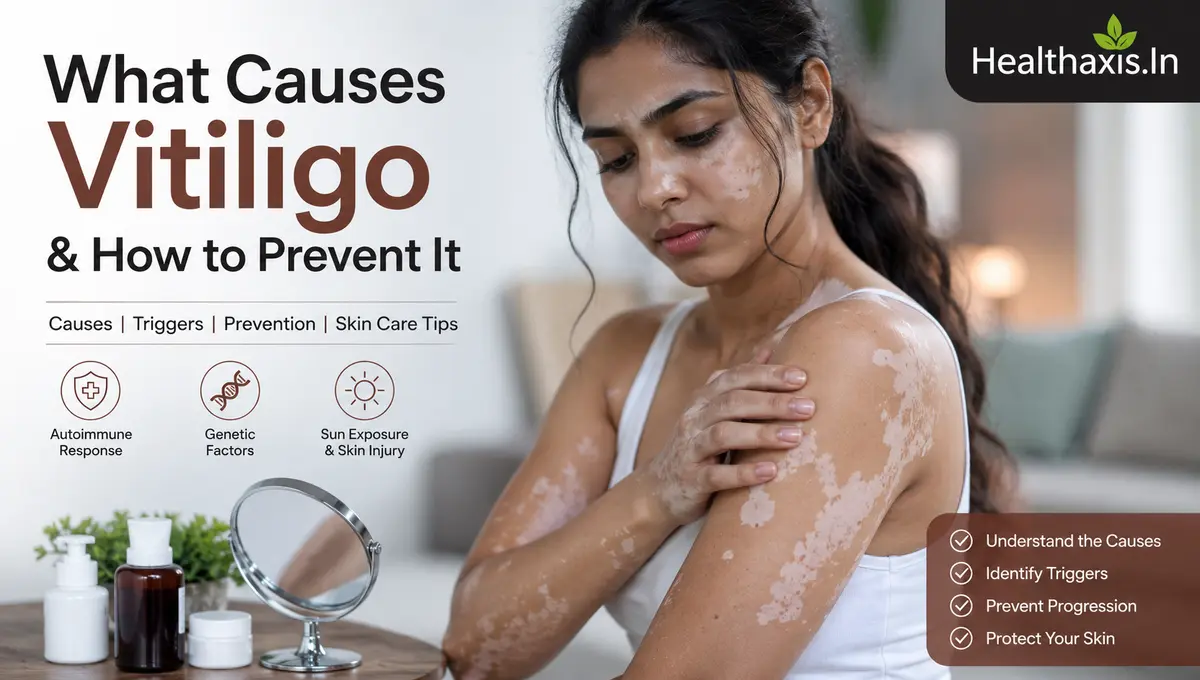
Vitiligo is a long-term skin condition that causes white patches to appear when pigment-producing cells stop working or are destroyed. The exact cause of vitiligo is not fully understood, but experts believe it is linked to autoimmune reactions, genetics, stress, skin injury, and environmental triggers.
Understanding what causes vitiligo and how to prevent it from worsening is important for early care and better skin protection. While vitiligo is not contagious or life-threatening, it can affect confidence and emotional well-being if left unmanaged.
Key Highlights / Quick Facts
- Vitiligo causes loss of natural skin color due to damage to melanocytes.
- It is considered an autoimmune skin disorder in many cases.
- Family history may increase the risk of developing vitiligo.
- Emotional stress, sunburn, and skin injury can trigger flare-ups in some people.
- Vitiligo is not contagious and does not spread through touch.
- Nutritional deficiencies such as low vitamin B12 or vitamin D may play a role in some cases.
- Early diagnosis can help slow progression and improve treatment response.
- Sunscreen and skin protection are important to prevent worsening.
- Common treatments include topical medicines, light therapy, and lifestyle support.
- A dermatologist should be consulted if white patches rapidly spread or change.
What Is Vitiligo and Why Does It Happen?
Vitiligo is a condition in which the skin loses melanin, the pigment responsible for normal skin color. This happens when melanocytes, the cells that produce pigment, become damaged or stop functioning.
Vitiligo can affect any part of the body, including the face, hands, lips, scalp, and even inside the mouth. In some people, the patches remain stable for years, while in others they may gradually spread.
Researchers believe vitiligo develops due to a combination of factors rather than a single cause. Autoimmune reactions, genetics, oxidative stress, and environmental triggers are commonly associated with the condition.
Main Causes of Vitiligo Explained
The exact cause of vitiligo is still being studied, but several medically recognized factors may contribute to its development.
Autoimmune Reaction
In many people, the immune system mistakenly attacks melanocytes. This is considered one of the strongest explanations for vitiligo.
Genetic Factors
Some people inherit genes that increase susceptibility to autoimmune disorders and pigment loss.
Oxidative Stress
An imbalance of harmful molecules called free radicals may damage pigment cells.
Nervous System Factors
Certain theories suggest nerve-related chemicals may affect melanin production in localized areas.
Environmental Triggers
Exposure to chemicals, repeated friction, severe sunburn, or emotional stress may contribute to flare-ups in vulnerable individuals.
Is Vitiligo Genetic? Family History and Inherited Risk
Vitiligo can run in families, but having a family history does not guarantee that someone will develop the condition.
Research suggests that multiple genes linked to immune system regulation may increase risk. If a parent or sibling has vitiligo or another autoimmune disease, the chances may be slightly higher.
However, many people with vitiligo have no known family history. Environmental and immune-related factors also play a major role.
Autoimmune Disorders Linked to Vitiligo
Vitiligo is commonly associated with other autoimmune conditions. People with vitiligo may sometimes develop additional immune-related disorders.
Conditions linked with vitiligo include:
- Thyroid disorders, especially autoimmune thyroid disease
- Type 1 diabetes
- Rheumatoid arthritis
- Psoriasis
- Alopecia areata
- Pernicious anemia
Doctors may recommend blood tests if symptoms suggest an associated autoimmune condition.
Common Triggers That May Worsen Vitiligo
Certain triggers may not directly cause vitiligo but can worsen existing patches or contribute to new ones.
Common triggers include:
- Severe emotional stress
- Frequent skin friction or pressure
- Sunburn
- Exposure to harsh industrial chemicals
- Repeated cuts or injuries
- Poor skin care habits
Some people experience the Koebner phenomenon, where new white patches develop after skin trauma or injury.
Can Stress Cause Vitiligo or Make It Spread Faster?
Stress alone may not directly cause vitiligo, but it can influence immune system activity and potentially worsen the condition in some individuals.
Many patients report flare-ups during periods of emotional stress, anxiety, lack of sleep, or major life changes. Chronic stress may increase inflammation and oxidative damage in the body.
Stress management techniques that may help include:
- Regular physical activity
- Meditation or yoga
- Proper sleep
- Relaxation exercises
- Emotional support or counseling
Managing stress is important for overall skin and immune health.
Vitamin Deficiencies and Nutritional Factors in Vitiligo
Certain nutritional deficiencies may be associated with vitiligo, although they are not considered the sole cause.
Low levels of the following nutrients have been observed in some patients:
- Vitamin B12
- Vitamin D
- Folic acid
- Iron
- Copper
- Zinc
A balanced diet may support overall skin health and immune function.
Foods that may help maintain healthy skin include:
- Green leafy vegetables
- Nuts and seeds
- Citrus fruits
- Eggs
- Fish
- Whole grains
Before taking supplements, it is best to consult a doctor because unnecessary supplementation may not be beneficial.
Does Skin Injury, Sunburn, or Chemicals Trigger Vitiligo?
Yes, physical skin damage may trigger or worsen vitiligo in some individuals.
Possible triggers include:
- Repeated friction from tight clothing
- Burns and cuts
- Tattoo-related skin trauma
- Severe sun exposure
- Contact with industrial chemicals or phenolic compounds
Protecting the skin from injury is an important part of vitiligo management. Using sunscreen daily may reduce sun damage and help limit contrast between affected and unaffected skin.
Who Is More Likely to Develop Vitiligo?
Vitiligo can affect people of all ages and skin types, but certain factors may increase risk.
Higher risk groups include:
- People with a family history of vitiligo
- Individuals with autoimmune diseases
- Those with chronic stress exposure
- People with repeated chemical exposure
- Individuals who experience frequent skin injuries
Vitiligo often begins before the age of 30, but it can appear later in life as well.
How to Prevent Vitiligo From Spreading
There is no guaranteed way to completely prevent vitiligo, but certain precautions may help reduce triggers and slow progression.
Helpful prevention strategies include:
- Protect skin from sunburn using broad-spectrum sunscreen
- Avoid harsh chemicals and skin irritants
- Reduce unnecessary skin friction or injury
- Follow treatment plans consistently
- Manage stress effectively
- Maintain a healthy diet and lifestyle
- Seek early medical evaluation for new patches
Early treatment may help stabilize the condition in some people.
Daily Lifestyle Habits That May Help Protect Skin Pigment
Healthy daily habits can support skin health and reduce irritation.
Recommended habits include:
- Use mild soaps and fragrance-free skincare products
- Wear loose, breathable clothing
- Stay hydrated
- Eat a balanced diet rich in antioxidants
- Avoid smoking and excessive alcohol consumption
- Get regular sleep and physical activity
- Use sunscreen even on cloudy days
People with vitiligo may also benefit emotionally from support groups or counseling if the condition affects self-esteem.
When to See a Dermatologist for Vitiligo Symptoms
A dermatologist should be consulted if white patches appear suddenly, spread quickly, or affect sensitive areas such as the face, eyes, scalp, or genitals.
Seek medical advice if:
- Skin patches continue to expand
- Hair turns white in affected areas
- Symptoms cause emotional distress
- You notice signs of another autoimmune condition
- Home care measures are not helping
Doctors may diagnose vitiligo through skin examination, medical history, and sometimes blood tests or special light examination.
Treatment options may include topical corticosteroids, calcineurin inhibitors, phototherapy, depigmentation therapy in selected cases, and camouflage methods.
FAQs
Is vitiligo dangerous?
Vitiligo itself is usually not dangerous or life-threatening. However, it can affect emotional well-being and may sometimes be associated with autoimmune disorders.
Can vitiligo spread quickly?
In some people, vitiligo remains stable for years, while in others it may spread gradually or rapidly depending on immune activity and triggers.
Can diet cure vitiligo?
No specific diet can cure vitiligo. However, a nutritious diet may support overall skin and immune health.
Is vitiligo contagious?
No, vitiligo is not contagious. It cannot spread through touching, sharing food, or physical contact.
Does sunscreen help vitiligo?
Yes, sunscreen helps protect sensitive depigmented skin from sunburn and may reduce visible contrast between affected and unaffected skin.
Can children develop vitiligo?
Yes, vitiligo can occur in children as well as adults. Early evaluation by a dermatologist may help guide proper management.
Read More: How to Stop Vitiligo From Spreading: What You Need to Know

1 Comment
Pingback: Vitiligo Diagnostic Test: Early Detection Guide 2026 | Healthaxis.In