

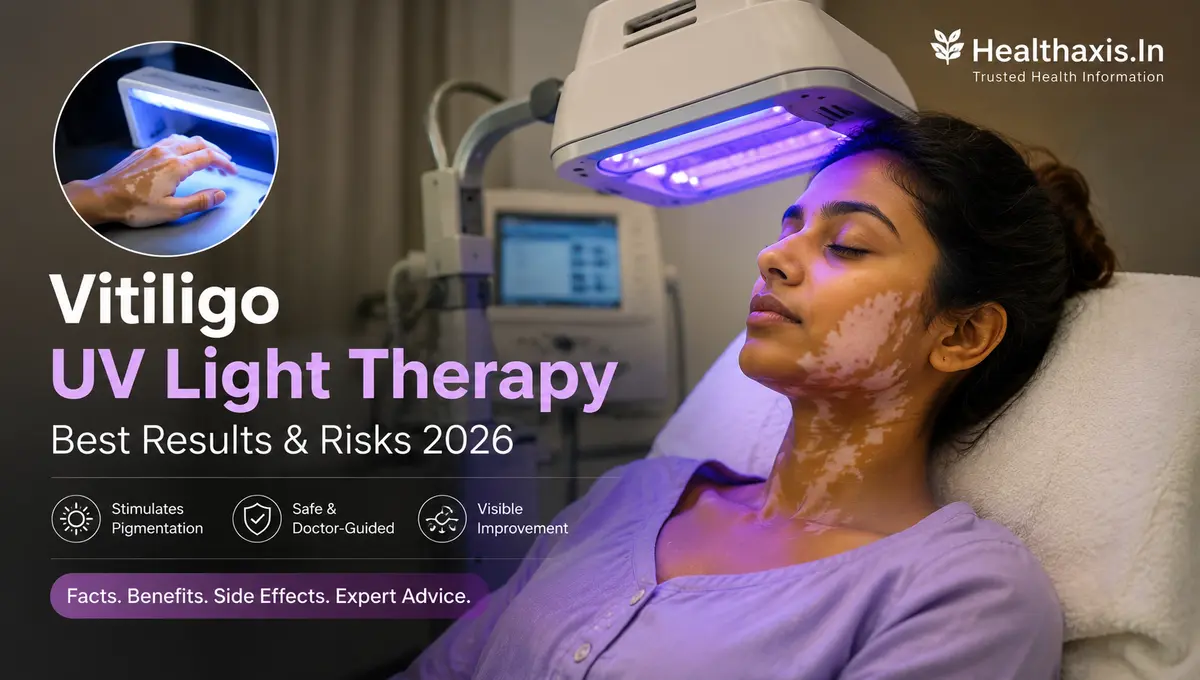
Vitiligo UV light therapy is one of the most commonly recommended treatments for people with vitiligo who want to slow pigment loss and improve skin repigmentation. Dermatologists often use controlled ultraviolet light exposure, especially narrowband UVB (NB-UVB), to stimulate melanocyte activity and help restore skin color over time.
In India, awareness of vitiligo treatment options has increased significantly in recent years. Many patients now seek safer and more effective therapies that can improve appearance without major side effects. Understanding how vitiligo UV light therapy works, its benefits, limitations, risks, and expected results can help patients make informed treatment decisions.
Key Highlights / Quick Facts
- Vitiligo UV light therapy is mainly used to stimulate repigmentation in white skin patches.
- NB-UVB therapy is currently the most commonly used light treatment for vitiligo.
- Excimer laser therapy may work better for small, localized patches.
- Results usually take several weeks to months to appear.
- Early treatment often gives better repigmentation outcomes.
- Side effects may include redness, itching, dryness, or mild burning.
- Home UVB devices should only be used under dermatologist supervision.
- Treatment response varies depending on skin type, age, and vitiligo duration.
- Combining UV therapy with topical medicines may improve results.
- Regular dermatology follow-up is important during treatment.
What Is Vitiligo UV Light Therapy and How Does It Work?
Vitiligo UV light therapy is a medical treatment that uses controlled ultraviolet light to encourage pigment-producing cells, called melanocytes, to function again. The treatment is performed under dermatologist supervision using specific wavelengths of UV light.
The therapy mainly works by:
- Stimulating surviving melanocytes in the skin
- Reducing abnormal immune activity linked to vitiligo
- Supporting melanin production in affected areas
- Slowing the spread of depigmented patches in some patients
Most dermatologists prefer narrowband UVB because it is considered safer and more effective than older phototherapy methods.
Types of UV Light Therapy Used for Vitiligo Treatment
Narrowband UVB (NB-UVB)
NB-UVB therapy uses a specific wavelength of ultraviolet light around 311–313 nm. It is widely used for generalized vitiligo and is often considered the standard phototherapy treatment.
Benefits include:
- Suitable for larger body areas
- Lower risk compared to older PUVA therapy
- Can be used in children under medical supervision
- Often combined with topical treatments
Excimer Laser Therapy
Excimer laser treatment delivers focused UVB light directly to small vitiligo patches.
It may be useful for:
- Localized vitiligo
- Facial patches
- Early-stage lesions
- Patients with limited body involvement
PUVA Therapy
PUVA combines UVA light with a medication called psoralen. It is used less frequently today because it carries higher risks of side effects compared to NB-UVB.
NB-UVB vs Excimer Laser: Which Vitiligo Therapy Works Better?
Both treatments can improve vitiligo, but the better option depends on the extent and location of skin involvement.
NB-UVB may be better for:
- Widespread vitiligo
- Multiple body areas
- Long-term maintenance treatment
Excimer laser may be better for:
- Small resistant patches
- Facial vitiligo
- Faster treatment of limited areas
Many dermatologists in India start with NB-UVB for generalized disease and use excimer laser for stubborn localized spots.
Who Is a Good Candidate for Vitiligo UV Light Therapy?
Vitiligo UV light therapy may benefit people who have:
- Active or spreading vitiligo
- Multiple white patches
- Stable vitiligo requiring repigmentation
- Poor response to creams alone
However, not everyone is an ideal candidate. People with certain skin cancers, severe photosensitivity disorders, or uncontrolled autoimmune conditions may require alternative treatment approaches.
A dermatologist usually evaluates:
- Type of vitiligo
- Duration of disease
- Skin tone
- Age
- Previous treatments
- Overall medical history
How Many Sessions Are Needed to See Vitiligo Repigmentation Results?
Vitiligo UV light therapy requires patience because repigmentation develops gradually. Most patients need multiple sessions weekly for several months.
Typical schedules include:
- 2–3 sessions per week
- Initial improvement after 6–12 weeks
- Better results after 4–6 months in responsive patients
Some body areas respond better than others. Facial lesions often improve faster, while hands and feet may respond slowly.
Stopping treatment too early is a common reason for disappointing results.
Vitiligo UV Light Therapy Before and After: What Results Can You Expect?
Results vary significantly between individuals. Some patients experience noticeable repigmentation, while others may see only partial improvement.
Factors that influence outcomes include:
- Early treatment initiation
- Younger age
- Facial or neck involvement
- Stable disease
- Consistent treatment attendance
Patients should understand that vitiligo UV light therapy does not permanently cure vitiligo. Maintenance treatment or additional therapies may sometimes be needed to preserve results.
Common Side Effects and Risks of UV Light Therapy for Vitiligo
Vitiligo UV light therapy is generally considered safe when supervised properly, but side effects can occur.
Common side effects include:
- Mild redness
- Dry skin
- Itching
- Burning sensation
- Temporary tanning around patches
Long-term excessive UV exposure may increase skin aging and potentially raise skin cancer risk, especially with inappropriate or unsupervised use.
Patients should immediately inform their dermatologist if they develop:
- Severe burns
- Blistering
- Eye irritation
- Sudden worsening of vitiligo
How to Improve Vitiligo UV Light Therapy Results Safely
Several measures may improve treatment effectiveness while reducing complications.
Helpful strategies include:
- Attending sessions regularly
- Using prescribed topical medicines correctly
- Applying sunscreen to unaffected skin
- Avoiding self-adjustment of UV doses
- Following dermatologist instructions carefully
Some dermatologists may combine vitiligo UV light therapy with:
- Topical corticosteroids
- Calcineurin inhibitors
- Antioxidant support
- Micropigmentation in selected cases
Can Home UV Therapy Devices Treat Vitiligo Effectively?
Home UVB devices are available in India, but they should only be used after proper medical guidance. Incorrect use can lead to burns or uneven skin pigmentation.
Home therapy may be suitable for:
- Patients requiring long-term maintenance
- Individuals living far from treatment centers
- Stable patients trained in device use
Regular dermatologist monitoring remains important even during home treatment.
Cost of Vitiligo UV Light Therapy in India in 2026
The cost of vitiligo UV light therapy in India varies depending on the city, clinic type, machine used, and number of sessions required.
Factors affecting cost include:
- NB-UVB vs excimer laser
- Size of treatment area
- Frequency of sessions
- Duration of therapy
- Dermatologist consultation fees
Excimer laser therapy is usually more expensive per session than standard NB-UVB therapy.
When UV Light Therapy Does Not Work for Vitiligo
Some patients may not respond adequately despite consistent treatment. Poor response is more common in:
- Long-standing vitiligo
- White hair within patches
- Hand and foot lesions
- Extensive disease
- Irregular treatment schedules
In such cases, dermatologists may recommend alternative or combination treatments.
Dermatologist Tips Before Starting Vitiligo UV Light Therapy
Before beginning treatment, patients should discuss expectations clearly with a qualified dermatologist.
Important precautions include:
- Inform the doctor about all medications
- Report any history of photosensitivity
- Avoid tanning or excessive sun exposure
- Wear protective eyewear during sessions
- Follow scheduled appointments consistently
Patients should also understand that results are gradual and vary from person to person.
FAQs
Is vitiligo UV light therapy safe?
Yes, vitiligo UV light therapy is generally safe when performed under dermatologist supervision. Side effects are usually mild and manageable.
How long does vitiligo UV light therapy take to work?
Many patients begin noticing small repigmentation changes within 2–3 months, but meaningful improvement may require longer treatment.
Can vitiligo return after UV light therapy?
Yes, vitiligo can recur even after successful repigmentation. Some patients may need maintenance treatment.
Which is better for vitiligo: NB-UVB or excimer laser?
NB-UVB is often preferred for widespread vitiligo, while excimer laser may work better for small localized patches.
Can children undergo vitiligo UV light therapy?
Children may receive NB-UVB therapy under specialist supervision when considered medically appropriate.
Is home UVB therapy safe for vitiligo?
Home UVB therapy can be useful for selected patients, but it should only be used with dermatologist guidance and regular monitoring.
Vitiligo UV light therapy remains an important treatment option for many patients seeking repigmentation and better disease control. While results vary, early diagnosis, proper medical supervision, and consistent treatment can improve outcomes and reduce risks. Anyone considering phototherapy should consult a qualified dermatologist to determine the safest and most suitable treatment plan.
Read More: Vitiligo Bee Venom Treatment: Benefits, Risks & 2026

1 Comment
Pingback: Homeopathic Medicine For Vitiligo: 2026 Expert Guide | Healthaxis.In