

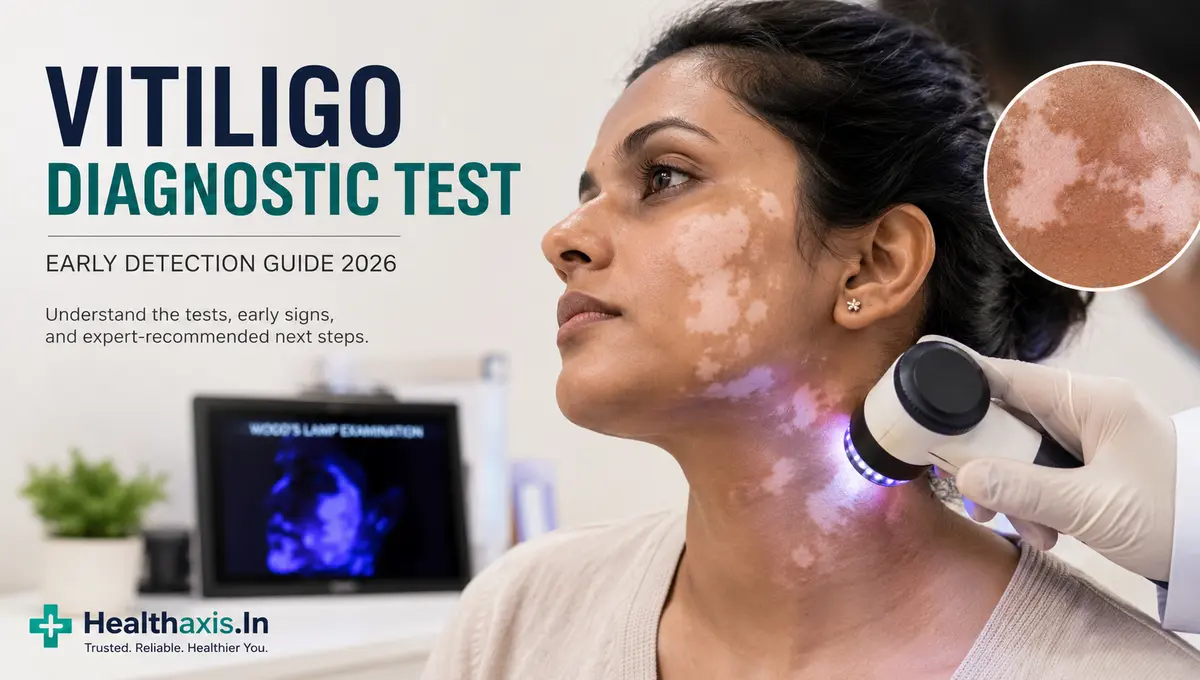
A vitiligo diagnostic test helps doctors confirm whether white patches on the skin are caused by vitiligo or another skin condition. Early diagnosis is important because it allows timely treatment, helps slow the spread of depigmentation in some cases, and reduces confusion with fungal infections or other pigment disorders.
Vitiligo is a long-term condition in which the skin loses melanin, the pigment responsible for skin color. In India, many people delay testing because they mistake early patches for allergies, sun damage, or fungal infections. Understanding how doctors diagnose vitiligo can help patients seek proper medical care sooner.
Key Highlights / Quick Facts
- A vitiligo diagnostic test usually starts with a physical skin examination.
- Dermatologists often use a Wood’s lamp to identify depigmented skin patches.
- Blood tests may be advised to check for autoimmune disorders or thyroid problems.
- Skin biopsy is not always required, but it may help in unclear cases.
- Vitiligo is not contagious and does not spread through touch.
- Early diagnosis may improve treatment planning and skin protection.
- White patches caused by fungal infections can look similar to vitiligo.
- Online self-checks cannot replace a dermatologist’s evaluation.
- Treatment may include creams, light therapy, and lifestyle support.
- Seek medical advice if white patches rapidly spread or appear near the eyes, lips, hands, or genitals.
What Is a Vitiligo Diagnostic Test and Why Is It Important?
A vitiligo diagnostic test refers to the medical evaluation used to identify vitiligo and rule out other causes of skin discoloration. The process usually includes skin examination, medical history review, and special diagnostic tools.
Diagnosis is important because several skin conditions can resemble vitiligo, including fungal infections, post-inflammatory hypopigmentation, and pityriasis alba. Accurate diagnosis helps doctors recommend the right treatment and monitor disease progression properly.
Early Signs Doctors Look for During Vitiligo Diagnosis
Doctors often identify vitiligo by looking for specific skin changes and patterns. The condition usually begins with small pale or milky-white patches that gradually enlarge.
Common early signs include:
- White patches on hands, face, feet, elbows, or around the mouth
- Premature whitening of hair, eyebrows, or eyelashes
- Loss of pigment inside the mouth
- Symmetrical skin discoloration on both sides of the body
- Increased sensitivity to sunlight in affected areas
Some people may notice itching before new patches appear, although this does not happen in every case.
How Dermatologists Diagnose Vitiligo Through Skin Examination
In many cases, a dermatologist can strongly suspect vitiligo through a detailed clinical examination. Doctors examine the color, pattern, location, and borders of skin patches.
During the consultation, the doctor may ask about:
- Family history of vitiligo or autoimmune disease
- Recent skin injuries or stress
- Rapid spread of white patches
- Hair color changes
- Previous skin infections or treatments
The dermatologist also checks whether the patches completely lack pigment, which is more typical of vitiligo.
Wood’s Lamp Test for Vitiligo Detection
A Wood’s lamp test is one of the most common tools used during a vitiligo diagnostic test. The device emits ultraviolet light that helps doctors examine skin pigment changes more clearly.
Under the Wood’s lamp:
- Vitiligo patches often appear bright white or chalky blue-white
- Fungal infections may show a different color pattern
- Early pigment loss becomes easier to detect
This test is painless, non-invasive, and usually performed in a dark room during a clinic visit. It is especially useful for people with fair skin or very early vitiligo.
Blood Tests Used Alongside a Vitiligo Diagnostic Test
Vitiligo is sometimes associated with autoimmune conditions. Because of this, doctors may recommend blood tests to look for related health issues.
Common blood tests may include:
- Thyroid function tests
- Blood sugar testing
- Vitamin B12 levels
- Complete blood count (CBC)
- Autoimmune screening in selected cases
These tests do not directly diagnose vitiligo but help identify conditions that may occur alongside it.
Skin Biopsy in Vitiligo: When Doctors Recommend It
A skin biopsy is not routinely needed for every vitiligo patient. However, doctors may recommend it if the diagnosis is uncertain or if the skin patches appear unusual.
In a biopsy procedure:
- A small skin sample is removed under local anesthesia
- The sample is examined under a microscope
- Doctors look for absence or reduction of melanocytes
Biopsy helps differentiate vitiligo from inflammatory skin disorders or rare pigment conditions.
Difference Between Vitiligo and Other White Skin Conditions
Many people confuse vitiligo with common fungal infections or minor pigment changes. A proper vitiligo diagnostic test helps avoid incorrect treatment.
Conditions commonly mistaken for vitiligo include:
Fungal Infection (Tinea Versicolor)
- Often causes flaky white or brown patches
- Usually associated with mild itching
- Responds to antifungal treatment
Pityriasis Alba
- Common in children and teenagers
- Produces light patches with dry skin
- Often linked to eczema
Post-Inflammatory Hypopigmentation
- Develops after skin injury or inflammation
- Pigment may gradually return over time
Vitiligo patches are usually sharply defined and completely depigmented.
Can Vitiligo Be Diagnosed at Home or Online?
Online symptom checkers and mobile apps may help people recognize possible warning signs, but they cannot confirm vitiligo accurately.
Self-diagnosis can lead to confusion because several skin conditions look similar. Some people use home UV lights or internet images for comparison, but these methods are unreliable without medical training.
A dermatologist remains the best person to perform a proper vitiligo diagnostic test and identify the exact cause of white patches.
What Happens After a Positive Vitiligo Diagnosis?
After confirming vitiligo, the dermatologist creates a treatment and monitoring plan based on the severity and spread of the condition.
Treatment options may include:
- Topical corticosteroid creams
- Calcineurin inhibitors
- Phototherapy or narrowband UVB therapy
- Sun protection measures
- Cosmetic camouflage products
Doctors may also discuss emotional well-being because visible skin changes can affect confidence and mental health in some individuals.
When to See a Dermatologist for Vitiligo Testing
You should consult a dermatologist if you notice unexplained white patches that continue spreading or fail to improve.
Seek medical advice if:
- White patches appear suddenly
- Hair in affected areas turns white
- The patches spread quickly
- Skin becomes more sensitive to sunlight
- Home treatment does not help
Early consultation may help identify vitiligo sooner and reduce unnecessary treatments for unrelated conditions.
Cost and Availability of Vitiligo Diagnostic Tests in India
Vitiligo diagnostic tests are widely available in dermatology clinics, multispecialty hospitals, and skin care centers across India.
The cost depends on:
- Type of clinic or hospital
- City and specialist consultation fees
- Need for additional blood tests or biopsy
- Use of advanced diagnostic tools
Basic skin examination and Wood’s lamp evaluation are generally affordable compared to advanced laboratory investigations.
Common Questions Patients Ask About Vitiligo Diagnosis
Many patients worry about whether vitiligo is dangerous, contagious, or permanently progressive. Doctors usually explain that vitiligo is a non-contagious autoimmune-related skin condition and not a skin infection.
Patients also commonly ask:
- Whether vitiligo can spread rapidly
- If children can develop vitiligo
- Whether stress worsens the condition
- If treatment can restore skin color
- Whether dietary changes can help
Open discussion with a qualified dermatologist can help patients better understand their diagnosis and treatment choices.
FAQs
Is a Wood’s lamp test enough to diagnose vitiligo?
A Wood’s lamp test is very useful, but doctors usually combine it with skin examination and medical history for accurate diagnosis.
Can a blood test confirm vitiligo?
No. Blood tests cannot directly confirm vitiligo, but they may identify related autoimmune conditions such as thyroid disease.
Is vitiligo testing painful?
Most vitiligo diagnostic tests are painless. Only a skin biopsy may cause mild discomfort because it involves removing a small skin sample.
Can children undergo a vitiligo diagnostic test?
Yes. Dermatologists can safely evaluate children with white skin patches using standard examination methods and Wood’s lamp testing.
Is vitiligo contagious?
No. Vitiligo does not spread through touching, sharing clothes, or physical contact.
How long does it take to diagnose vitiligo?
In many cases, dermatologists can identify vitiligo during the first consultation, especially when the patches have typical features.
Conclusion
A vitiligo diagnostic test helps doctors identify skin pigment loss accurately and rule out other conditions that may look similar. Early diagnosis supports better treatment planning, proper skin care, and timely management of associated health concerns.
If you notice unexplained white patches on your skin, consult a qualified dermatologist instead of relying only on online information or home remedies. Professional evaluation remains the safest and most reliable way to confirm vitiligo and begin appropriate care.
Read More: What Causes Vitiligo & How to Prevent It

1 Comment
Pingback: Hypopigmentation Vs Vitiligo: Key Differences 2026 | Healthaxis.In