

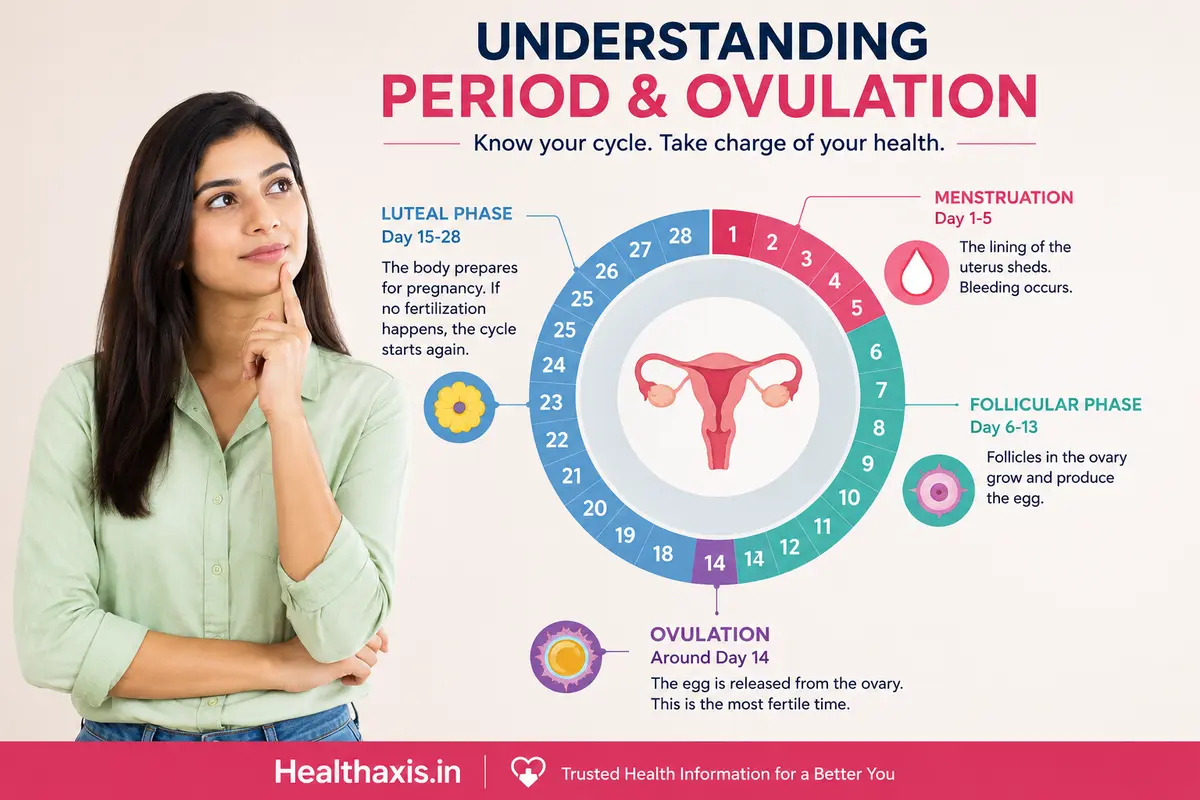
Understanding the relationship between your period and ovulation is essential for managing your reproductive health, planning a pregnancy, or simply tracking your monthly cycle. Menstruation is the shedding of the uterine lining, while the release of an egg from the ovary happens earlier in the cycle. By tracking your period and ovulation, you can accurately identify your fertile window and monitor your overall well-being. This guide explains how the menstrual cycle works and what physical signs to look for every month.
Key Highlights / Quick Facts
- A typical menstrual cycle lasts between 21 and 35 days for most adult women.
- The egg release usually occurs around 14 days before your next bleeding phase begins.
- Common signs of a fertile window include changes in cervical mucus and a slight drop in basal body temperature.
- Stress, poor diet, and sudden weight changes can easily disrupt your monthly cycle.
- Hormonal imbalances, such as Polycystic Ovary Syndrome (PCOS), are leading causes of irregular cycles in India.
- Tracking apps, hormonal predictor kits, and basal thermometers are highly reliable cycle tracking methods.
- It is entirely possible to experience menstrual bleeding without actually releasing an egg, which is known as an anovulatory cycle.
- Consult a gynecologist if your cycle suddenly changes, stops, or if bleeding is excessively heavy.
Understanding the Connection Between Your Period and Ovulation
The menstrual cycle is a continuous loop of hormonal changes preparing the female body for a potential pregnancy. The link between your period and ovulation is driven by hormones like estrogen and progesterone. When an egg is released, the body thickens the uterine lining to support a fertilized egg.
If pregnancy does not occur, your hormone levels naturally drop. This sudden drop triggers the shedding of the thickened lining, which you experience as menstrual bleeding. Tracking these phases helps you understand your body’s baseline health.
Key Differences Between Menstruation and the Ovulation Phase
Menstruation is the physical shedding of the uterine lining, marking the very first day of your cycle. It involves vaginal bleeding that typically lasts three to seven days. In contrast, the egg release phase happens roughly in the middle of your cycle and involves the ovaries.
While menstruation is highly visible, the fertile phase is often silent or comes with very subtle physical signs. Understanding both phases helps you better decode your body’s natural rhythms. Period and ovulation are distinct events, but one always sets the stage for the other.
How to Calculate Ovulation Days Based on Your Period Cycle
To calculate your most fertile days, you first need to know the average length of your menstrual cycle. Count from the first day of your current bleeding to the day before your next bleeding begins. For a standard 28-day cycle, the egg is usually released around day 14.
If your cycle is 30 days long, this phase likely occurs around day 16. Subtracting 14 days from your total cycle length is the standard medical formula used by doctors. Tracking your period and ovulation over several months will give you a much more accurate average.
Identifying the Most Fertile Window for Pregnancy
Your fertile window spans about six days every month, leading up to and including the day the egg is actually released. Sperm can survive inside the female reproductive tract for up to five days under the right conditions. However, the egg itself only survives for 12 to 24 hours after being released.
Having intercourse during the days immediately before the egg is released offers the highest chance of conception. Monitoring your period and ovulation helps accurately pinpoint this critical timeframe. Couples trying to conceive should aim for regular intercourse during this specific window.
Physical Signs and Symptoms of Ovulation to Watch For
Your body provides several natural clues when it is preparing to release an egg. Paying attention to these physical symptoms can help you accurately track your period and ovulation at home.
- Changes in cervical mucus, which becomes clear, slippery, and resembles raw egg whites.
- A mild twinge or cramp on one side of the lower abdomen, medically known as mittelschmerz.
- A slight dip followed by a noticeable rise in your basal body temperature.
- Increased libido and heightened senses of smell or taste.
- Light spotting or minor breast tenderness in some women.
Effective Methods and Tools to Track Your Menstrual Cycle
Modern tools make it easier than ever to monitor your reproductive health and predict fertile days. Digital calendar apps allow you to log bleeding days and symptoms to predict future cycles accurately. For more scientific accuracy, consider using specialized predictor kits available at local pharmacies.
These kits measure the luteinizing hormone surge in your urine, which happens 24 to 36 hours before the egg is released. Daily temperature tracking using a basal body thermometer is another proven and cost-effective method. Consistently logging your period and ovulation data empowers you during doctor visits.
Can You Have a Regular Period Without Ovulating?
Yes, you can experience regular bleeding without actually releasing an egg. This condition is medically known as an anovulatory cycle. During an anovulatory cycle, estrogen builds up the uterine lining, which eventually sheds, mimicking a normal menstrual flow.
Women approaching menopause or young girls who have just started menstruating frequently experience this. If you are tracking your period and ovulation but fail to see signs of a fertile window, anovulation might be the cause. Persistent anovulatory cycles require medical evaluation, especially if you are actively trying to conceive.
How Conditions Like PCOS Affect Period and Ovulation Health
Polycystic Ovary Syndrome (PCOS) is a common hormonal disorder affecting lakhs of Indian women today. It causes the ovaries to produce excess male hormones, which disrupts the normal cycle. As a result, women with PCOS often experience delayed, missed, or completely absent cycles.
Because the hormonal balance is off, the ovaries struggle to develop and release eggs regularly. Managing PCOS is crucial for maintaining a healthy period and ovulation cycle long-term. Treatment usually involves lifestyle modifications and targeted medications prescribed by a specialist.
Impact of Diet and Lifestyle on Your Reproductive Cycle
Your daily habits play a massive role in maintaining the delicate hormonal balance required for regular cycles. A diet rich in whole grains, fresh vegetables, lean proteins, and healthy fats supports optimal reproductive function. Conversely, excessive consumption of processed foods and refined sugars can lead to insulin resistance, negatively affecting your cycle.
High stress levels increase cortisol production, which can delay or completely halt your monthly cycle. Maintaining a healthy body weight through moderate exercise is also essential. Both being severely underweight and overweight can disrupt your period and ovulation patterns.
When to Consult a Gynecologist About Cycle Irregularities
Occasional variations in your cycle are normal, but persistent irregularities should never be ignored. If your cycle is consistently shorter than 21 days or longer than 35 days, it is time to seek professional medical advice. You should also consult a doctor if your bleeding lasts more than seven days or is unusually heavy.
Experiencing severe pelvic pain that disrupts your daily routine is another red flag. If you have been actively tracking your period and ovulation for over a year without achieving pregnancy, consult a fertility specialist. Early diagnosis of underlying issues ensures better reproductive health outcomes and easier treatment.
Frequently Asked Questions (FAQs)
Can I get pregnant right after my period ends?
Yes, it is possible, though it is less common. If you have a short menstrual cycle, your fertile window may start soon after your bleeding stops. Because sperm can survive for up to five days, early intercourse can lead to conception if you release an egg early.
How many days after my period do I ovulate?
In a typical 28-day cycle, egg release usually occurs around 14 days after the start of your period. However, this varies depending on your individual cycle length. Subtracting 14 days from your total cycle length provides a reliable medical estimate.
Is it normal to miss a period but not be pregnant?
Yes, missing a cycle can be caused by various non-pregnancy factors. High stress, extreme weight loss, intense exercise, and hormonal imbalances like PCOS are common culprits. If you miss multiple consecutive cycles, you should consult a healthcare professional.
Can tracking my period and ovulation help treat PCOS?
While tracking cannot cure or treat PCOS directly, it helps you understand your body’s patterns. Sharing this tracking data with your gynecologist allows them to tailor an effective treatment plan. It is a vital first step in managing your overall reproductive health.
Are ovulation predictor kits accurate?
Yes, these hormonal kits are highly accurate when used correctly according to the package instructions. They detect the hormonal surge that occurs right before an egg is released. They are much more reliable for finding your fertile window than simply counting days on a calendar.
Read More: New Period Pain Treatment 2026: Causes, Symptoms, and Relief
