

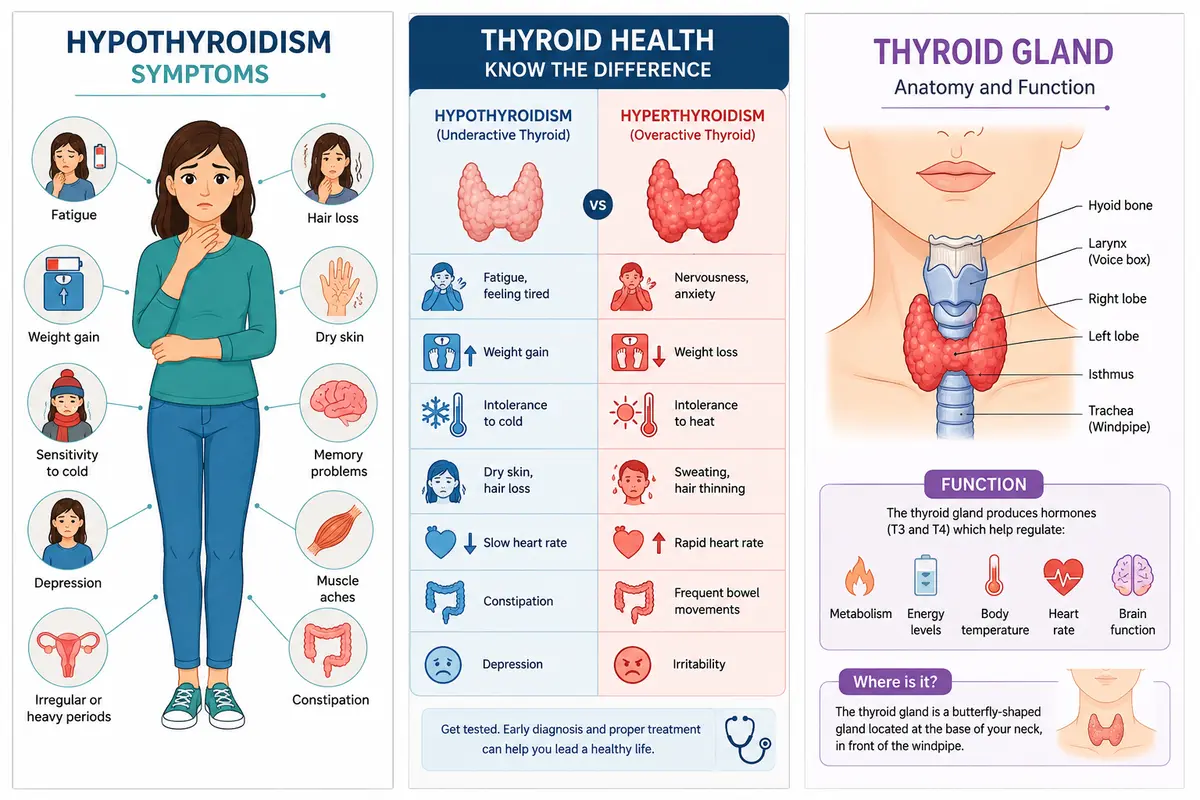
The thyroid hormone (thyroxine), commonly known as T4, is a vital chemical produced by the thyroid gland that controls your body’s metabolism, energy levels, and overall growth. It dictates how your cells use energy, impacting almost every organ in your body.
Understanding how thyroid hormone (thyroxine) works is essential for maintaining good health, especially in India, where thyroid disorders are increasingly common. This guide explains how T4 functions, signs of imbalance, and ways to manage your thyroid health effectively.
Key Highlights / Quick Facts
- Thyroid hormone (thyroxine) or T4 makes up about 80% of the hormones produced by your thyroid gland.
- Its primary role is to regulate your metabolism, heart rate, and body temperature.
- Fatigue, weight gain, and feeling cold are major symptoms of low T4 levels.
- Unexplained weight loss, rapid heartbeat, and anxiety are common signs of high T4 levels.
- Autoimmune conditions like Hashimoto’s and Graves’ disease are leading causes of imbalances.
- A simple blood test measuring TSH, Free T4, and Total T4 can diagnose thyroid issues.
- Treatment usually involves daily medication to either replace missing hormones or suppress excess production.
- Adequate iodine intake in your daily diet is crucial for healthy hormone synthesis.
- Pregnant women need careful monitoring, as T4 is vital for fetal brain development.
- Always consult an endocrinologist or physician before starting any thyroid medication.
Understanding Thyroid Hormone (Thyroxine): What is T4?
Thyroid hormone (thyroxine) is the main hormone secreted into the bloodstream by the butterfly-shaped thyroid gland located at the base of your neck. It plays a foundational role in digestion, heart and muscle function, brain development, and bone maintenance. Once released, T4 travels through the blood and converts into an active form called T3, which cells can readily use. Maintaining the right balance of thyroid hormone (thyroxine) is crucial, as both overproduction and underproduction can lead to significant health complications.
How Thyroxine Regulates Your Metabolism and Overall Energy
Thyroxine acts as the body’s internal thermostat and energy manager. It regulates your basal metabolic rate, which is the speed at which your body burns calories for energy at rest. When you have adequate levels of thyroid hormone (thyroxine), your cells produce energy efficiently, keeping you active and alert. If levels drop, your metabolism slows down, causing fatigue and sluggishness. Conversely, excess T4 forces your body to burn energy too quickly, leading to physical exhaustion and weakness.
Recognizing the Symptoms of Low T4 (Hypothyroidism)
Key symptoms to watch for include:
- Extreme fatigue and lethargy.
- Unexplained weight gain despite no change in diet.
- High sensitivity to cold temperatures.
- Dry skin, thinning hair, and brittle nails.
- Constipation and heavy or irregular menstrual periods.
- Brain fog, poor memory, and feelings of depression.
Signs of High Thyroxine Levels (Hyperthyroidism) to Watch For
Common signs of excess T4 include:
- Rapid or irregular heartbeat (palpitations).
- Unintentional weight loss despite an increased appetite.
- Nervousness, anxiety, and irritability.
- Tremors in the hands and fingers.
- Increased sweating and intolerance to heat.
- Frequent bowel movements and lighter menstrual periods.
Common Causes Behind Thyroid Hormone Imbalances
Imbalances in thyroid hormone (thyroxine) usually stem from autoimmune diseases, where the immune system mistakenly attacks the thyroid gland. Hashimoto’s thyroiditis is the most common cause of underactive thyroid in India. Graves’ disease is the leading cause of an overactive thyroid. Other factors include iodine deficiency, thyroid nodules, inflammation of the gland (thyroiditis), or certain medications. Sometimes, radiation therapy to the neck region or surgical removal of the thyroid can also permanently alter hormone levels.
Understanding Your Thyroid Function Tests and Normal T4 Ranges
Doctors measure your thyroid health using a simple blood test called a Thyroid Profile, which checks TSH (Thyroid Stimulating Hormone) and T4 levels. TSH is produced by the pituitary gland to tell the thyroid how much hormone to make. Normal ranges for free thyroid hormone (thyroxine) typically fall between 0.8 to 1.8 nanograms per deciliter (ng/dL), though this can vary slightly between laboratories. High TSH with low T4 indicates hypothyroidism, while low TSH with high T4 points to hyperthyroidism.
Effective Treatment Options for Thyroid Hormone Disorders
Treatment focuses on restoring the normal levels of thyroid hormone (thyroxine) in your blood. For low T4, doctors prescribe a synthetic hormone pill, such as levothyroxine, taken daily on an empty stomach. If you have high levels of thyroid hormone (thyroxine), treatment may involve anti-thyroid medications to block hormone production. In more severe cases, radioactive iodine therapy or surgical removal of the gland might be necessary. Regular blood tests are required to adjust the medication dosage accurately over time.
The Impact of Diet and Lifestyle on Thyroid Health
While diet alone cannot cure a thyroid disorder, it plays a supportive role in maintaining optimal thyroid hormone (thyroxine) levels. Consuming iodized salt is the simplest way to prevent iodine deficiency, a primary cause of thyroid issues in India. Foods rich in selenium and zinc, such as nuts, seeds, and lentils, support the conversion of T4 to its active form. It is also advisable to manage stress through yoga or meditation, as chronic stress can negatively impact autoimmune thyroid conditions.
Why Thyroxine Levels Matter During Pregnancy
During the first trimester, a developing baby relies entirely on the mother’s supply of thyroid hormone (thyroxine) for crucial brain and nervous system development. Low T4 levels during pregnancy can increase the risk of miscarriage, premature birth, and developmental delays. Expectant mothers with known thyroid issues must work closely with their doctors to monitor and adjust their medication dosage. Maintaining optimal levels ensures both maternal health and safe fetal growth.
When to Consult a Doctor About Your Thyroid Health
You should consult a healthcare provider if you experience persistent fatigue, unexplained weight changes, or a noticeable swelling at the base of your neck. Early diagnosis of an imbalance in thyroid hormone (thyroxine) prevents long-term complications like heart disease or severe metabolic issues. A general physician or an endocrinologist can evaluate your symptoms and recommend the appropriate blood tests. Never self-medicate or alter your prescribed hormone dosage without professional medical guidance.
FAQs
What is the difference between T3 and T4?
T4 (thyroxine) is the primary inactive hormone produced by the thyroid gland. The body converts T4 into T3 (triiodothyronine), which is the active form that cells use to regulate metabolism.
Can I permanently cure a thyroid hormone (thyroxine) imbalance?
Most thyroid disorders, especially autoimmune ones like Hashimoto’s or Graves’ disease, cannot be permanently cured. However, they can be highly successfully managed with daily medication and regular medical monitoring.
Should I avoid certain vegetables if I have low T4?
Cruciferous vegetables like cabbage, cauliflower, and broccoli contain goitrogens that can interfere with thyroid function if eaten raw in massive quantities. Cooking these vegetables neutralizes the goitrogens, making them entirely safe for a balanced diet.
Is it safe to take thyroid hormone (thyroxine) medication during pregnancy?
Yes, it is highly safe and strictly necessary if you have an underactive thyroid. Untreated hypothyroidism poses severe risks to the baby, so doctors will closely monitor and often increase your dosage during pregnancy.
How long does it take for thyroid medication to work?
It typically takes a few weeks for thyroid hormone (thyroxine) levels to stabilize in the blood after starting medication. Patients usually notice a significant improvement in their energy levels and symptoms within three to six weeks.
Read More: Thyroid Disorder Symptoms in Women

1 Comment
Pingback: Thyroid Dysfunction Symptoms In Men: 10 Red Flags You’re Missing | Healthaxis.In