


Men often dismiss early warning signs of hormonal imbalance as everyday stress or natural aging. However, recognizing Thyroid Dysfunction Symptoms early is critical for maintaining long-term health, energy levels, and metabolic function. The thyroid gland regulates crucial bodily processes, and when it underperforms or overproduces hormones, the effects impact everything from muscle strength to sexual health. Understanding these subtle indicators can help you seek timely medical intervention before irreversible complications arise.
Key Highlights / Quick Facts
- The thyroid is a butterfly-shaped gland located in the neck, responsible for regulating your body’s energy and metabolism.
- Thyroid disorders in men are often misdiagnosed because symptoms like fatigue and stress overlap with a busy modern lifestyle.
- Recognizing Thyroid Dysfunction Symptoms early can prevent long-term cardiovascular and metabolic complications.
- Hypothyroidism slows down body functions, while hyperthyroidism accelerates them uncontrollably.
- Low libido and erectile dysfunction are frequent but rarely discussed complications of male thyroid imbalances.
- A simple TSH (Thyroid Stimulating Hormone) blood test is the first medical step in diagnosing any thyroid-related issue.
- Treatment usually involves daily oral medication to restore normal hormone levels effectively.
Understanding Thyroid Dysfunction Symptoms in Men
Thyroid Dysfunction Symptoms often manifest gradually, making them easy to overlook in daily life. Men frequently attribute feeling tired or mentally sluggish to a demanding work schedule rather than a potential endocrine issue. The thyroid controls how the body utilizes energy, meaning any hormonal irregularity can disrupt multiple organ systems simultaneously. Being proactive about these physiological changes is essential for maintaining optimal physical and mental well-being.
Hypothyroidism vs. Hyperthyroidism: Key Differences to Watch For
Understanding the two primary types of thyroid disorders helps in identifying specific warning signs. Hypothyroidism occurs when the gland produces insufficient hormones, leading to a slowed metabolism, unexpected weight gain, and intense, chronic fatigue. Conversely, hyperthyroidism happens when the gland is overactive, causing a rapid heartbeat, unexplained weight loss, and extreme nervous energy. Both conditions present distinct Thyroid Dysfunction Symptoms that require targeted diagnostic approaches and specialized treatment protocols.
10 Silent Red Flags of Male Thyroid Problems
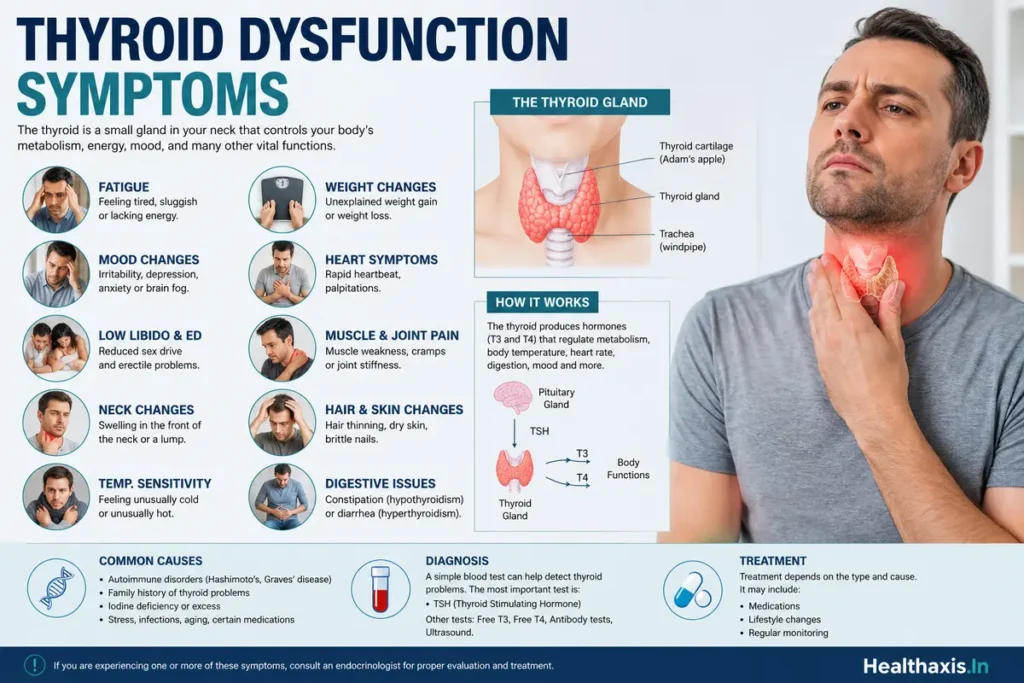
While individual experiences vary, men should be vigilant about these ten critical indicators. When evaluating Thyroid Dysfunction Symptoms, noting how many of these issues occur together can point directly to an underlying endocrine disturbance.
- Persistent, unexplainable exhaustion that sleep does not fix.
- Sudden, unintentional weight gain or rapid weight loss.
- Decreased sex drive and recurring performance issues.
- Uncharacteristic muscle weakness, cramps, or joint pain.
- Prematurely thinning hair or rapidly receding hairlines.
- Dry, rough, or continuously itchy skin.
- Severe brain fog, memory lapses, and difficulty concentrating.
- Increased and unusual sensitivity to cold or heat.
- Irregular bowel movements, such as new-onset constipation or frequent diarrhea.
- A visibly swollen neck, chronic sore throat, or a notably hoarse voice.
The Link Between Thyroid Health, Low Libido, and Erectile Dysfunction
Hormonal imbalances directly affect a man’s sexual health and reproductive system. When Thyroid Dysfunction Symptoms arise, free testosterone levels often fluctuate negatively, leading to a noticeable drop in sexual desire. Erectile dysfunction can also occur due to poor blood circulation and cellular energy depletion caused by an underactive thyroid gland. Addressing the root endocrine problem with a medical professional frequently resolves these intimate health concerns.
Unexplained Weight Fluctuations and Sudden Muscle Weakness
Metabolic regulation is the thyroid’s primary job, making sudden weight changes a prominent indicator of Thyroid Dysfunction Symptoms. Men with an underactive thyroid may gain significant weight despite maintaining their usual diet and exercise routine. On the other hand, an overactive thyroid can lead to rapid weight loss accompanied by a dangerous loss of muscle mass. Muscle weakness, particularly in the shoulders and thighs, makes routine physical tasks surprisingly difficult to manage.
Premature Hair Thinning and Persistent Skin Changes
Thyroid hormones play a crucial role in the development and cellular turnover of hair follicles and skin tissue. A hormonal deficit can cause hair to become brittle, thin out, or fall out at an accelerated rate, which is frequently misdiagnosed as standard male pattern baldness. Furthermore, Thyroid Dysfunction Symptoms often include skin that loses its natural moisture, becoming unusually dry, pale, or consistently cool to the touch.
Chronic Fatigue, Brain Fog, and Uncharacteristic Mood Swings
Mental and emotional disturbances are some of the most disruptive Thyroid Dysfunction Symptoms a man can experience. Severe brain fog makes it incredibly difficult to focus at work, while chronic fatigue ensures you feel physically drained even after a full night of rest. Mood fluctuations, ranging from unprovoked irritability and severe anxiety to mild depression, are directly tied to how thyroid hormones interact with overall brain chemistry.
Primary Causes and Risk Factors for Male Thyroid Disorders
Autoimmune diseases are the leading cause of thyroid issues in adult men. Hashimoto’s thyroiditis typically causes an underactive thyroid, while Graves’ disease forces the gland to become dangerously overactive. Additional risk factors include a family history of endocrine disorders, previous viral infections, and medical exposure to high levels of radiation. Age also plays a significant role, with the risk of developing Thyroid Dysfunction Symptoms increasing steadily as men grow older.
Essential Diagnostic Tests: Decoding Your Thyroid Profile
If you exhibit Thyroid Dysfunction Symptoms, your doctor will likely recommend a comprehensive blood panel. The primary diagnostic tool is the TSH test, which indicates exactly how well the pituitary and thyroid glands are communicating. Further laboratory tests may measure Free T4 and Free T3 levels to provide a clearer, more detailed picture of actual hormone production. In some cases, a doctor may order ultrasound imaging to check for structural abnormalities or thyroid nodules.
Medical Treatments and Hormone Replacement Therapies
Medical intervention is highly effective and proven for managing thyroid conditions in men. Hypothyroidism is typically treated with synthetic hormone replacement pills taken daily to restore normal bodily levels. Hyperthyroidism may be managed with specialized anti-thyroid medications, targeted radioactive iodine therapy, or, in rare cases, surgical removal of the gland. Regular blood monitoring is essential to ensure the medication dosage remains accurate and effective over time.
Lifestyle and Dietary Adjustments for Optimal Thyroid Function
While medication is the absolute cornerstone of treatment, adopting healthy daily habits supports overall endocrine health. A balanced diet rich in natural iodine, selenium, and zinc can assist your body in proper hormone synthesis. Managing psychological stress through yoga or meditation is also highly beneficial, as chronic stress can aggressively exacerbate Thyroid Dysfunction Symptoms. Regular, moderate exercise helps combat lingering fatigue and naturally regulates a sluggish metabolism.
When to Consult an Endocrinologist for Specialized Care
You should seek immediate medical advice if your physical symptoms begin to interfere heavily with your daily life, relationships, or work performance. Unexplained neck swelling, sudden and severe heart palpitations, or drastic mood changes warrant a prompt consultation with a specialist. An endocrinologist can properly evaluate your Thyroid Dysfunction Symptoms, tailor a medical treatment plan to your specific physiological needs, and prevent serious long-term health complications.
Frequently Asked Questions (FAQs)
Can thyroid problems go away on their own?
No, most clinical thyroid disorders are chronic medical conditions that require formal diagnosis and ongoing medical treatment. Delaying care can lead to more severe cardiovascular and neurological health complications over time.
Does thyroid medication affect male fertility?
Untreated Thyroid Dysfunction Symptoms can negatively impact sperm quality, count, and overall fertility. However, proper medical treatment and consistent hormone regulation typically restore normal reproductive function in men.
Can lifestyle and dietary changes alone cure my thyroid?
While a healthy, nutrient-rich diet and active stress management support thyroid health, they cannot replace prescribed medical treatments for a clinically dysfunctional gland. Always consult a licensed healthcare provider for a proper management plan.
How long does it take for thyroid medicine to work?
Many men notice a distinct improvement in their energy levels and mental clarity within a few weeks of starting daily medication. However, it can take several months of consistent treatment and dosage adjustments to fully stabilize hormone levels.
Read More: Thyroid Hormone (Thyroxine): Essential Guide to T4 & Health

1 Comment
Pingback: Thyroid Cartilage: Essential Anatomy, Function & Health | Healthaxis.In