

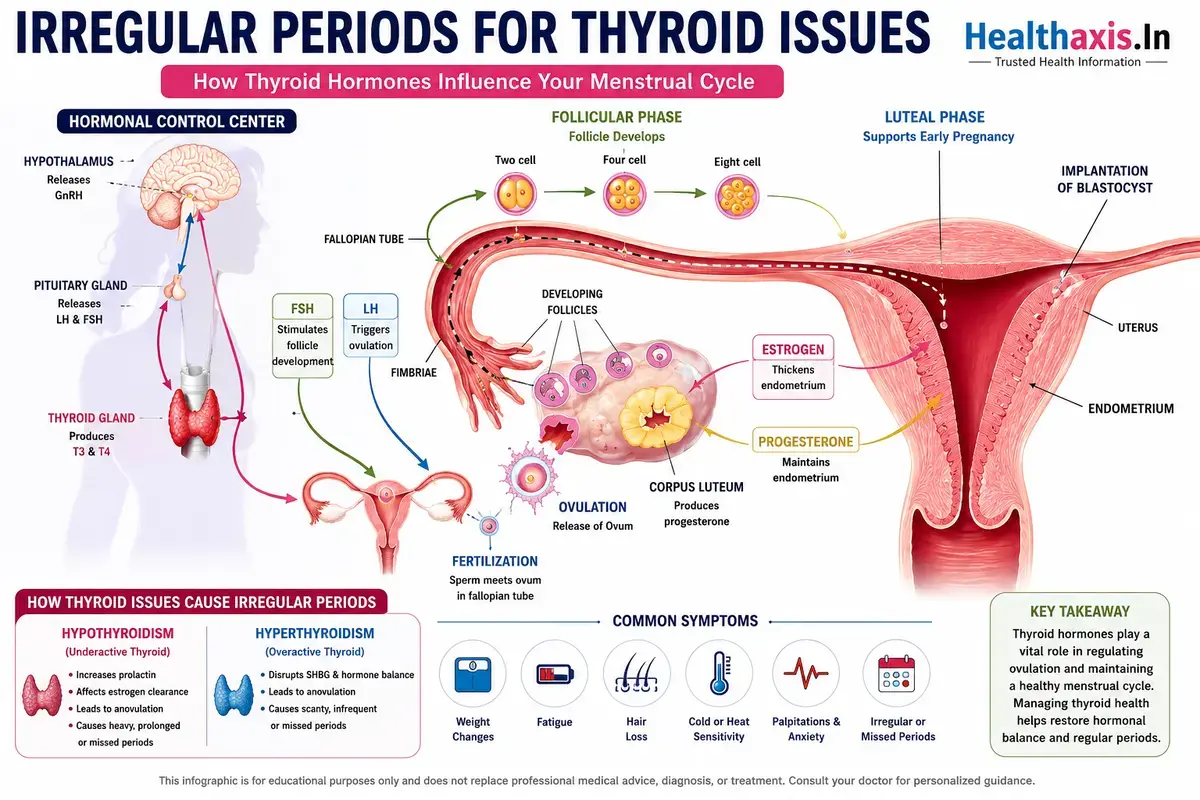
An irregular period is often one of the first physical signs of an underlying thyroid issue. The thyroid gland controls your metabolism and heavily influences the hormones responsible for your menstrual cycle. When your thyroid produces too much or too little hormone, it disrupts natural ovulation, leading to menstrual irregularities. Understanding this biological connection is vital for managing your reproductive health effectively. At Healthaxis. We emphasize that early identification of thyroid symptoms can help you seek timely medical care and restore necessary hormonal balance.
Key Highlights / Quick Facts
- An irregular period can result from both an underactive (hypothyroidism) and an overactive (hyperthyroidism) thyroid gland.
- Hypothyroidism frequently causes heavier, longer, or much more frequent menstrual bleeding.
- Hyperthyroidism typically leads to lighter, infrequent, or entirely missed menstrual cycles.
- Thyroid dysfunction directly disrupts sex hormone-binding globulin (SHBG) and prolactin levels, which stops normal ovulation.
- A simple TSH (Thyroid Stimulating Hormone) blood test is the essential first step in diagnosing the root cause of cycle changes.
- Managing thyroid hormone levels through proper prescription medication usually restores a normal menstrual cycle within a few months.
- Ignoring an irregular cycle linked to thyroid problems can eventually lead to fertility struggles, bone density loss, and severe anemia.
The Connection Between Thyroid Health and an Irregular Period
The thyroid is a small, butterfly-shaped gland located in your neck that regulates your body’s cellular energy use. It interacts closely with your reproductive system to maintain a healthy and predictable menstrual cycle. When thyroid function becomes abnormal, it interferes with the proper release of estrogen and progesterone.
This hormonal confusion frequently results in abnormal menstrual cycles. Many women in India experience these unexplained menstrual changes for years without realizing a thyroid condition is the true underlying cause. Regulating the thyroid is often the exact key to resolving these reproductive issues.
How Hypothyroidism Causes Heavy, Prolonged, or Missed Periods
Hypothyroidism occurs when your gland does not produce enough necessary thyroid hormones. This metabolic sluggishness decreases the liver’s production of specific binding proteins, leaving too much free estrogen circulating in the bloodstream. Consequently, the uterine lining builds up excessively over the month.
When shedding finally occurs, it causes an irregular period characterized by unusually heavy, painful, or prolonged bleeding. In some severe cases, untreated hypothyroidism can drastically increase prolactin levels in the brain. High prolactin directly suppresses ovulation and leads to entirely missed cycles for months at a time.
How Hyperthyroidism Leads to a Scanty, Infrequent, or Irregular Period
Hyperthyroidism means your thyroid is chronically overactive, producing a dangerous excess of hormones and over-stimulating your metabolism. This rapid, heightened metabolic state fundamentally alters how your body processes key reproductive hormones. The result is often a menstrual flow that is noticeably lighter than usual or happens very infrequently.
Women dealing with this hyperactive condition might experience menstrual cycles that are much shorter than a standard 28 days. They may also notice prolonged, unpredictable gaps between instances of menstrual bleeding.
Key Symptoms Identifying Menstrual Changes Linked to Thyroid Issues
Recognizing the physical signs of thyroid dysfunction helps you seek the right medical support promptly. Menstrual changes rarely happen in total isolation when the thyroid is physically involved.
- Unexplained weight gain, extreme daily fatigue, hair loss, and feeling constantly cold are common signs of hypothyroidism.
- Rapid weight loss, a racing heartbeat, chronic anxiety, and excessive sweating are typical hyperthyroidism signs.
- Bleeding that requires changing heavy pads every hour or lasts longer than seven to eight days.
- Going 35 days or more without experiencing a natural menstrual cycle.
Experiencing any of these symptoms alongside unpredictable cycles strongly points toward a systemic thyroid imbalance.
The Role of Hormonal Imbalance in Thyroid-Induced Cycle Disruptions
Your natural menstrual cycle relies on a precise, constant communication loop between the brain, the ovaries, and the thyroid gland. Thyroid hormones directly impact the hypothalamus and pituitary glands, which control the timing of ovulation. A thyroid hormone imbalance completely disrupts the timely release of luteinizing hormone (LH) and follicle-stimulating hormone (FSH).
Without the proper and timely LH surge, the ovaries ultimately fail to release an egg. This failure to ovulate is the primary mechanical reason you experience an irregular period. Restoring thyroid balance through medical care essentially repairs this delicate internal communication network.
PCOS vs. Thyroid Disease: Differentiating the Causes of an Irregular Period
Polycystic Ovary Syndrome (PCOS) and thyroid disorders share many heavily overlapping symptoms, making self-diagnosis extremely tricky. Both medical conditions frequently cause an irregular period, frustrating weight fluctuations, and noticeable hair thinning. However, PCOS is typically accompanied by physical signs of excess male hormones.
These PCOS signs include unwanted facial hair growth, severe jawline acne, and insulin resistance. Conversely, thyroid disease is far more likely to cause distinct changes in resting heart rate, bowel habits, and severe temperature sensitivity. A healthcare provider will use specific blood profiles to accurately distinguish between the two separate conditions.
Can an Irregular Period from Thyroid Problems Affect Fertility and Pregnancy?
Yes, an irregular period caused by long-term thyroid dysfunction can significantly and negatively impact your fertility. Because an abnormal thyroid disrupts regular ovulation, predicting your fertile windows or trying to conceive naturally becomes highly difficult. Furthermore, leaving a thyroid disease untreated during early pregnancy increases serious risks.
These risks include early miscarriage, premature birth, and specific developmental issues for the baby. Fortunately, properly regulating your thyroid hormones under medical supervision greatly improves the chances of successful conception and a healthy, safe pregnancy.
Diagnosing the Root Cause: Thyroid Function Tests and Menstrual Evaluations
Identifying the medical cause of an irregular period requires a comprehensive and professional evaluation. Doctors typically start with a detailed medical history regarding your cycles and a basic physical examination.
- Thyroid Profile: A simple blood test measuring your specific TSH, Free T3, and Free T4 levels.
- Thyroid Antibody Tests: Additional blood work to check for autoimmune conditions like Hashimoto’s thyroiditis or Graves’ disease.
- Pelvic Ultrasound: A painless imaging test to rule out physical or structural issues in the uterus or the ovaries.
Gathering these specific diagnostics helps your doctor create a highly targeted, safe, and effective treatment plan.
Medical Treatments to Regulate an Irregular Period and Balance Thyroid Levels
Modern medical treatment correctly focuses on fixing the underlying thyroid disorder rather than just temporarily addressing the menstrual symptoms. For hypothyroidism, endocrinologists usually prescribe a daily synthetic thyroid hormone tablet to restore your normal baseline levels. For hyperthyroidism, clinical treatments may include specialized anti-thyroid medications, radioactive iodine therapy, or specific beta-blockers to manage acute symptoms.
Consistent monitoring and dosage adjustments are usually required in the first few months. Once your circulating thyroid hormone levels successfully stabilize, you will typically notice your menstrual cycle regulating naturally within a few months.
Lifestyle and Dietary Management to Support a Healthy Menstrual Cycle
While proper prescription medication is the primary and most effective treatment, building healthy daily habits supports your overall hormonal balance. Eating a nutrient-dense, balanced diet is crucial for Indian women managing cycle disruptions alongside a confirmed thyroid condition.
- Incorporate iodine-rich and selenium-rich foods, but only as explicitly directed by a doctor, especially if you have an autoimmune-based thyroid issue.
- Focus heavily on anti-inflammatory dietary choices like turmeric, fresh green leafy vegetables, and unrefined whole grains.
- Actively manage your daily stress through gentle yoga, daily meditation, or evening walks, as chronically high cortisol heavily worsens thyroid function.
- Ensure you get seven to eight hours of adequate, uninterrupted sleep to allow the body to regulate its natural daily hormonal rhythms.
When to Consult a Healthcare Provider for Menstrual and Thyroid Concerns
You should never ignore persistent or sudden changes in your normal menstrual cycle. It is strongly recommended to consult a gynecologist or a specialist endocrinologist if your irregular period lasts for more than three consecutive cycles. Do not try to self-medicate with over-the-counter hormone supplements or unverified herbal remedies.
Seek immediate medical attention if you experience extremely heavy uterine bleeding, severe pelvic pain, dizziness, or extreme unexplained fatigue. Early and professional medical intervention prevents long-term health complications and safely helps you regain total control over your reproductive well-being.
Frequently Asked Questions (FAQs)
Can thyroid medication fix an irregular period?
Yes, taking correctly prescribed thyroid medication usually restores your normal hormone levels. Once the thyroid function is chemically balanced, your menstrual cycle will typically return to a normal, highly predictable pattern within three to six months.
How do I know if my irregular period is due to stress or my thyroid?
High stress usually causes temporary, short-term delays in your cycle that resolve when the stress passes. If your irregular period is accompanied by persistent physical changes like weight gain, chronic fatigue, hair loss, or temperature sensitivity, a thyroid issue is highly likely and requires testing.
Can I get pregnant if I have an irregular period from a thyroid disorder?
Pregnancy is entirely possible, but it can be considerably more challenging because your natural ovulation is unpredictable. Consulting a specialized doctor to normalize your thyroid hormone levels will significantly improve your baseline fertility and protect your pregnancy outcomes.
Which specific thyroid problem causes heavier bleeding?
Hypothyroidism, which is an underactive thyroid gland, is most commonly associated with heavier, longer, and much more painful menstrual bleeding. This is primarily due to its disruptive impact on natural estrogen clearance and subsequent uterine lining thickness.
Read More: Period and Ovulation

1 Comment
Pingback: Thyroid Disorders | Healthaxis.In