

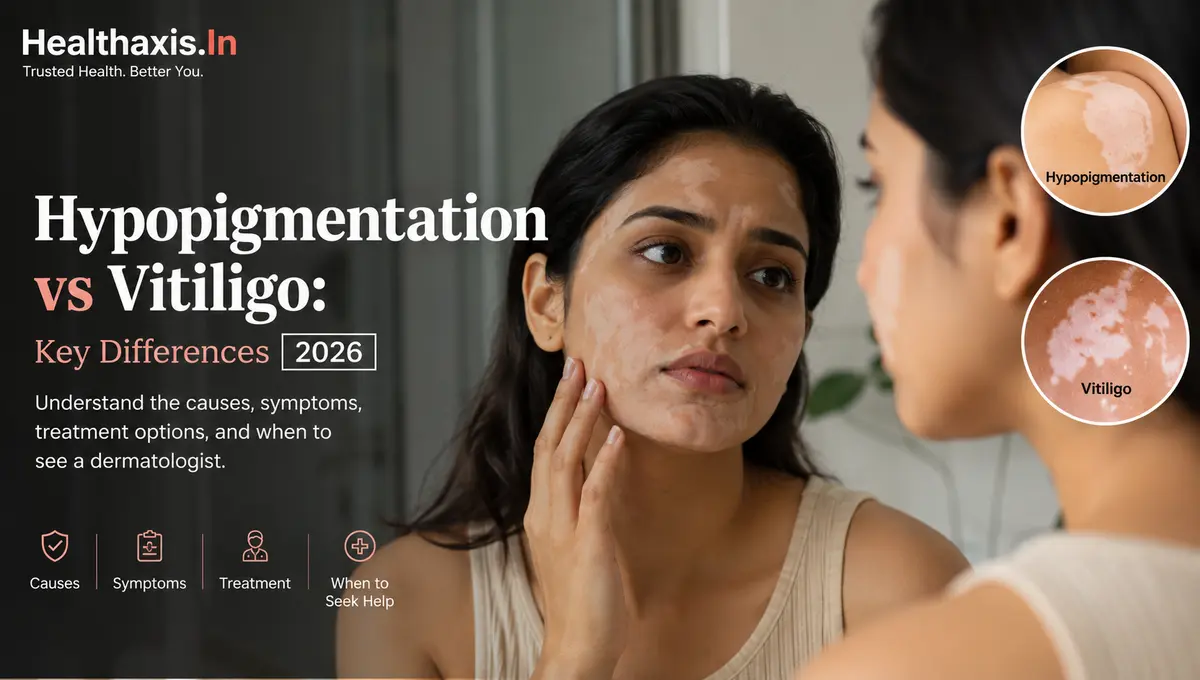
White or lighter skin patches can appear for many reasons, but hypopigmentation and vitiligo are among the most commonly confused conditions. Hypopigmentation refers to reduced skin pigment caused by injury, inflammation, infections, or other skin conditions, while vitiligo is an autoimmune disorder that destroys pigment-producing cells called melanocytes.
Understanding hypopigmentation vs vitiligo is important because the causes, progression, and treatment approaches are different. Early medical evaluation can help identify the correct condition and guide proper care.
Key Highlights / Quick Facts
- Hypopigmentation means partial loss of skin color, while vitiligo usually causes complete pigment loss.
- Vitiligo is commonly linked to autoimmune activity.
- Hypopigmentation may happen after eczema, burns, fungal infections, or skin injury.
- Vitiligo patches are often sharply defined and milky white.
- Both conditions can affect children and adults.
- A dermatologist may use a Wood’s lamp examination to identify vitiligo.
- Some cases of hypopigmentation improve naturally over time.
- Vitiligo may spread gradually in some people.
- Treatment may include creams, light therapy, and management of underlying skin conditions.
- Medical attention is important if white patches rapidly increase or spread.
What Is the Difference Between Hypopigmentation and Vitiligo?
The main difference between hypopigmentation and vitiligo is the amount and cause of pigment loss. Hypopigmentation is a broad term used for skin areas that become lighter than the surrounding skin due to reduced melanin production. Vitiligo is a specific autoimmune condition where melanocytes are destroyed completely.
In hypopigmentation, the skin may appear slightly lighter, uneven, or faded. In vitiligo, the patches are usually bright white and more noticeable.
Vitiligo is often long-term and may progress over time. Hypopigmentation can sometimes improve once the underlying cause heals.
Hypopigmentation vs Vitiligo: How the Skin Patches Look Different
In many cases, the appearance of the patches helps doctors distinguish hypopigmentation vs vitiligo.
Common features of hypopigmentation
- Lightened patches rather than completely white skin
- Uneven borders
- Often follows skin irritation or rash
- May improve gradually
- Sometimes associated with dryness or scaling
Common features of vitiligo
- Milky white patches
- Sharply defined edges
- Symmetrical distribution in some people
- Can affect hair, lips, and inside of the mouth
- Usually painless and non-scaly
Vitiligo commonly appears on visible areas such as the hands, face, elbows, knees, and around the eyes.
Common Causes of Hypopigmentation and Vitiligo
Hypopigmentation has many possible causes. It often develops after skin inflammation or damage.
Causes of hypopigmentation
- Eczema or dermatitis
- Psoriasis
- Fungal infections such as tinea versicolor
- Burns or injuries
- Chemical exposure
- Certain medications
- Post-inflammatory skin changes after acne or rashes
Causes of vitiligo
Vitiligo is believed to be caused by an autoimmune reaction in which the immune system attacks melanocytes. Factors that may contribute include:
- Family history
- Autoimmune disorders
- Emotional stress
- Skin trauma
- Genetic susceptibility
Vitiligo is not contagious and does not spread through touch.
Can Hypopigmentation Turn Into Vitiligo?
Hypopigmentation itself does not usually turn into vitiligo. However, early vitiligo can sometimes look similar to mild hypopigmentation, especially in darker Indian skin tones.
This is why professional diagnosis is important when white patches continue to spread or become more clearly defined. A dermatologist can identify whether the pigment loss is temporary or related to vitiligo.
Areas of the Body Commonly Affected by Vitiligo and Hypopigmentation
The location of the patches may provide useful clues.
Common areas affected by hypopigmentation
- Chest and back
- Areas with previous injury or rash
- Arms and legs
- Face in children with pityriasis alba
Common areas affected by vitiligo
- Hands and fingers
- Around the mouth and eyes
- Knees and elbows
- Feet
- Armpits and groin
- Scalp and beard area
Vitiligo may also affect hair color, causing white or gray hair in affected regions.
How Doctors Diagnose Hypopigmentation vs Vitiligo
Doctors usually diagnose hypopigmentation vs vitiligo through physical examination and medical history.
Common diagnostic methods include
- Skin examination
- Wood’s lamp test
- Dermoscopy
- Blood tests for autoimmune conditions when needed
- Skin biopsy in unclear cases
Under a Wood’s lamp, vitiligo patches often appear bright white and more distinct. This helps differentiate vitiligo from other pigment disorders.
Early diagnosis can help improve treatment planning and reduce unnecessary anxiety.
Is Hypopigmentation or Vitiligo Permanent?
The answer depends on the cause and severity.
Hypopigmentation caused by inflammation or injury may improve gradually over weeks or months after the skin heals. Some cases recover completely, while others leave long-term color changes.
Vitiligo is generally considered a chronic condition. In some people, the disease remains stable for years, while in others it may spread slowly. Treatment can sometimes restore partial pigmentation, but results vary from person to person.
Treatment Options for Hypopigmentation and Vitiligo
Treatment depends on the underlying condition and extent of pigment loss.
Treatments for hypopigmentation
- Moisturizers and skin barrier repair
- Antifungal medicines for fungal infections
- Topical anti-inflammatory creams
- Sun protection
- Treatment of underlying skin diseases
Treatments for vitiligo
- Topical corticosteroids
- Calcineurin inhibitors
- Phototherapy
- Excimer laser therapy
- Cosmetic camouflage
- Surgical procedures in selected stable cases
Lifestyle support may also help overall skin health.
Helpful skin care tips
- Use sunscreen daily
- Avoid harsh chemical products
- Protect skin from repeated friction or injury
- Follow prescribed treatment regularly
- Avoid self-medication with steroid creams
Patients should discuss treatment risks and benefits with a qualified dermatologist.
When White Patches on Skin May Need Medical Attention
Some white patches are harmless, but certain signs should not be ignored.
Consult a doctor if:
- Patches spread quickly
- Skin becomes completely white
- Hair turns white in affected areas
- There is itching, pain, or scaling
- The patches affect confidence or emotional well-being
- A child develops unexplained white patches
Early medical evaluation may improve management outcomes and rule out serious skin conditions.
Hypopigmentation vs Vitiligo in Children and Adults
Both conditions can affect people of all ages, but presentation may differ.
In children, hypopigmentation is often linked to eczema, fungal infections, or pityriasis alba. Vitiligo in children may begin around the face or extremities.
Adults may experience vitiligo along with other autoimmune conditions such as thyroid disorders. Emotional stress and cosmetic concerns may also affect quality of life.
Parents should avoid home remedies without medical guidance, especially in children with sensitive skin.
Myths and Misconceptions About Vitiligo and Skin Pigment Loss
Many myths still exist around hypopigmentation vs vitiligo, particularly in India.
Common myths
- Vitiligo spreads through touch
- White patches always mean leprosy
- Certain foods directly cause vitiligo
- Vitiligo is caused by poor hygiene
- All white patches are permanent
These beliefs are medically incorrect. Vitiligo is not infectious, and many forms of hypopigmentation are treatable or temporary.
Accurate medical information can reduce stigma and encourage timely treatment.
Frequently Asked Questions About Hypopigmentation vs Vitiligo
Is vitiligo more serious than hypopigmentation?
Vitiligo is a chronic autoimmune condition and may have a greater emotional and cosmetic impact. Hypopigmentation is often temporary and linked to other skin problems.
Can vitamin deficiency cause hypopigmentation?
Certain nutritional deficiencies may contribute to skin color changes, but they are not the most common cause. Medical evaluation is important for proper diagnosis.
Does vitiligo always spread?
No. Some people have stable vitiligo for years, while others may notice gradual spreading.
Can hypopigmentation be cured naturally?
Some mild cases improve as the skin heals, especially after inflammation or infection. However, persistent patches should be checked by a dermatologist.
Is sunscreen important for vitiligo and hypopigmentation?
Yes. Sun protection helps reduce contrast between affected and normal skin and protects sensitive skin from sun damage.
Conclusion
Understanding hypopigmentation vs vitiligo is essential for identifying the correct cause of white skin patches and choosing appropriate treatment. Although both conditions involve pigment loss, they differ significantly in appearance, causes, progression, and management.
If you notice new or spreading white patches, consult a qualified dermatologist for proper diagnosis. Early medical guidance can help manage symptoms effectively and reduce unnecessary worry.
Read More: Vitiligo Diagnostic Test: Early Detection Guide 2026

1 Comment
Pingback: Vitiligo In Face: Best 2026 Treatments & Coping Strategies | Healthaxis.In