

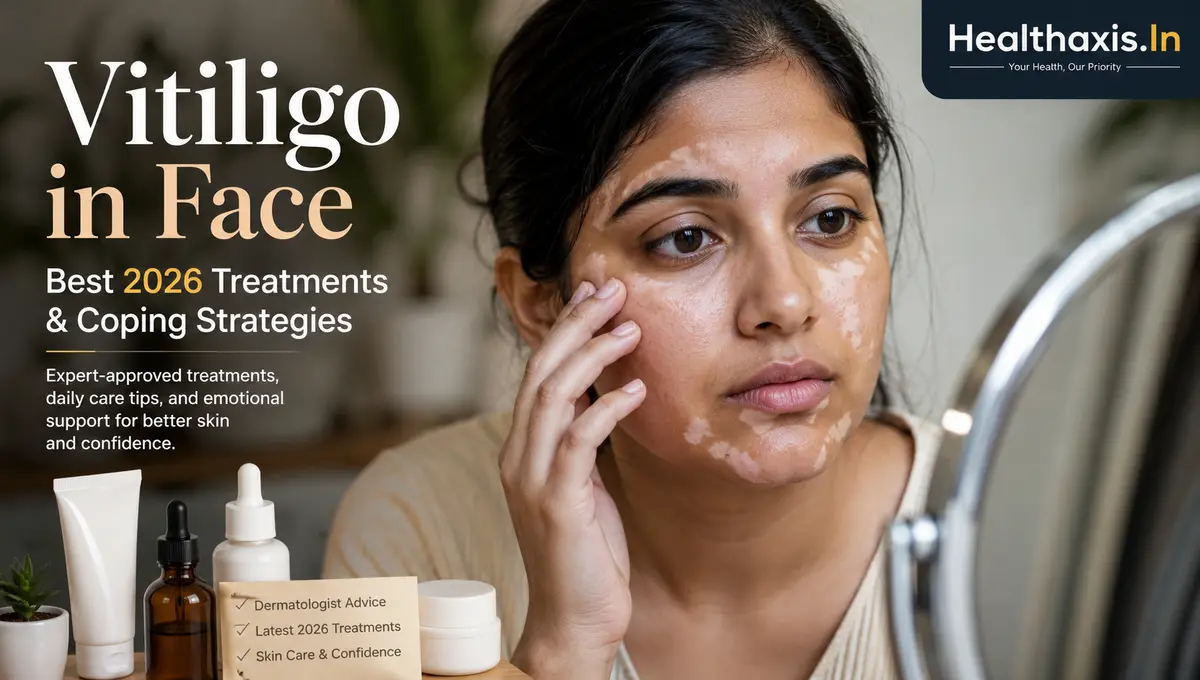
Vitiligo in face is a common skin condition where patches of skin lose their natural color due to the destruction of pigment-producing cells called melanocytes. Facial vitiligo can affect confidence and emotional well-being because the patches are highly visible, but early treatment and proper skin care may help manage the condition effectively.
In India, awareness about vitiligo in face is improving, and modern dermatology now offers several treatment options including topical medicines, light therapy, laser treatments, and cosmetic support. Understanding the condition early can help people make informed decisions and reduce unnecessary fear or social stigma.
Key Highlights / Quick Facts
- Vitiligo in face causes white or lighter patches on the facial skin.
- The condition is not contagious and does not spread through touch.
- Early treatment may improve repigmentation results in some patients.
- Common treatments include steroid creams, calcineurin inhibitors, and phototherapy.
- Stress, skin injury, and sunburn may trigger worsening in some people.
- Facial vitiligo often responds better to treatment than vitiligo on hands or feet.
- Sunscreen is important to protect depigmented skin from UV damage.
- Makeup and camouflage products can help improve confidence.
- Emotional support and counseling may help people cope with social anxiety.
- A dermatologist should evaluate rapidly spreading or new white patches.
What Makes Vitiligo in Face Different From Other Types of Vitiligo
Vitiligo in face is different because the affected area is highly visible and emotionally sensitive. Even small patches near the lips, eyes, or forehead may affect self-esteem and social interactions.
Facial skin also contains more hair follicles, which may support better repigmentation during treatment. Because of this, vitiligo in face sometimes responds faster to therapies compared to patches on fingers, feet, or joints.
Common facial areas affected include:
- Around the mouth
- Eyelids
- Cheeks
- Forehead
- Chin
- Nose area
Best 2026 Treatments for Vitiligo in Face Recommended by Dermatologists
The best treatment depends on the size, location, and progression of vitiligo in face. Dermatologists usually aim to stop disease progression and encourage repigmentation safely.
Common medical treatments include:
- Topical corticosteroid creams
- Calcineurin inhibitors such as tacrolimus
- Narrowband UVB phototherapy
- Excimer laser treatment
- Depigmentation therapy in extensive cases
- Surgical grafting in selected stable patients
Doctors may combine treatments for better results. Treatment often requires patience because improvement can take several weeks or months.
How Early Treatment Can Slow or Stop Facial Vitiligo Spread
Early diagnosis is important because active vitiligo may spread over time. Starting treatment quickly may help control inflammation and preserve remaining pigment cells.
Signs that need early medical attention include:
- Rapidly enlarging white patches
- New spots appearing within weeks
- Whitening of facial hair or eyebrows
- Burning or itching before patch formation
Dermatologists may use clinical examination, Wood’s lamp evaluation, or blood tests to check associated autoimmune conditions.
Topical Creams and Medicines Used for Vitiligo in Face
Topical medicines are often the first treatment for mild or localized vitiligo in face. These medications work by reducing immune activity or stimulating pigment recovery.
Commonly prescribed options include:
Corticosteroid Creams
These may reduce inflammation and slow pigment loss. Long-term unsupervised use can cause skin thinning, especially on delicate facial skin.
Tacrolimus and Pimecrolimus
These non-steroid creams are commonly used on the face because they are considered safer for sensitive areas.
Oral Medicines
In selected cases, dermatologists may prescribe short-term oral medications to control rapidly spreading vitiligo.
Patients should avoid self-medication and use creams only under medical supervision.
Light Therapy and Laser Options for Facial Vitiligo
Phototherapy is widely used for vitiligo in face and may help stimulate melanocyte activity.
Narrowband UVB Therapy
This is one of the most common treatments for widespread vitiligo. Sessions are usually performed multiple times weekly under medical guidance.
Excimer Laser
This targeted laser treatment is often used for smaller facial patches. It delivers focused ultraviolet light directly to affected skin.
Possible side effects may include:
- Mild redness
- Dryness
- Temporary irritation
- Increased sun sensitivity
Results vary between individuals, and maintenance treatment may sometimes be required.
Can Vitiligo in Face Be Permanently Treated or Reversed?
There is currently no guaranteed permanent cure for vitiligo in face. However, many patients experience partial or significant repigmentation with proper treatment.
Some people may achieve long periods without progression, while others may develop recurring patches later. Treatment success depends on factors such as:
- Early intervention
- Stability of the condition
- Treatment consistency
- Individual immune response
- Location and size of patches
A dermatologist can help set realistic expectations and choose suitable therapies.
Safe Makeup and Cosmetic Solutions to Cover Facial Vitiligo
Cosmetic camouflage can help improve confidence and social comfort, especially during treatment.
Safe options include:
- Dermatologist-tested concealers
- Color-correcting makeup
- Waterproof camouflage creams
- Self-tanning products designed for sensitive skin
Before using cosmetic products:
- Perform a patch test
- Avoid harsh chemical products
- Remove makeup gently
- Use non-comedogenic products
Permanent tattooing is generally not recommended without specialist advice because skin trauma may worsen vitiligo in some people.
Daily Skin Care Tips to Protect Sensitive Vitiligo Patches on the Face
Facial skin affected by vitiligo is more vulnerable to sunburn and irritation because of reduced melanin protection.
Helpful skin care practices include:
- Apply broad-spectrum sunscreen daily
- Wear hats or protective clothing outdoors
- Use mild fragrance-free cleansers
- Moisturize regularly
- Avoid excessive scrubbing or chemical peels
- Protect skin from cuts and friction
Good skin care may reduce irritation and support overall skin health.
Foods, Lifestyle Habits, and Triggers That May Affect Facial Vitiligo
No specific food has been proven to cure vitiligo in face, but a balanced diet may support overall immunity and skin health.
Healthy habits may include:
- Eating fruits and vegetables rich in antioxidants
- Managing stress levels
- Sleeping adequately
- Avoiding smoking
- Limiting excessive alcohol intake
Possible triggers linked to worsening in some individuals include:
- Emotional stress
- Severe sunburn
- Skin injury
- Certain chemical exposures
Lifestyle support should complement, not replace, medical treatment.
Emotional Impact of Vitiligo in Face and Ways to Build Confidence
Vitiligo in face can affect mental health, particularly among teenagers and young adults. Some people experience embarrassment, anxiety, or social withdrawal due to visible skin changes.
Helpful coping strategies include:
- Joining support groups
- Speaking openly with family members
- Consulting a mental health professional if needed
- Using cosmetic camouflage confidently
- Following treatment plans consistently
Public awareness about vitiligo is improving in India, which may help reduce myths and stigma over time.
When to See a Dermatologist for Vitiligo in Face
A dermatologist should evaluate any unexplained white facial patches to confirm the diagnosis and rule out other skin conditions.
Seek medical advice if:
- Patches are spreading quickly
- Facial hair turns white
- Symptoms affect confidence or daily life
- Home remedies are causing irritation
- Previous treatment is not working
Early professional guidance often improves treatment planning and long-term management.
Latest Research and Emerging Treatments for Vitiligo in Face in 2026
Research on vitiligo treatment is expanding rapidly. Scientists are studying immune-targeted therapies and regenerative approaches to improve outcomes.
Emerging areas being explored include:
- JAK inhibitor medications
- Advanced laser combinations
- Melanocyte transplantation techniques
- Personalized immunotherapy
- Combination therapy protocols
Some newer treatments may not be suitable or available for every patient in India, and long-term safety data is still being evaluated.
FAQs
Is vitiligo in face dangerous?
Vitiligo itself is usually not dangerous, but it can affect emotional well-being and increase sensitivity to sunlight.
Can vitiligo in face spread to the whole body?
In some people, vitiligo may remain localized, while others may develop patches in additional areas over time.
Which doctor should I consult for facial vitiligo?
A qualified dermatologist is the best specialist for diagnosis and treatment planning.
Does sunlight help vitiligo in face?
Limited medically supervised light exposure may help in some cases, but uncontrolled sun exposure can cause sunburn and worsen skin damage.
Are home remedies effective for vitiligo in face?
There is limited scientific evidence supporting home remedies. Some natural products may even irritate sensitive skin.
Can children develop vitiligo in face?
Yes. Vitiligo can occur in children and teenagers, and early dermatology consultation is recommended.
Conclusion
Vitiligo in face is a manageable skin condition that requires proper medical guidance, skin protection, and emotional support. While there is no guaranteed permanent cure, many people benefit from early treatment, modern therapies, and healthy lifestyle practices.
Read More: Hypopigmentation vs Vitiligo: Key Differences 2026

1 Comment
Pingback: Hair Vitiligo: 2026 Latest Treatments For White Hair Patches | Healthaxis.In