

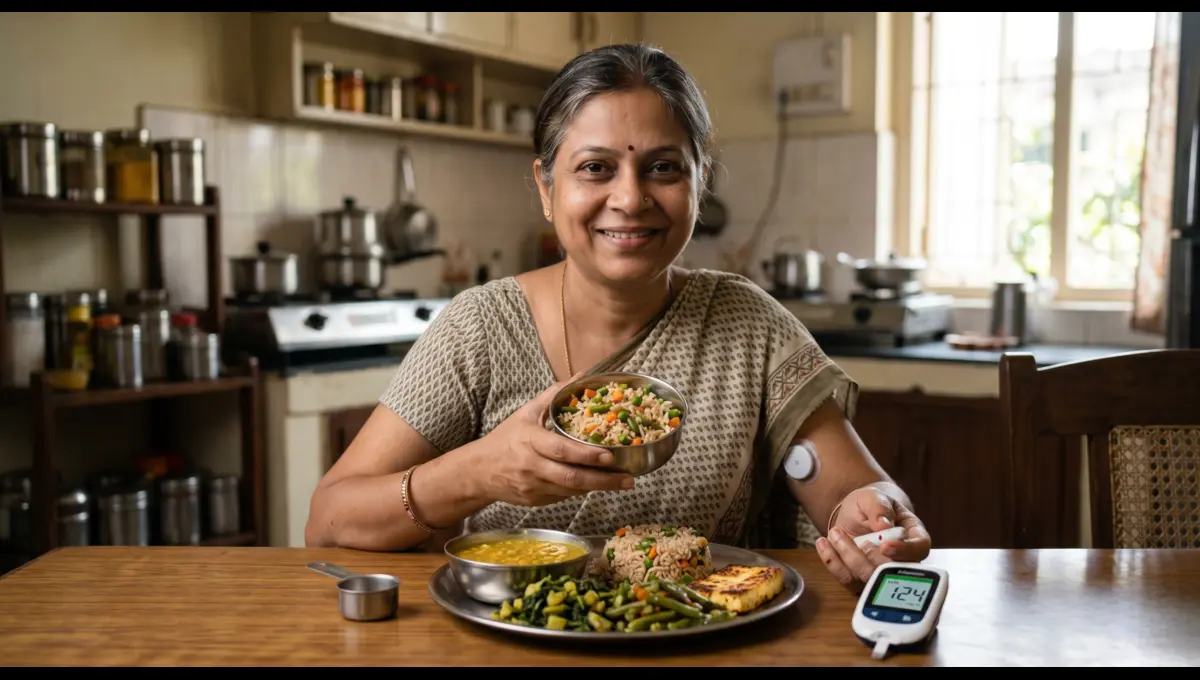
Yes, individuals managing their blood sugar can eat rice if portion sizes and types are chosen carefully. The key for patients is to select low glycemic index varieties and balance the meal with adequate protein, fiber, and healthy fats. Instead of eliminating rice completely, focus on moderation and smart cooking techniques to prevent sudden blood glucose spikes. This guide explains how diabetics can safely include rice in an Indian diet without compromising their health goals.
Key Highlights / Quick Facts
- Glycemic Index (GI): Choose rice varieties with a GI below 55 to prevent rapid blood sugar spikes.
- Portion Control: Restrict rice intake to half a cup (cooked) per meal to manage carbohydrate load.
- Best Varieties: Brown rice, red rice, black rice, and basmati rice are scientifically better options.
- Cooling Technique: Cooling cooked rice in the fridge increases resistant starch, significantly lowering its glycemic impact.
- Food Pairing: Always pair rice with plenty of non-starchy vegetables, legumes, or lean protein.
- Daily Consumption: Eating rice daily is possible if your total daily carbohydrate intake is strictly monitored.
- Worst Choice: Highly polished, short-grain white rice causes the fastest and most dangerous blood sugar elevations.
How Rice Affects Blood Sugar Levels in Diabetics
Rice is a carbohydrate-rich food that the digestive system rapidly breaks down into glucose. For diabetics, consuming high amounts of easily digestible carbohydrates can lead to dangerous post-meal sugar spikes. The impact depends heavily on the rice’s Glycemic Index (GI) and Glycemic Load (GL).
High-GI rice digests rapidly, releasing glucose into the bloodstream quickly and straining the pancreas. Conversely, low-GI rice digests slowly, providing a steady release of energy and helping diabetics maintain stable, predictable blood sugar levels throughout the day.
White Rice vs Brown Rice: Which Is Better for Diabetics?
Brown rice is significantly better for diabetics compared to standard white rice. White rice undergoes heavy milling and polishing, a process that removes the nutrient-rich bran and germ layers, leaving only the starchy endosperm that triggers rapid sugar spikes.
Brown rice retains these outer layers, offering a much higher fiber profile and essential micronutrients. This intrinsic fiber slows down digestion and glucose absorption, making it a safer and more nutritious choice for blood sugar management.
Best Types of Rice for Diabetics (Low GI Indian Options)
Selecting the right variety is crucial when diabetics want to enjoy traditional meals without health compromises. Several native Indian rice varieties naturally possess lower glycemic indices.
- Basmati Rice: Both brown and white basmati have a lower GI (around 50-58) compared to sticky, short-grain varieties.
- Red Rice: Rich in antioxidants and dietary fiber, it helps slow down carbohydrate absorption effectively.
- Black Rice (Karuppu Kavuni): Packed with anthocyanins, this ancient variety has a very low GI and exceptional fiber content.
- Parboiled Rice (Sella/Ukda Tandul): The traditional parboiling process physically alters the starch structure, notably lowering the GI compared to regular white rice.
How Much Rice Can Diabetics Eat in One Meal?
Portion control is the most critical factor for diabetics consuming any form of carbohydrates. Nutritionists generally recommend limiting cooked rice to about half a cup to one-third of a cup per meal, which roughly translates to 30 to 45 grams of carbohydrates.
Diabetics must measure their portions strictly with standardized cups rather than eyeballing them to avoid unintentional overeating. The remainder of the dining plate should be filled with non-starchy vegetables and lean proteins to promote fullness and stabilize blood glucose.
Best Time to Eat Rice for Diabetics Without Spiking Sugar
Timing your carbohydrate intake can significantly influence your body’s blood glucose response. For diabetics, lunchtime is generally the safest time to consume rice because the body’s metabolism is naturally more active, allowing for better glucose utilization.
Eating rice for dinner should be minimized, as physical activity typically decreases in the evening, leading to overnight sugar spikes. If diabetics choose to eat rice at night, the portion must be strictly halved and followed by a 15-minute light walk.
How to Cook Rice to Reduce Blood Sugar Impact in Diabetics
Preparation methods can physically alter how starches impact your blood sugar. Cooking rice with healthy fats, like adding a teaspoon of ghee or coconut oil, can slow down gastric emptying and delay glucose absorption.
Additionally, cooking rice, cooling it in the refrigerator for 12 to 24 hours, and then reheating it is highly beneficial. This cooling process converts some digestible carbohydrates into resistant starch, which is not completely digested, thus dramatically lowering the post-meal glucose spike for diabetics.
Common Mistakes Diabetics Make While Eating Rice
Many individuals unknowingly make dietary choices that exacerbate blood sugar fluctuations when eating traditional meals.
- Eating Rice Alone: Consuming a bowl of plain rice without protein or fiber leads to rapid, unchecked glucose absorption.
- Overcooking: Cooking rice until it is completely mushy breaks down the starches entirely, increasing its GI score.
- Ignoring Liquid Calories: Pairing rice with sweetened curries, sweetened yogurt, or sugary beverages adds hidden carbohydrates.
- Skipping Portion Measurement: Assuming a “small household bowl” is a safe portion without using actual measuring tools.
Can Diabetics Eat Rice Daily? What Experts Recommend
Yes, diabetics can eat rice daily, provided it fits strictly within their personalized total daily carbohydrate allowance. Medical professionals advise against eating large quantities of rice at every single meal throughout the day.
If a diabetic patient consumes rice for lunch, they should opt for a different, lower-carb staple for dinner to balance the daily load. Regular blood sugar monitoring is essential for diabetics who choose to eat rice every day to ensure their current strategy is working.
Healthy Alternatives to Rice for Diabetics (Indian Diet Options)
Diversifying carbohydrate sources is highly recommended for achieving stable, long-term blood sugar management. You can easily swap traditional rice with healthier, nutrient-dense Indian alternatives that offer better glycemic control.
- Millets: Foxtail, pearl (bajra), and finger millet (ragi) are excellent low-GI substitutes rich in vital micronutrients.
- Quinoa: A complete protein source with a low glycemic index that perfectly mimics the texture and feel of rice.
- Broken Wheat (Dalia): High in fiber and deeply satisfying, making it an excellent base for pilafs or vegetable khichdi.
- Cauliflower Rice: Grated or food-processed cauliflower provides a virtually carbohydrate-free alternative perfect for heavy curries.
Tips to Balance Rice with Protein and Fiber for Diabetics
Food pairing is a powerful, scientifically backed strategy to minimize the glycemic load of any meal. Diabetics should ensure that rice makes up no more than one-quarter of their physical plate.
Half the plate must consist of fiber-rich, non-starchy vegetables like spinach, bottle gourd, or green beans. The remaining quarter should contain high-quality protein, such as dal, paneer, tofu, chicken, or fish, which helps blunt the subsequent insulin and glucose response in diabetics.
When Should Diabetics Limit or Avoid Rice Completely?
While moderation works for many, there are clinical scenarios where strict carbohydrate restriction becomes necessary. Diabetics with severely uncontrolled blood sugar levels (an HbA1c consistently above 8.5%) should consider avoiding rice entirely until their baseline numbers stabilize.
Furthermore, patients experiencing severe insulin resistance or those struggling with severe obesity may benefit from a strict low-carbohydrate protocol. Patients must always consult their endocrinologist or clinical dietician before making drastic dietary changes to ensure it aligns with their medication regimen.
Read More: Low Blood Sugar Foods List: Best Foods for Blood Sugar Control

1 Comment
Pingback: Foods To Avoid In Diabetes: High Sugar Foods And Diet Tips | Healthaxis.In