

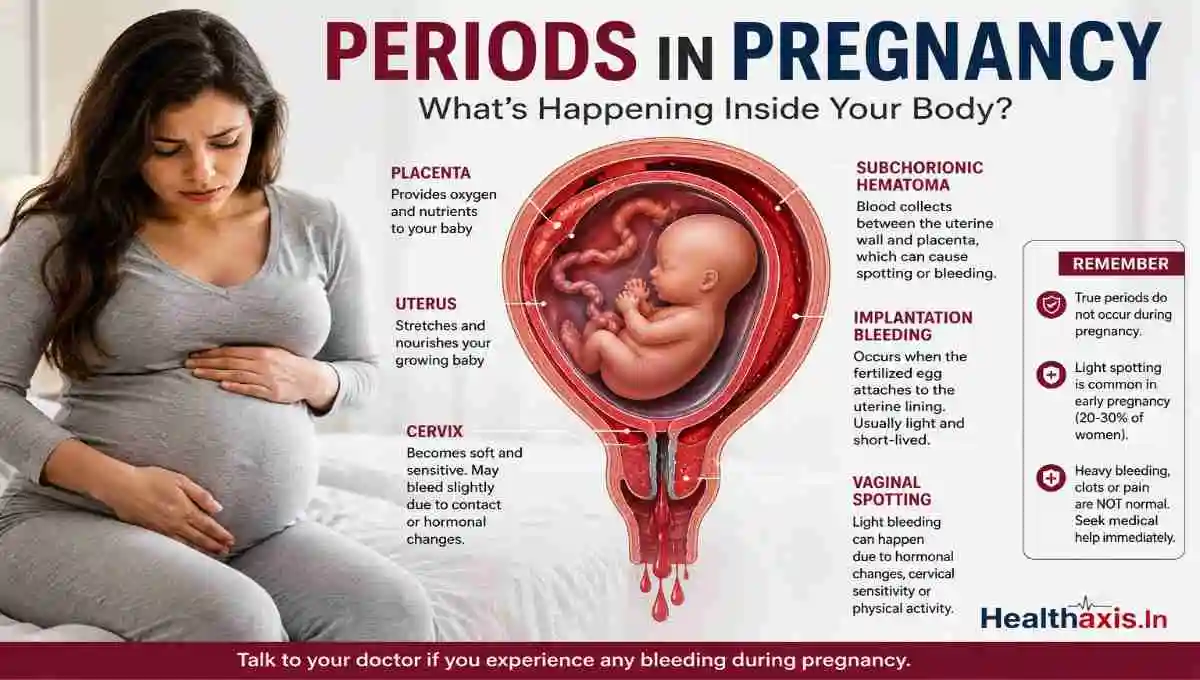
Biologically, it is impossible to have true periods in pregnancy. Once a fertilized egg implants in the uterus, your body stops releasing the hormones that trigger the monthly shedding of the uterine lining. However, many women experience vaginal bleeding or spotting during their first trimester, which they often mistake for a regular menstrual cycle. Understanding the difference between normal pregnancy spotting and a medical emergency is crucial for expectant mothers. This guide explains why this bleeding happens and when you need to consult your doctor.
Key Highlights / Quick Facts
- True menstruation cannot occur once you conceive, and implantation is complete.
- Light spotting during the first trimester affects nearly 20 to 30 percent of pregnant women.
- Implantation bleeding is a common, harmless cause of early spotting that mimics a cycle.
- Harmless bleeding is usually much lighter, shorter, and different in color compared to regular menstruation.
- Subchorionic hematoma and cervical changes are other frequent causes of non-threatening spotting.
- Heavy bleeding with large clots and severe abdominal pain are medical emergencies.
- Ectopic pregnancies and miscarriages present with significant bleeding, sharp cramping, and dizziness.
- Always avoid inserting tampons or menstrual cups if you bleed while pregnant to prevent infections.
- Consult your gynecologist immediately if you notice heavy, bright red blood.
Is It Possible to Have Periods in Pregnancy? The Biological Reality
The short answer is no. You cannot have periods in pregnancy because the biological mechanism of menstruation stops once conception occurs. A menstrual cycle is the shedding of an unfertilized egg and the unneeded uterine lining.
When you become pregnant, your body produces human chorionic gonadotropin (hCG). This hormone signals your body to maintain the uterine lining to support the growing embryo, effectively halting your normal cycle. Therefore, any blood you see is not a true menstrual cycle, but rather pregnancy-related bleeding.
Why You Might Experience Bleeding That Looks Like a Period
Many expecting mothers panic when they see blood, assuming the worst for their baby. However, light bleeding or spotting is surprisingly common in the first twelve weeks of gestation.
Your body undergoes massive hormonal and physical shifts to accommodate the growing fetus. Increased blood flow to the reproductive organs makes the vaginal and cervical tissues highly sensitive. Various harmless biological events can cause light bleeding, though it is always vital to have any unexpected bleeding checked by a doctor.
Implantation Bleeding: The Most Common Early Pregnancy “Period”
Implantation bleeding occurs when the fertilized egg physically burrows into the highly vascular lining of the uterus. This typically happens about 10 to 14 days after conception, right around the time you would expect your normal menstrual cycle to begin.
Because of this specific timing, many women mistake it for a light menstrual flow. Implantation bleeding is usually very light, appearing as light pink or brown discharge, and only lasts for a day or two. It does not require any medical treatment or intervention.
Understanding Subchorionic Hematoma and Its Role in Pregnancy Spotting
A subchorionic hematoma happens when blood collects between the uterine wall and the chorionic membrane, which eventually becomes the placenta. This blood pooling can slowly leak out, causing bleeding that ranges from very light spotting to a heavy flow.
While the idea of a blood clot sounds alarming, most small subchorionic hematomas resolve on their own over time without harming the baby. Your gynecologist will typically monitor the hematoma via routine ultrasound and may recommend pelvic rest until the bleeding completely stops.
Can Hormonal Shifts Cause Period-Like Bleeding in the First Trimester?
During the early weeks of gestation, your hormone levels are fluctuating rapidly as the placenta takes over production. Some women experience what is clinically known as a breakthrough bleed during this transition.
This occurs because the hormones controlling the gestation are still stabilizing, causing the body to temporarily mimic its old routine. You might shed a tiny bit of the uterine lining around the time your cycle would normally be due. This bleeding is generally light, sometimes accompanied by mild cramps, but poses no risk.
Cervical Changes: Why Physical Activity or Intercourse May Cause Spotting
Gestation causes a dramatic increase in blood supply to your cervix, making it much softer and more prone to minor bleeding. Because the cervical tissue becomes incredibly sensitive, even slight physical friction can cause spotting.
Activities such as sexual intercourse, a transvaginal ultrasound, or a routine pelvic exam by your doctor can easily irritate the cervix. This often results in a small amount of pink or brown blood on your underwear. This is entirely normal and usually stops entirely within a few hours.
Decidual Bleeding: When Your Body Mimics a Menstrual Cycle
Decidual bleeding is a rare phenomenon where an expecting mother sheds a small portion of her uterine lining. This usually happens because the hormones that halt the menstrual cycle get slightly out of sync during early gestation.
This shedding can look remarkably like a regular cycle, causing significant confusion about the pregnancy timeline. While decidual bleeding can happen periodically throughout the early months, it does not typically threaten the baby’s health as long as the placenta remains securely attached.
Identifying the Difference: Period Blood vs. Pregnancy Spotting
Telling the difference between normal menstruation and pregnancy spotting is key to reducing your anxiety. Menstrual bleeding usually starts light, gets progressively heavier with bright red blood, contains clots, and lasts five to seven days.
In contrast, spotting is usually much lighter and often brown or pale pink, resembling old blood. It rarely fills a panty liner, typically lacks clots, and stops completely within 24 to 48 hours. If the flow ever requires a regular sanitary pad, it needs immediate medical evaluation.
Red Flags: When Periods in Pregnancy Might Indicate a Miscarriage or Ectopic Pregnancy
While light spotting is often harmless, heavy bleeding can be a clear warning sign of severe complications. An ectopic pregnancy, where the embryo implants outside the uterus in the fallopian tube, is a life-threatening medical emergency.
Symptoms of an ectopic pregnancy include heavy vaginal bleeding, severe lower abdominal pain localized to one side, and extreme dizziness. Similarly, a miscarriage often presents with bright red blood, large tissue clots, and intense abdominal cramping that worsens over time. Both conditions require immediate emergency room care.
Common Indian Home Remedies for Spotting: What is Safe and What to Avoid
In many Indian households, elders often suggest complete bed rest and avoiding “heat-inducing” foods like papaya, pineapple, or sesame seeds if spotting occurs. While resting and staying well-hydrated are generally safe and physically beneficial, diet alone cannot stop active medical bleeding.
You must strictly avoid inserting anything into the vagina, including home herbal preparations, tampons, or douches. These practices significantly increase the risk of severe infections. Always prioritize professional medical evaluation over traditional home remedies when dealing with vaginal bleeding.
When to Consult Your Gynecologist: A Checklist for Expectant Mothers
You should never completely ignore vaginal bleeding while expecting, even if it seems very light and painless. Contact your gynecologist immediately if the bleeding is bright red, heavy enough to soak a pad within a few hours, or accompanied by tissue passing from the vagina.
Other urgent warning signs include severe pelvic cramping, high fever, chills, dizziness, or fainting spells. A doctor will typically perform a careful pelvic exam, draw blood to check hCG hormone levels, and conduct an ultrasound to verify the baby’s heartbeat.
Summary: Navigating Vaginal Bleeding Throughout Your Pregnancy Journey
Experiencing bleeding that resembles periods in pregnancy is a common source of intense stress for many expecting mothers. While true menstruation completely stops at conception, harmless events like implantation, cervical irritation, and normal hormonal shifts frequently cause mild spotting.
The most important step is to monitor the flow, color, and any accompanying symptoms carefully. By maintaining open, honest communication with your healthcare provider and attending routine checkups, you can safely navigate these early bodily changes and ensure a healthy journey for you and your baby.
Frequently Asked Questions (FAQs) ( Periods in Pregnancy )
Can I be 2 months pregnant and still get my monthly cycle?
No, you cannot have a true menstrual cycle while pregnant. Any bleeding at two months is considered pregnancy-related spotting or bleeding. It could be due to cervical sensitivity, intercourse, or hormonal shifts, but you should always consult a doctor to rule out potential complications.
How heavy is normal implantation bleeding?
Implantation bleeding is exceptionally light, usually appearing as just a few drops of pink or brown blood on your underwear or toilet paper when you wipe. It should never be heavy enough to soak through a standard panty liner or sanitary pad.
Does spotting mean I am having a miscarriage?
Not necessarily. Light spotting is very common in the first trimester and is often completely harmless. However, if the bleeding becomes heavily bright red or is accompanied by severe, painful cramps, it could indicate a threatened miscarriage and requires immediate medical attention.
Is it safe to use tampons if I bleed while expecting?
No, you should never use tampons or menstrual cups if you experience any bleeding while pregnant. Using internal sanitary products significantly increases the risk of introducing dangerous bacteria into the vagina and causing an infection. Always use an external sanitary pad instead.
When should I go directly to the hospital for bleeding?
Go to the nearest emergency room immediately if your bleeding is heavy enough to soak a pad in an hour. You also need emergency care if you pass blood clots or grey tissue, or if you experience severe abdominal pain, sharp shoulder pain, or extreme dizziness.
Read More: 7 Best Period Exercises

1 Comment
Pingback: Periods Mood Swings: Why They Happen And How To Cope | Healthaxis.In