

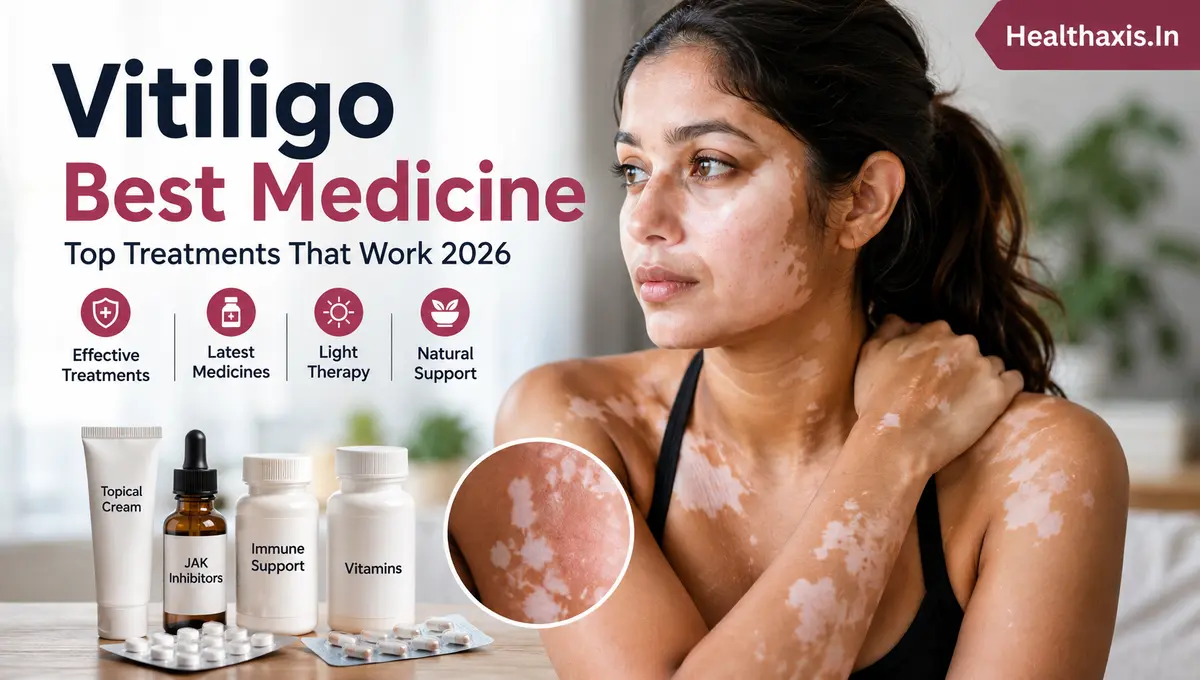
Vitiligo is a long-term skin condition that causes white patches due to loss of pigment-producing cells called melanocytes. Many people searching for vitiligo best medicine want to know which treatment works fastest, which options are safest, and whether complete repigmentation is possible.
In 2026, treatment for vitiligo has improved significantly with newer medicines, targeted therapies, and combination treatment approaches. However, the best treatment depends on factors such as age, severity, affected body area, and how active the condition is. Early medical care often improves treatment response and helps slow the spread of depigmentation.
Key Highlights / Quick Facts
- Vitiligo is an autoimmune skin disorder that causes white patches on the skin.
- There is no single permanent cure, but many treatments can help restore skin color.
- Topical steroids and calcineurin inhibitors are commonly prescribed for mild vitiligo.
- JAK inhibitors are among the latest treatment options for selected patients.
- Phototherapy is often effective for widespread or progressive vitiligo.
- Combination treatment may improve repigmentation results.
- Stress management and sun protection can support treatment outcomes.
- Some medicines may take several months to show visible improvement.
- Self-medication can increase the risk of side effects and skin damage.
- A dermatologist should guide treatment decisions for safe and effective care.
What Is the Best Medicine for Vitiligo in 2026?
There is no single vitiligo best medicine that works for every patient. Dermatologists usually recommend treatment based on the type, location, and progression of the disease.
Commonly used vitiligo medicines include:
- Topical corticosteroids
- Calcineurin inhibitors such as tacrolimus
- JAK inhibitors in selected cases
- Oral anti-inflammatory medicines
- Phototherapy-based treatment
- Combination therapies
For small and recent patches, creams and ointments may work well. For extensive vitiligo, light therapy combined with medicines often provides better results.
How Doctors Choose the Right Vitiligo Treatment
Doctors evaluate several factors before deciding the most suitable vitiligo best medicine for a patient.
These include:
- Size and number of patches
- Age of the patient
- Duration of vitiligo
- Whether the condition is stable or spreading
- Body areas affected
- Previous treatment response
- Presence of autoimmune diseases
For example, facial vitiligo usually responds better to treatment than patches on hands and feet. Children may also require milder and safer treatment plans.
Topical Steroids for Vitiligo: Benefits, Risks, and Results
Topical corticosteroids are among the most commonly prescribed medicines for vitiligo. They help reduce immune activity attacking melanocytes and may support repigmentation.
Benefits may include:
- Slowing the spread of vitiligo
- Partial restoration of skin color
- Better results in early-stage disease
Doctors usually prescribe them for limited periods because long-term use can cause side effects such as:
- Skin thinning
- Stretch marks
- Acne-like eruptions
- Burning or irritation
These medicines should always be used under medical supervision, especially in children and on sensitive areas like the face.
Calcineurin Inhibitors and Other Non-Steroid Creams for Vitiligo
Calcineurin inhibitors such as tacrolimus and pimecrolimus are non-steroid creams often used for facial vitiligo and sensitive skin areas.
These medicines may be preferred because they:
- Avoid steroid-related skin thinning
- Are suitable for long-term use in some patients
- Work well for small facial patches
Doctors may also combine these creams with phototherapy for improved outcomes. Mild burning or itching can occur during the initial weeks of treatment.
JAK Inhibitors for Vitiligo: Latest Advances and Availability in India
JAK inhibitors are newer medicines that target immune pathways involved in vitiligo. In recent years, they have gained attention as advanced treatment options for selected patients.
Some JAK inhibitors are available as topical creams, while others are oral medicines. Dermatologists may recommend them in cases where traditional therapies have not worked well.
Important points about JAK inhibitors include:
- They may help restore pigmentation in some patients
- Results often improve when combined with light therapy
- Treatment response varies from person to person
- Long-term safety monitoring may be required
Availability and cost can differ across India, and not every patient is a suitable candidate for these medicines.
Oral Medicines Used to Control Vitiligo Progression
Oral medicines are sometimes used when vitiligo is rapidly spreading or affecting large body areas.
Doctors may prescribe:
- Short-term oral corticosteroids
- Immunomodulatory medicines in selected cases
- Antioxidant supplements alongside treatment
These medicines aim to reduce disease activity and prevent new patches from developing. Because oral medicines can have systemic side effects, they are usually prescribed for carefully monitored periods.
Patients should never start oral steroid treatment without a dermatologist’s guidance.
Light Therapy and Phototherapy Treatments for Vitiligo
Phototherapy is one of the most effective treatment methods for widespread vitiligo. Narrowband UVB therapy is commonly used in India and is considered a standard option for many patients.
Benefits of phototherapy may include:
- Improved repigmentation
- Better treatment response on the face and neck
- Slowing disease progression
Treatment usually requires multiple sessions over several months. Consistency is important because repigmentation often occurs gradually.
Excimer laser therapy may also be used for localized vitiligo patches.
Combination Treatments That May Improve Repigmentation Results
Many dermatologists combine therapies to improve treatment response. Combination approaches often provide better outcomes than using a single medicine alone.
Examples include:
- Steroid creams with phototherapy
- Tacrolimus with narrowband UVB
- JAK inhibitors with light therapy
Combination treatment may help:
- Stimulate faster pigmentation
- Reduce inflammation
- Improve stability of results
However, treatment plans must be individualized to reduce the risk of side effects.
Natural and Supportive Remedies Alongside Vitiligo Medicines
Natural remedies cannot replace medically approved vitiligo treatment, but supportive lifestyle habits may help overall skin health.
Helpful supportive measures include:
- Using sunscreen daily
- Managing emotional stress
- Eating a balanced diet rich in antioxidants
- Avoiding skin injury and friction
- Following treatment regularly
Some people try herbal or alternative therapies, but scientific evidence remains limited for many of these approaches. Patients should discuss supplements or alternative remedies with a dermatologist to avoid harmful interactions.
How Long Vitiligo Medicines Take to Show Results
Vitiligo treatment usually takes time. Most medicines do not produce immediate results, and visible repigmentation may require several weeks or months.
Treatment response depends on:
- Location of patches
- Severity of vitiligo
- Age of the patient
- Consistency of treatment
Facial patches often respond faster than areas like fingers or feet. Many patients require long-term follow-up to maintain results and monitor recurrence.
Side Effects and Safety Tips Before Starting Vitiligo Treatment
Every vitiligo best medicine has potential risks and benefits. Understanding side effects helps patients use treatment more safely.
Important safety tips include:
- Avoid self-medication
- Follow prescription instructions carefully
- Attend regular dermatologist follow-ups
- Report burning, redness, or worsening symptoms
- Use sunscreen during treatment
Possible side effects can include skin irritation, thinning, acne, increased sensitivity, or pigment changes, depending on the medicine used.
When to See a Dermatologist for Advanced Vitiligo Treatment Options
A dermatologist should evaluate vitiligo if:
- White patches are rapidly increasing
- Home treatment is not helping
- The condition affects the face or large body areas
- Emotional distress is significant
- Side effects develop during treatment
Advanced therapies such as phototherapy, laser treatment, or JAK inhibitors require professional supervision. Early treatment may improve the chances of stabilizing the condition and restoring pigmentation.
FAQs
Can vitiligo be cured permanently?
There is currently no guaranteed permanent cure for vitiligo. However, many treatments can help restore skin color and slow disease progression.
Which cream is commonly used for vitiligo?
Doctors commonly prescribe topical steroids or tacrolimus-based creams depending on the patient’s age, skin area, and severity of vitiligo.
Is phototherapy safe for vitiligo?
Phototherapy is generally considered safe when performed under medical supervision. Dermatologists monitor treatment to reduce the risk of burns or excessive UV exposure.
Are JAK inhibitors available in India for vitiligo?
Some JAK inhibitor treatments are available in India, but their use depends on medical evaluation, availability, and suitability for the patient.
Can stress worsen vitiligo?
Stress may contribute to flare-ups or worsening in some people with vitiligo. Stress management can support overall treatment and emotional well-being.
Should I use home remedies alone for vitiligo?
Home remedies should not replace medical treatment. A dermatologist can recommend evidence-based therapies and guide safe supportive care.
Conclusion
Finding the vitiligo best medicine depends on the individual patient and the stage of the disease. Modern treatments in 2026 include topical medicines, phototherapy, oral therapies, and newer options such as JAK inhibitors. Early diagnosis and dermatologist-guided treatment can improve the chances of repigmentation and help control disease progression safely.
People with vitiligo should avoid self-treatment and seek professional advice for a personalized treatment plan that balances effectiveness and safety.
Read More: Vitiligo Cure in India: Top 2026 Treatment Results

1 Comment
Pingback: Best Cream For Vitiligo In India (2026 Doctor Picks) | Healthaxis.In