

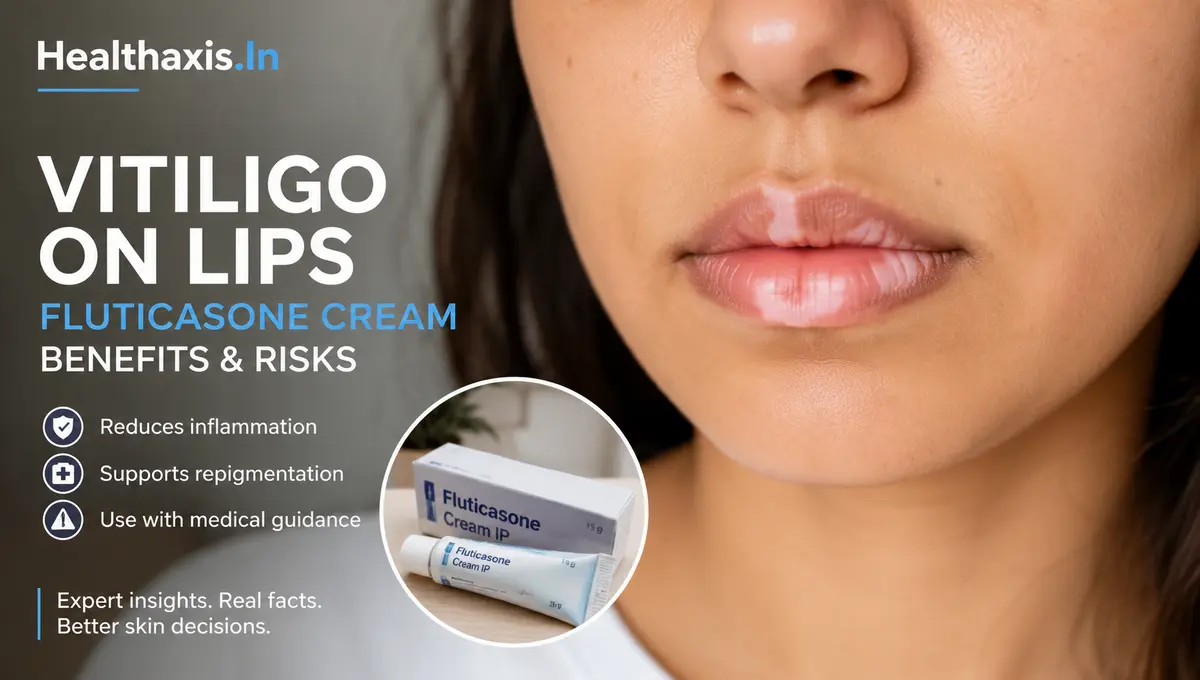
Vitiligo on lips can be difficult to manage because the skin around the mouth is thin, sensitive, and constantly exposed to saliva, sunlight, and irritation. Fluticasone cream is sometimes prescribed by dermatologists to reduce inflammation linked with vitiligo and support repigmentation in selected cases.
However, fluticasone cream is a steroid medicine and should only be used carefully under medical guidance. Understanding its benefits, risks, proper application, and limitations is important before using it on delicate lip skin.
Key Highlights / Quick Facts
- Vitiligo on lips causes white or light-colored patches due to loss of pigment cells.
- Lip vitiligo may spread slowly or remain stable for years.
- Fluticasone cream is a topical corticosteroid used to reduce immune-related skin inflammation.
- Some patients may notice partial repigmentation with regular medical treatment.
- Long-term steroid use on the lips can cause skin thinning and irritation.
- Applying too much cream does not improve results faster.
- Sun protection may help prevent worsening of vitiligo patches.
- Children, pregnant women, and people with infections need extra caution.
- Dermatologists may combine steroid creams with phototherapy or calcineurin inhibitors.
- Persistent or rapidly spreading vitiligo should always be evaluated by a skin specialist.
What Is Vitiligo on Lips and Why Does It Need Special Care
Vitiligo on lips is a form of Vitiligo that affects the pigment-producing melanocyte cells around or on the lips. This leads to pale, white, or depigmented patches that may become more noticeable over time.
The lips require special care because the skin is thinner and more sensitive than many other body areas. Frequent exposure to food, saliva, heat, cold weather, and sunlight can irritate the affected area and sometimes worsen discoloration.
Lip vitiligo may also affect confidence and emotional well-being, especially when patches become clearly visible.
How Fluticasone Cream Works for Lip Vitiligo
Fluticasone cream belongs to a group of medicines called corticosteroids. These medicines help reduce inflammation and immune activity in the skin.
Vitiligo is considered an autoimmune condition in many cases. The immune system may mistakenly attack melanocytes, which produce melanin pigment. Fluticasone cream may help slow this immune reaction and create a better environment for pigment cells to recover.
Doctors usually prescribe topical steroids for limited periods because long-term use on delicate skin can increase side effects.
Can Fluticasone Cream Help Restore Lip Pigmentation?
Fluticasone cream may help restore some pigmentation in selected patients with vitiligo on lips, particularly in early or active disease. Results vary from person to person, and complete repigmentation is not guaranteed.
Some people notice:
- Small brown pigment spots returning within white patches
- Slowing of patch enlargement
- Better response when treatment starts early
However, lip vitiligo can be stubborn. Certain areas around the mouth may respond more slowly compared to other body parts.
Dermatologists may combine fluticasone with:
- Light therapy
- Tacrolimus ointment
- Nutritional support if deficiencies exist
- Sun protection measures
Benefits of Using Fluticasone Cream on Vitiligo Patches on Lips
When used correctly under medical supervision, fluticasone cream may offer several benefits for vitiligo on lips.
Possible benefits include:
- Reduction of skin inflammation
- Slowing progression of depigmented patches
- Support for partial repigmentation
- Convenient home-based treatment
- Lower irritation compared with some stronger steroids
Fluticasone is often considered a medium-potency steroid, which may make it safer than very strong corticosteroids for sensitive facial areas when used properly.
Risks and Side Effects of Fluticasone Cream on Sensitive Lip Skin
The lips are highly sensitive, so steroid creams must be used carefully. Overuse or unsupervised use can damage the skin barrier.
Possible side effects include:
- Burning or stinging sensation
- Dryness and irritation
- Thinning of lip skin
- Increased sensitivity
- Small visible blood vessels
- Darkening or lightening of the surrounding skin
- Fungal or bacterial infection risk with prolonged use
Using steroid creams continuously for many weeks without monitoring can increase complications. This is why dermatologists usually recommend short treatment cycles and follow-up visits.
How to Apply Fluticasone Cream Safely on the Lips
Correct application reduces the chance of side effects and improves treatment safety.
General safety tips:
- Wash your hands before and after application.
- Apply a very thin layer only on affected areas.
- Avoid licking the lips immediately after use.
- Do not apply more frequently than prescribed.
- Avoid sharing steroid creams with others.
- Use sunscreen or lip protection when outdoors.
Most dermatologists advise against self-medicating with steroid creams purchased without proper evaluation.
Who Should Avoid Fluticasone Cream for Vitiligo on Lips
Fluticasone cream may not be suitable for everyone with vitiligo on lips.
People who may require caution include:
- Individuals with active lip infections
- Patients allergic to corticosteroids
- Young children without medical supervision
- People with severe skin thinning
- Pregnant or breastfeeding women unless prescribed
- Patients already using multiple steroid products
A dermatologist may choose safer alternatives if the risk of steroid-related side effects is high.
How Long Does Fluticasone Cream Take to Show Results in Lip Vitiligo?
Treatment response is usually gradual. Some people may notice early pigment changes within several weeks, while others may require a few months of monitored treatment.
Factors affecting results include:
- Duration of vitiligo
- Patch size and location
- Age
- Consistency of treatment
- Overall skin health
- Combination therapies used
Stopping treatment too early or applying excessive amounts can both reduce effectiveness.
Fluticasone Cream vs Other Treatments for Vitiligo on Lips
Fluticasone cream is only one treatment option for vitiligo on lips. Dermatologists choose therapy based on severity, skin sensitivity, and patient age.
Other commonly used treatments include:
Calcineurin inhibitors
Medicines like tacrolimus may be preferred for sensitive facial areas because they do not cause skin thinning like steroids.
Phototherapy
Targeted ultraviolet light treatment may help stimulate pigment production in some patients.
Cosmetic camouflage
Lip-colored cosmetic products may help improve appearance temporarily.
Surgical procedures
Selected stable vitiligo cases may benefit from pigment grafting procedures under specialist care.
No single treatment works for everyone, and many patients require combination therapy.
Common Mistakes That Can Worsen Vitiligo on Lips During Treatment
Certain habits may irritate lip skin and interfere with recovery.
Common mistakes include:
- Using steroid cream for too long without supervision
- Applying thick layers repeatedly
- Scrubbing or peeling lip skin
- Smoking or tobacco use
- Ignoring lip dryness
- Excessive sun exposure
- Frequently changing medications without medical advice
Stress management and overall skin care may also support long-term skin health.
When to See a Dermatologist for Vitiligo on Lips
Medical evaluation is important if:
- White patches spread rapidly
- Lips become painful or cracked
- Home treatment is not helping
- Side effects develop after steroid use
- Vitiligo affects confidence or daily life
- Similar patches appear elsewhere on the body
A dermatologist can confirm whether the condition is vitiligo or another lip pigmentation disorder and recommend appropriate treatment.
FAQs About Fluticasone Cream for Vitiligo on Lips
Can fluticasone cream cure vitiligo on lips?
No. Fluticasone cream may help control inflammation and support repigmentation, but it does not permanently cure vitiligo.
Is fluticasone cream safe for long-term use on lips?
Long-term use is generally not recommended without medical supervision because steroid creams can thin sensitive lip skin.
Can I buy fluticasone cream without a prescription?
Self-medication is not advisable. A dermatologist should confirm the diagnosis and treatment plan before steroid use.
Does sunlight worsen vitiligo on lips?
Excessive sunlight may increase contrast between normal and depigmented skin and can irritate sensitive lip areas.
Are there non-steroid treatments for lip vitiligo?
Yes. Doctors may prescribe tacrolimus ointment, phototherapy, or combination therapies depending on the condition.
Can vitiligo on lips spread to other body parts?
In some people, vitiligo may remain localized, while in others it can spread gradually over time.
Conclusion
Vitiligo on lips can be emotionally distressing and medically challenging because of the sensitive nature of lip skin. Fluticasone cream may help reduce inflammation and support partial pigment recovery in some patients, but it should be used carefully and only under dermatological guidance.
Because steroid creams carry risks such as skin thinning and irritation, professional monitoring is important. Early treatment, gentle lip care, sun protection, and regular follow-up with a dermatologist can help improve treatment outcomes safely.
Read More: Hair Vitiligo: 2026 Latest Treatments for White Hair Patches

1 Comment
Pingback: Vitiligo Cure In India: Top 2026 Treatment Results | Healthaxis.In