

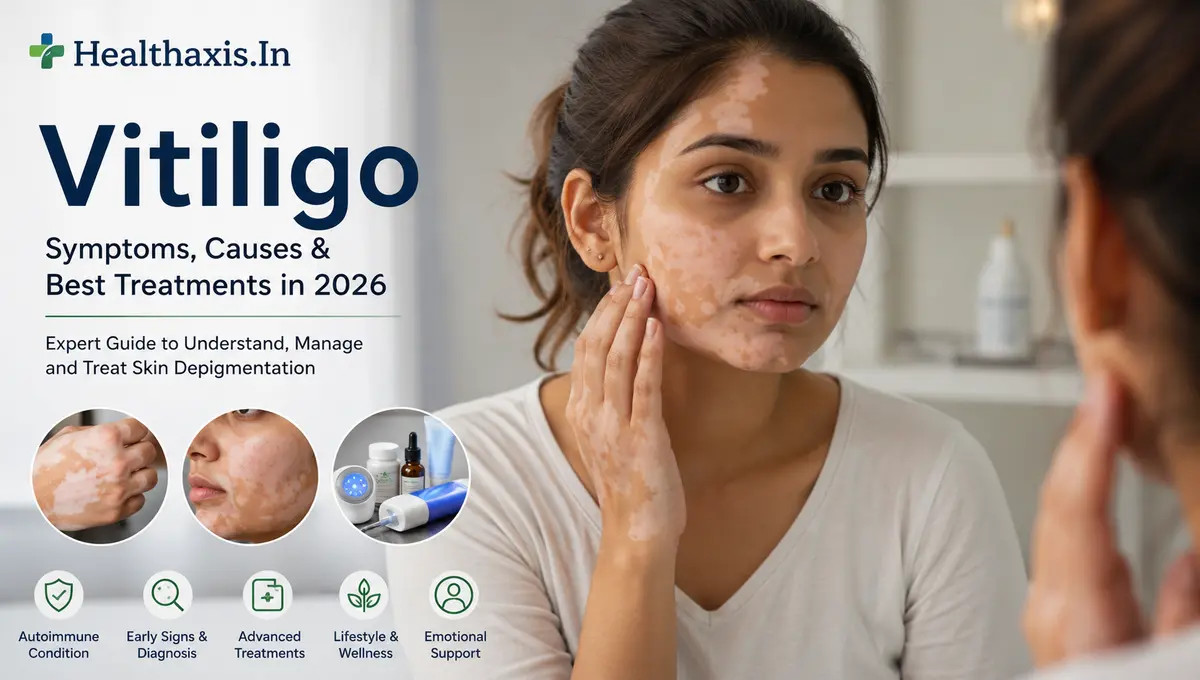
Vitiligo is a long-term skin condition characterized by the loss of pigment, resulting in distinct white patches on various parts of the body. This happens when melanocytes, the skin cells responsible for producing color, stop functioning or are destroyed. While vitiligo is not contagious or medically dangerous, the sudden change in appearance can deeply affect a person’s emotional well-being. Understanding the early signs, root causes, and the latest treatment options available in India can help individuals manage the condition effectively and regain their confidence.
Key Highlights / Quick Facts
- Primary symptom: Painless white patches on the skin, often starting on sun-exposed areas like hands, feet, and face.
- Core cause: An autoimmune response where the body mistakenly attacks its own pigment-producing cells.
- Contagiousness: It is entirely non-contagious; you cannot catch it from physical contact.
- Trigger factors: Severe stress, sunburn, or chemical exposure can accelerate pigment loss.
- Age of onset: It can appear at any age, but most people notice the first patches before the age of 30.
- Diagnosis: Dermatologists typically diagnose vitiligo through a physical exam, sometimes aided by a Wood’s lamp to detect early depigmentation.
- 2026 Treatments: Options range from advanced topical creams and targeted phototherapy to newer targeted immune inhibitors.
- Medical guidance: Early consultation with a dermatologist significantly improves the chances of successful repigmentation.
What is Vitiligo: Understanding Skin Depigmentation
Vitiligo is a dermatological condition that causes the skin to lose its natural color or melanin. This depigmentation results in smooth, white patches that can appear anywhere on the body, including the hair and the inside of the mouth. The condition occurs because the cells that produce melanin, known as melanocytes, either die or stop functioning completely.
In India, where skin tones are generally richer, these white patches are often highly visible, which can sometimes lead to social misconceptions. It is crucial to understand that vitiligo is purely a cosmetic skin issue and does not affect the physical health of internal organs. The condition poses no threat to a person’s life expectancy or general physical capabilities.
Early Signs and Symptoms of Vitiligo to Watch For
The most prominent early sign of vitiligo is the sudden appearance of pale or completely white patches on the skin. These patches usually start small and are often first noticed on areas frequently exposed to the sun, such as the hands, feet, arms, and face. Recognizing these signs early is important, as medical intervention is most effective when the patches are newly formed.
Other common symptoms include:
- Premature whitening or graying of the hair on your scalp, eyelashes, eyebrows, or beard.
- Loss of color in the tissues that line the inside of your mouth and nose.
- Changes in the color of the retina, the inner layer of the eyeball.
- Patches that tend to expand over time, often symmetrically on both sides of the body.
The Primary Root Causes Behind Melanin Loss
The exact reason why melanocytes fail remains a subject of ongoing medical research, but the primary cause of vitiligo is widely understood to be an autoimmune disorder. In this scenario, the body’s immune system mistakenly identifies the pigment-producing cells as foreign threats and destroys them. Without these cells, the skin simply cannot generate melanin, leading to the characteristic white patches.
Some researchers also believe that a single stressful event, such as severe emotional distress or a harsh chemical burn, can trigger the initial onset of the condition in susceptible individuals. Furthermore, neurogenic factors, where nerve endings release substances toxic to melanocytes, are also being studied as a contributing cause.
Genetic, Autoimmune, and Environmental Risk Factors
While anyone can develop this condition, certain risk factors significantly increase an individual’s susceptibility to vitiligo. Genetics play a major role, as having a close blood relative with the condition raises your chances of developing it. Understanding these factors helps in both early detection and in managing potential triggers to slow down the progression.
Key risk factors include:
- Family history: A genetic predisposition makes the autoimmune destruction of melanocytes more likely.
- Other autoimmune diseases: Individuals already managing conditions like Hashimoto’s thyroiditis, rheumatoid arthritis, or type 1 diabetes are at a higher risk.
- Environmental triggers: Severe sunburns, exposure to harsh industrial chemicals, and physical skin trauma can initiate pigment loss.
- Chronic stress: Prolonged psychological or physical stress can alter immune function, potentially triggering an autoimmune response.
How Dermatologists Accurately Diagnose Vitiligo
Diagnosing vitiligo is usually a straightforward process for an experienced dermatologist. The doctor will begin by reviewing your medical history, asking about family genetics, recent illnesses, or episodes of severe stress. During the physical examination, the dermatologist will closely inspect the affected skin to confirm the pattern of depigmentation.
Often, they will use a specialized ultraviolet light called a Wood’s lamp. This lamp is shone directly onto the skin in a dark room, causing the affected patches to glow brightly, which helps distinguish it from other fungal or skin conditions. In rare cases, a small skin biopsy or blood test may be recommended to rule out other underlying autoimmune disorders.
Top Medical Treatments and Breakthrough Therapies in 2026
Medical science has made significant strides, and 2026 offers highly effective treatments aimed at restoring skin tone and halting the spread of the patches. The choice of treatment for vitiligo depends heavily on the patient’s age, the extent of the patches, and how rapidly the disease is progressing. Topical corticosteroids and calcineurin inhibitors remain the primary first-line defense to control inflammation and encourage early repigmentation.
Breakthrough therapies in 2026 include:
- Targeted Phototherapy (UVB): Narrowband UVB light therapy is highly effective for widespread patches and is now safer and more precise than ever.
- JAK Inhibitors: Innovative topical creams that block the specific immune pathways responsible for destroying melanocytes, showing excellent results for facial repigmentation.
- Excimer Laser Therapy: A highly focused laser treatment ideal for small, stubborn patches that do not respond to traditional creams.
Advanced Repigmentation Procedures and Surgical Options
When topical creams and light therapies fail to yield results, surgical intervention becomes a viable option for stable cases of vitiligo. These procedures are typically recommended only if the white patches have not changed in size or shape for at least a year. The goal is to transfer healthy, pigment-producing cells from one part of the body to the depigmented areas.
Common surgical options include:
- Skin grafting: A doctor removes small sections of normal, pigmented skin and attaches them to the affected areas.
- Blister grafting: The doctor creates blisters on pigmented skin, removes the tops, and transplants them to the depigmented areas.
- Cellular suspension transplant: Healthy skin tissue is processed in a lab to extract melanocytes, which are then applied to the treated white patches.
Dietary Recommendations and Lifestyle Management Strategies
While there is no medically proven diet that cures vitiligo, healthy lifestyle choices can support overall immune health and skin resilience. A nutrient-rich diet helps reduce systemic inflammation and protects the body against cellular stress. Patients are often advised to consume a balanced diet rich in antioxidants, vitamins, and minerals.
Important lifestyle strategies include:
- Sun protection: Depigmented skin lacks natural protection, making broad-spectrum sunscreen (SPF 30 or higher) strictly essential to prevent severe sunburn.
- Antioxidant-rich foods: Incorporating fresh vegetables, fruits, and omega-3 fatty acids can help combat oxidative stress in the body.
- Avoiding skin trauma: Minimizing cuts, scrapes, and tight clothing is vital, as physical injury can trigger new patches through the Koebner response.
- Vitamin D supplementation: Since sun avoidance is crucial, patients should check their vitamin D levels and take supplements if advised by a doctor.
Coping with the Psychological Impact and Social Stigma
Living with visible skin changes can be emotionally challenging, especially in Indian society where skin appearance often carries deep-seated social pressures. The psychological burden of vitiligo can lead to severe anxiety, depression, and social withdrawal. Acknowledging this emotional toll is just as important as treating the physical symptoms.
Building a strong support system is crucial for mental well-being. Connecting with support groups allows individuals to share experiences and coping strategies with others facing the same journey. Seeking professional counseling or cognitive behavioral therapy can also provide valuable tools for managing anxiety, improving self-esteem, and navigating insensitive social interactions with confidence.
Frequently Asked Questions About Vitiligo Care and Recovery
Can this condition be completely cured?
Currently, there is no permanent, universal cure for vitiligo. However, with modern 2026 medical treatments, many patients achieve significant or even complete repigmentation of the affected areas, especially if treated early.
Is the condition contagious through touch?
No, it is completely non-contagious. It is an internal autoimmune response, and you cannot catch it by touching, sharing food, or living with someone who has the condition.
Are certain foods responsible for causing the white patches?
There is no scientific evidence linking specific foods, such as the myth of combining milk and fish, to the onset of the condition. It is driven by genetics and immune system factors, not by routine dietary choices.
How quickly do the white patches spread?
The rate of spread is highly unpredictable and varies from person to person. For some, the patches remain stable for years, while for others, they can spread rapidly across large areas of the body over a few months.
Can makeup or self-tanners be used safely?
Yes, dermatologically tested camouflage makeup, skin dyes, and self-tanning lotions are safe and highly effective ways to blend the white patches with your natural skin tone. These products are completely safe to use and do not interfere with prescribed medical treatments.
Read More: Thyroid Symptoms You Cannot Ignore: 7 Hidden Signs

1 Comment
Pingback: Early Signs And Symptoms Of Vitiligo (2026 Expert Guide) | Healthaxis.In