

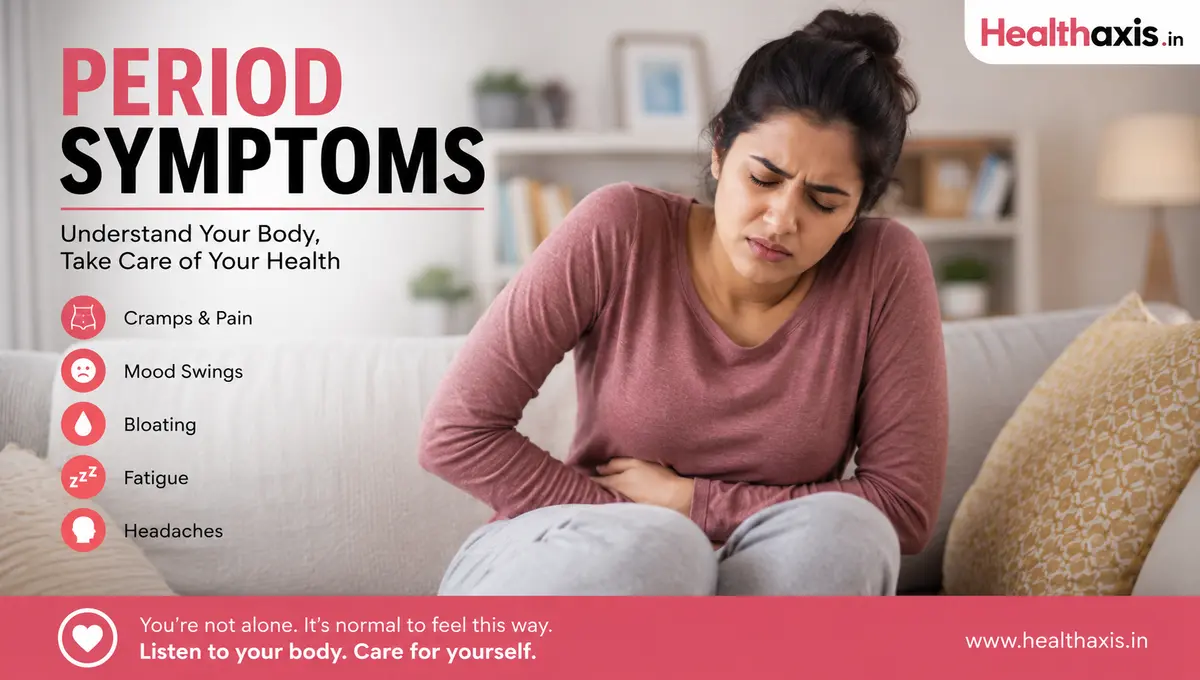
Period symptoms are the physical and emotional changes a woman experiences before and during her menstrual cycle. These changes are primarily driven by fluctuating estrogen and progesterone levels in the body. While mild cramps, bloating, and mood swings are entirely normal, severe pain that disrupts daily life is not. Understanding your period symptoms helps you manage discomfort effectively and identify when medical intervention is necessary. Let us explore the most common signs of menstruation and how to find relief.
Key Highlights / Quick Facts
- Most common signs: Cramps in the lower abdomen, breast tenderness, bloating, and mood swings are the most frequent physical and emotional markers.
- Typical timeline: Premenstrual syndrome (PMS) usually begins 5 to 11 days before menstruation starts.
- Dietary impact: Reducing salt and caffeine intake can significantly reduce water retention and breast pain.
- Home management: Applying a heating pad and drinking herbal teas like ginger or ajwain offer natural pain relief.
- Underlying conditions: Polycystic Ovary Syndrome (PCOS) and thyroid disorders can make menstrual discomfort much worse.
- Doctor consultation: You should see a gynecologist if bleeding lasts longer than seven days or if pain prevents you from performing normal activities.
Understanding Period Symptoms: How the Menstrual Cycle Affects Your Body
Your menstrual cycle is a complex biological process controlled by hormones that prepare your body for a potential pregnancy. When pregnancy does not occur, hormone levels drop, signaling the uterus to shed its lining. This hormonal shift is the primary cause of your period symptoms.
Prostaglandins, which are chemicals that trigger uterine muscle contractions, are released during this time. Higher levels of prostaglandins usually result in more severe menstrual cramps and bodily discomfort. The severity of these changes can vary widely from person to person.
The Timeline: When Do Early Period Symptoms Usually Start?
Early period symptoms typically start one to two weeks before your menstrual bleeding begins. This phase is clinically known as premenstrual syndrome or PMS. As your period gets closer, these signs may intensify, peaking just before or on the first day of bleeding.
Most physical and emotional discomfort will naturally subside within two to three days after your period starts. This relief happens because your hormone levels begin to stabilize as the menstrual flow progresses.
15 Common Period Symptoms You May Experience (Physical and Emotional)
Every woman experiences menstruation differently, but certain physical and emotional markers are widespread. Here is a list of the 15 most common period symptoms you might encounter.
Physical Signs:
- Abdominal cramps (dysmenorrhea)
- Breast swelling and tenderness
- Lower back pain
- Bloating and water retention
- Headaches or migraines
- Fatigue and low energy
- Acne breakouts or oily skin
- Changes in bowel movements (diarrhea or constipation)
- Muscle and joint aches
- Food cravings, particularly for sweets or carbohydrates
Emotional Signs:
- Mood swings
- Irritability or anger
- Unexplained crying spells
- Anxiety or feeling overwhelmed
- Trouble concentrating or sleeping
Mild vs. Severe Discomfort: Decoding What is Normal for Period Symptoms
Normal period symptoms include manageable pain that can be relieved with rest, a hot water bag, or standard over-the-counter pain relievers. You should still be able to attend school, work, and perform daily tasks without major interruption.
Severe discomfort, however, is not a normal part of the menstrual cycle. If your pain causes vomiting, fainting, or forces you to stay in bed, it could indicate an underlying medical issue. Conditions like endometriosis or uterine fibroids require a proper medical diagnosis and targeted treatment.
Period Symptoms vs. Early Pregnancy Signs: How to Spot the Difference
It is easy to confuse period symptoms with early pregnancy because both involve breast tenderness, fatigue, and sudden mood changes. The key difference lies in the specific progression of these signs. While PMS usually improves once bleeding starts, pregnancy signs persist and often include nausea (morning sickness) and darkening of the areolas.
If your period is late and you experience light spotting instead of a regular flow, it could be implantation bleeding. Taking a home pregnancy test is the most reliable way to know for sure.
Why Do Menstrual Symptoms Fluctuate or Change Over Time?
Your period symptoms will not always remain exactly the same throughout your entire life. Hormonal fluctuations caused by aging, pregnancy, childbirth, and breastfeeding can permanently alter your menstrual experience.
Lifestyle factors such as sudden weight gain or loss, high stress levels, and changes in your exercise routine also heavily influence cycle regularity and pain levels. Furthermore, entering perimenopause in your late 30s or 40s will cause additional shifts in how you experience menstruation.
The Role of Diet: Everyday Indian Foods That Ease or Trigger PMS
Diet plays a crucial role in managing the severity of your period symptoms. Eating traditional Indian foods rich in iron and magnesium, such as spinach (palak), lentils (dal), and pumpkin seeds, can reduce fatigue and cramping. Staying hydrated with coconut water or buttermilk (chaas) helps combat uncomfortable bloating.
Conversely, you should try to avoid highly processed snacks, excessive salt, and sugary sweets during your cycle. Reducing your intake of caffeine, including strong chai and coffee, can also prevent spikes in anxiety and breast tenderness.
Proven Home Remedies to Relieve Period Symptoms Naturally
Many Indian households rely on highly effective, natural methods to soothe menstrual discomfort. Applying a heating pad or a hot water bottle to your lower abdomen increases blood flow and relaxes the cramping uterine muscles.
Drinking warm ginger tea or carom seeds (ajwain) boiled in water is excellent for reducing inflammation and easing digestive issues. Gentle exercises, such as a light walk or restorative yoga poses like the child’s pose, can also release endorphins that act as natural painkillers.
How Conditions Like PCOS or Thyroid Can Worsen Your Menstruation
Underlying hormonal imbalances can drastically increase the severity of your period symptoms. Polycystic Ovary Syndrome (PCOS) often leads to irregular cycles, heavy bleeding, and intense pelvic pain due to excess androgen levels.
Similarly, thyroid disorders, whether hypothyroidism or hyperthyroidism, disrupt the delicate hormonal balance required for a normal and predictable menstrual cycle. If you have intense symptoms accompanied by sudden weight changes or excessive facial hair growth, a doctor should evaluate you for these conditions.
Tracking Your Cycle: The Best Ways to Monitor Your Menstrual Health at Home
Maintaining a menstrual calendar is one of the easiest ways to understand your unique period symptoms over time. You can use a dedicated smartphone app or a simple diary to log the first and last day of your bleeding.
Make sure to actively record the daily severity of your cramps, your mood changes, and the heaviness of your flow. This tracking helps you predict when your next cycle will start and provides highly valuable data for your gynecologist if problems arise.
Red Flags and Warning Signs: When to Consult a Gynecologist for Abnormal Period Symptoms
While some discomfort is expected, certain red flags require immediate medical attention from a qualified healthcare provider. You should consult a gynecologist if you soak through a sanitary pad or tampon every hour for several consecutive hours.
Passing blood clots larger than a coin or experiencing bleeding that lasts longer than seven days are also serious warning signs. Additionally, seek medical help if your period symptoms suddenly become much worse than usual or if your periods stop entirely for more than three months.
Frequently Asked Questions (FAQs)
How many days do period symptoms last?
Early signs usually begin 5 to 11 days before bleeding starts. Most physical and emotional discomfort resolves naturally within the first two to three days of the menstrual period.
Can stress delay my period or make cramps worse?
Yes, high levels of psychological or physical stress can interfere with the part of your brain that controls hormone regulation. This can lead to delayed cycles, missed periods, or significantly more severe cramping.
Are headaches a normal part of menstruation?
Hormonal headaches or migraines are very common period symptoms. They are typically triggered by the sudden drop in estrogen and progesterone levels right before your cycle begins.
What is the best sleeping position for period pain?
Sleeping in the fetal position, on your side with your knees tucked toward your chest, takes pressure off your abdominal muscles. This posture can significantly reduce uterine cramping and lower back pain.
Is it safe to exercise during my period?
Yes, light to moderate exercise like walking, swimming, or gentle yoga is highly recommended. Physical activity releases endorphins, which help naturally alleviate pain and improve your overall mood.

1 Comment
Pingback: Period Blood Black: Common Causes & When To Worry | Healthaxis.In