

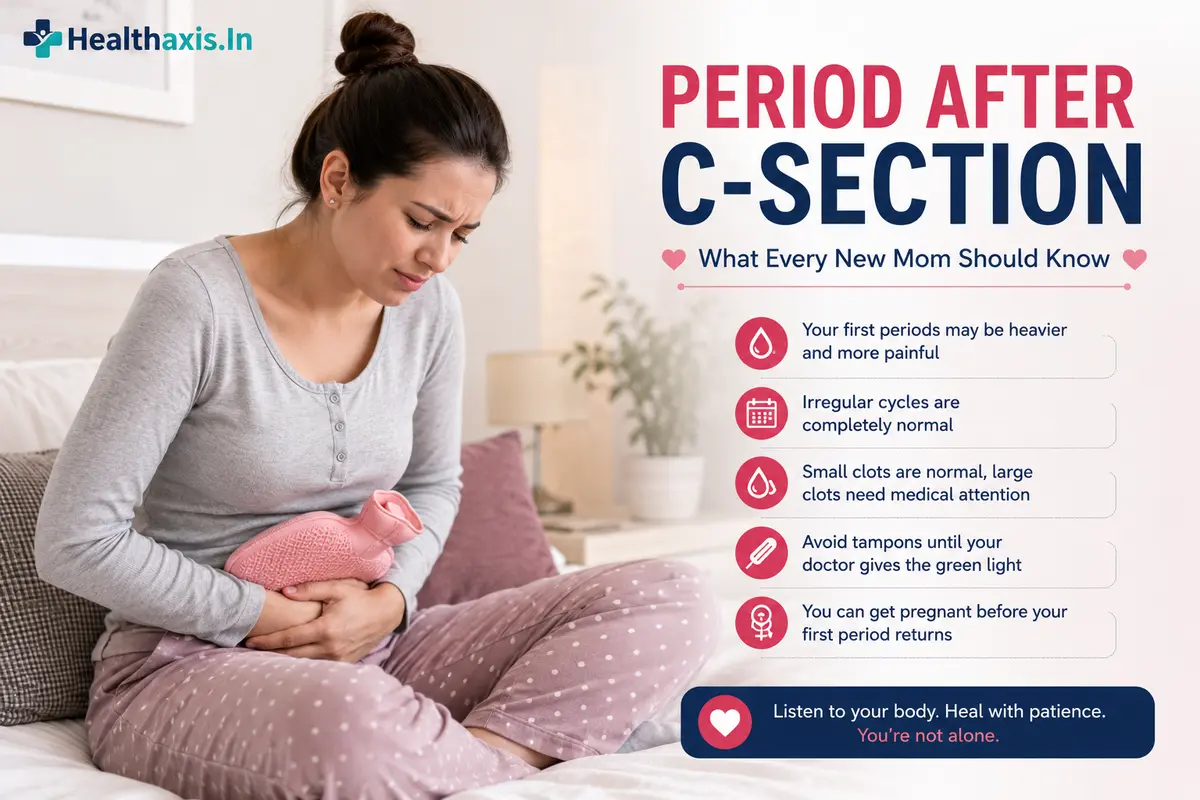
Navigating your postpartum recovery can be confusing, especially when anticipating your first period after C-section. Your menstrual cycle typically returns anywhere from six weeks to a year after surgery, depending heavily on whether you are exclusively breastfeeding. Understanding what is normal and what requires medical attention is crucial for your healing journey. This guide explains the timeline, flow changes, and physical symptoms you can expect as your hormones stabilize.
Key Highlights / Quick Facts
- Initial Bleeding: The bleeding immediately after surgery is called lochia, which is a mix of tissue and blood, not your menstrual cycle.
- Formula Feeding Timeline: Non-breastfeeding mothers usually see their cycle return within six to eight weeks postpartum.
- Breastfeeding Impact: Exclusive breastfeeding significantly delays menstruation due to the milk-producing hormone prolactin.
- Symptom Changes: Your first few cycles may be heavier, longer, and more painful than they were before pregnancy.
- Irregularity is Normal: Irregular cycles and skipped months are very common during the first year after giving birth.
- Blood Clots: Passing small, coin-sized blood clots is normal, but passing clots larger than a golf ball requires immediate medical care.
- Hygiene Precautions: Avoid using tampons or menstrual cups until your gynaecologist clears you, typically after six weeks.
- Fertility Warning: Ovulation happens before your first bleed, making early contraception essential to prevent unintended pregnancy.
Lochia vs. Menstruation: Decoding Your Initial Bleeding After a Cesarean
The bleeding you experience immediately after delivery is lochia, not your true period after c-section. Lochia consists of shed uterine tissue, mucus, and blood, typically lasting up to six weeks. It starts dark red and heavy, gradually transitioning over weeks to a watery pink or yellowish-white discharge. A genuine menstrual cycle will typically feature bright red blood and follow a distinct cycle of a few days.
The Recovery Timeline: When Will Your First Period After C-Section Start?
Your menstrual cycle will usually return between six to eight weeks postpartum if you are strictly formula-feeding. Hormonal stabilization determines this timeline, allowing your body to safely resume its normal reproductive functions. If you are combining breastfeeding and formula, your cycle might take a few months to return.
The Breastfeeding Factor: How Lactation Influences Your Postpartum Menstrual Cycle
Breastfeeding is the primary factor that delays your period after c-section. Milk production relies heavily on a hormone called prolactin, which naturally suppresses ovulation and menstruation. Mothers who exclusively breastfeed day and night might not experience a menstrual cycle for six months to a year. Once you introduce solid foods or reduce feeding frequency, your cycle will likely resume.
Flow and Pain Changes: What to Expect During Your First Period After a C-Section
Expect your first cycle to be noticeably different, often presenting with a heavier flow and stronger cramping. Your uterine lining has shed and rebuilt itself entirely, and surgical recovery adds to the physical sensitivity. Many women experience intense cramping because the uterus contracts over the fresh surgical scar. These symptoms usually improve after the first few cycles as your body heals.
Irregular Cycles: Why Your Menstrual Schedule Might Shift Post-Surgery
It is completely normal to experience irregular cycles during the first year after a cesarean delivery. Hormonal fluctuations, stress, sleep deprivation, and weight changes significantly impact your menstrual regularity. You might skip a month entirely or experience shorter gaps between cycles. Your body simply needs time to establish a predictable reproductive rhythm again.
Passing Blood Clots: Identifying Normal Menstruation vs. Postpartum Complications
Passing small blood clots during your period after a C-section is generally normal, especially on heavy flow days. Small, coin-sized clots are expected as your body actively sheds the thickened uterine lining. However, you must seek emergency medical attention if you pass clots larger than a golf ball or soak through a pad every hour.
Managing Abdominal Cramps and Incision Pain During Your Period
Managing pain requires a gentle approach since uterine cramps can easily irritate your healing cesarean incision. A warm heating pad placed lightly on your lower back or carefully above your incision can provide immediate, soothing relief. Your doctor may also recommend safe over-the-counter pain relievers to manage inflammation and discomfort. Avoid lifting heavy objects during this time to prevent extra strain on your recovering abdominal muscles.
Menstrual Hygiene Guide: Are Tampons and Menstrual Cups Safe to Use Yet?
You should exclusively use sanitary pads for your first period after c-section to reduce the risk of infection. Inserting tampons or menstrual cups is generally unsafe until your cervix has fully closed and your doctor gives approval. Most gynaecologists will assess your internal healing during your six-week postpartum checkup before clearing these products. Always prioritize hygiene by changing pads frequently throughout the day.
Dealing with Postpartum PMS and Hormonal Mood Swings
Premenstrual syndrome (PMS) can feel more intense after pregnancy due to significant hormonal shifts and ongoing postpartum fatigue. You might experience heightened irritability, mood swings, fatigue, and severe breast tenderness before your cycle begins. Prioritizing rest, eating balanced meals, and staying hydrated can help manage these physical and emotional symptoms. If mood swings feel overwhelming or lead to depression, consult your healthcare provider for support.
Fertility Facts: Navigating Birth Control Before Your Cycle Fully Returns
You can become pregnant before experiencing your first period after c-section. Ovulation occurs roughly two weeks before your menstrual bleeding starts, making early contraceptive planning absolutely vital. Do not rely solely on breastfeeding as a reliable form of birth control. Discuss safe postpartum contraceptive options, such as progesterone-only pills or an IUD, with your gynaecologist soon after delivery.
Medical Red Flags: When to Consult a Gynaecologist About Your Period After C-Section
While changes are normal, certain warning signs require immediate medical evaluation from your gynaecologist. Heavy bleeding that soaks multiple thick pads in a single hour indicates a serious potential complication. You should also consult a doctor if you experience foul-smelling discharge, a sudden fever, or severe abdominal pain. Furthermore, seek medical advice if your cycle has not returned within three months of completely stopping breastfeeding.
Frequently Asked Questions (FAQs)– ( Period After C-Section )
Does a C-section make your periods heavier forever?
No, a C-section does not permanently change your menstrual flow. While the first few cycles may be heavier due to hormonal resetting and a thickened uterine lining, your flow usually returns to its pre-pregnancy state within a few months.
Why does my c-section scar hurt during my period?
During menstruation, your uterus contracts to shed its lining. These natural contractions occur very close to your internal and external surgical incisions, which can cause referred pain or a pulling sensation around the scar tissue.
Is it normal to skip a month after my first postpartum cycle?
Yes, it is highly common to experience irregular cycles or skip a month early in your postpartum recovery. Fluctuating hormones, especially if you are breastfeeding or experiencing disrupted sleep, can temporarily interrupt your ovulation.
When can I safely start using tampons again?
You should wait until your six-week postpartum checkup before using tampons or menstrual cups. Your doctor must confirm that your cervix is completely closed and that your risk of internal infection has passed.
Can my period affect my breast milk supply?
Yes, the hormonal shifts that trigger your period can temporarily decrease your milk supply or slightly change the taste of the milk. This is completely normal and usually resolves within a few days once your period officially starts.
Read More: Periods Mood Swings: Why They Happen and How to Cope

1 Comment
Pingback: Periods Two Times In A Month? 5 Warning Signs You Shouldn't Ignore | Healthaxis.In