


Thyroid disorder symptoms in women often present as unexplained fatigue, weight changes, mood swings, and irregular menstrual cycles. Because the thyroid gland regulates the body’s metabolism and energy levels, any dysfunction can severely impact your daily life. Recognizing these thyroid disorder symptoms early is crucial for getting the right diagnosis and treatment. In India, many women dismiss these signs as simple stress or aging. This guide explains the key indicators of both underactive and overactive thyroid conditions to help you take charge of your health.
Key Highlights / Quick Facts
- Women are significantly more likely to develop thyroid problems than men, often after pregnancy or during menopause.
- Hypothyroidism (underactive thyroid) typically causes weight gain, extreme fatigue, and feeling unusually cold.
- Hyperthyroidism (overactive thyroid) usually leads to unexpected weight loss, rapid heartbeat, and persistent anxiety.
- Irregular, heavy, or missed menstrual periods are strong indicators of underlying thyroid issues.
- Autoimmune diseases, such as Hashimoto’s thyroiditis and Graves’ disease, are the most common causes.
- Diagnosis requires simple blood tests checking TSH, T3, and T4 hormone levels.
- Treatments generally involve daily oral medications to balance hormone production.
- Untreated thyroid conditions can lead to complications with fertility, heart health, and mental well-being.
- Regular monitoring through blood tests every six to twelve months is essential for managing the condition.
Understanding the Thyroid Gland and Its Impact on Women
The thyroid is a small, butterfly-shaped gland located at the base of your neck that controls how your body uses energy. It produces critical hormones that regulate your heart rate, body temperature, and overall metabolism.
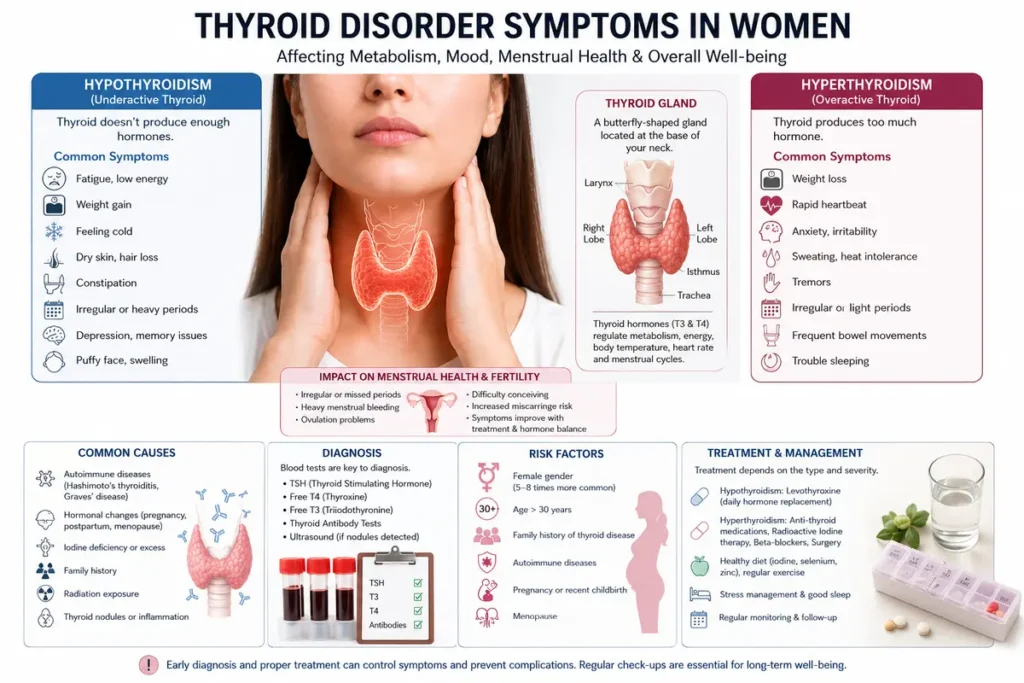
When this gland produces too much or too little hormone, it disrupts your entire physical system. Women face a much higher risk of developing thyroid problems compared to men due to hormonal fluctuations throughout their lives.
These hormonal imbalances can affect everything from your weight management to your reproductive system. Understanding how this gland functions is the first step in identifying thyroid disorder symptoms accurately.
Recognizing Early Thyroid Disorder Symptoms in Women
Early thyroid disorder symptoms in women often mimic normal signs of daily stress, making them incredibly easy to ignore. You might experience persistent tiredness, difficulty concentrating, or sudden changes in your skin and hair texture.
Many women also notice unexplained muscle aches or joint pain that does not improve with adequate rest. Mood changes, including increased anxiety or sudden depressive episodes, are also common early warning signs.
If you experience these physical and emotional changes consistently, it is important to evaluate your thyroid health. Early detection prevents the condition from worsening and causing long-term complications.
Hypothyroidism: Signs of an Underactive Thyroid Gland
Hypothyroidism occurs when your gland does not produce enough hormones to keep your body functioning at a normal pace. The most common thyroid disorder symptoms for this condition include unexplained weight gain, chronic fatigue, and a heightened sensitivity to cold temperatures.
You may also experience dry skin, thinning hair, and a noticeably slower heart rate. Many women report feeling physically sluggish, experiencing persistent brain fog, or struggling with frequent constipation.
If left untreated, an underactive thyroid can lead to high cholesterol levels and severe heart problems. Recognizing these specific signs helps in seeking timely and effective medical intervention.
Hyperthyroidism: Identifying Symptoms of an Overactive Thyroid
Hyperthyroidism happens when your body produces excessive amounts of thyroid hormones, pushing your metabolism into a dangerous overdrive. Key thyroid disorder symptoms here include rapid weight loss despite eating normally, a fast or irregular heartbeat, and frequent nervousness.
Women with this condition often feel unusually warm, sweat excessively, and experience slight tremors in their hands. You might also notice trouble sleeping through the night and more frequent bowel movements.
An overactive thyroid puts significant strain on your cardiovascular system and your bone health. It requires prompt medical attention to slow down hormone production and protect your long-term well-being.
How Thyroid Issues Affect Menstrual Health and Fertility
Thyroid hormones play a critical role in managing your reproductive system and controlling your menstrual cycle. Imbalances often lead to irregular, unusually heavy, or completely missed menstrual periods.
Women experiencing thyroid disorder symptoms frequently face significant challenges with fertility and conceiving a child. An underactive thyroid can prevent ovulation entirely, while an overactive thyroid can cause highly unpredictable cycles.
Managing your thyroid levels is a crucial step if you are planning a pregnancy now or in the future. Proper medical treatment can restore normal menstrual function and significantly improve your chances of a healthy pregnancy.
Common Causes and Risk Factors Behind Thyroid Diseases
Autoimmune conditions are the primary cause of thyroid problems in women across the globe. Hashimoto’s disease typically causes hypothyroidism, while Graves’ disease is the leading cause of hyperthyroidism.
Other common causes include dietary iodine deficiency, thyroid nodules, or a temporary inflammation known as thyroiditis. Your risk increases substantially if you have a family history of autoimmune diseases or existing thyroid issues.
Women who have recently been pregnant or are actively going through menopause face a higher risk of developing these conditions. Prior radiation therapy to the neck or chest region can also trigger thyroid disorder symptoms later in life.
When to Consult a Doctor About Thyroid Disorder Symptoms
You should consult a doctor immediately if you experience persistent fatigue, unexplained weight changes, or irregular periods that last for several months. Do not ignore severe thyroid disorder symptoms like a rapid heart rate, severe anxiety, or a visible lump forming in your neck.
A healthcare professional can evaluate your complete medical history and determine if your symptoms require further clinical investigation. Prompt consultation is especially critical if you are currently trying to get pregnant.
Delaying a medical visit can lead to unnecessary daily discomfort and much more complex health issues. It is always safer to get a proper medical diagnosis rather than relying on internet research or self-diagnosis.
Diagnosing Thyroid Conditions: Essential Blood Tests and Screenings
Doctors diagnose thyroid issues primarily through simple blood tests that accurately measure your circulating hormone levels. The most common baseline test checks your Thyroid Stimulating Hormone (TSH), which indicates how hard your brain is working to stimulate the gland.
If your TSH levels are abnormal, doctors will also check your Free T4 and Free T3 levels to confirm the exact diagnosis. In some cases, testing for specific thyroid antibodies helps identify underlying autoimmune diseases causing the dysfunction.
If you have a lump or swelling in your neck, your doctor might recommend a thyroid ultrasound. These painless imaging tests help evaluate the size, shape, and structure of your thyroid gland.
Medical Treatments and Daily Management Strategies
Treatment for an underactive thyroid usually involves taking a daily synthetic hormone pill called levothyroxine. This medication restores adequate hormone levels in your blood, effectively reversing your thyroid disorder symptoms over time.
For an overactive thyroid, doctors may prescribe anti-thyroid medications, radioactive iodine therapy, or beta-blockers to control a rapid heart rate. In severe cases or when nodules are cancerous, surgical removal of the gland might be necessary.
Following your prescribed treatment plan consistently is absolutely vital for managing the disease. You should take your medication exactly as directed by your doctor, which is usually on an empty stomach first thing in the morning.
Dietary Guidelines and Lifestyle Adjustments for Thyroid Health
While no specific food can cure thyroid disease, eating balanced meals heavily supports your overall health and energy levels. Ensure you get adequate amounts of iodine, selenium, and zinc through your regular diet or doctor-approved supplements.
Avoid extreme diets and consult your doctor before consuming large amounts of soy products, as they can interfere with daily hormone absorption. Managing psychological stress through yoga, meditation, or regular walking also helps regulate your body’s immune response.
Consistent sleep routines and regular, moderate exercise combat the severe fatigue associated with thyroid disorder symptoms. Small, sustainable daily lifestyle changes make a significant difference in how you feel and function.
Long-Term Care and Monitoring Your Thyroid Levels
Thyroid conditions typically require lifelong management and regular medical supervision to stay healthy. You will need to take routine blood tests every six to twelve months to ensure your medication dosage remains accurate.
Your body’s hormone requirements can change due to natural aging, pregnancy, or significant weight fluctuations. You should never adjust or stop your medication dosage without consulting your healthcare provider first.
By staying proactive with your medical appointments and actively tracking your thyroid disorder symptoms, you can live a completely normal, active life. Consistent monitoring prevents long-term health complications and keeps your metabolism stable for years to come.
FAQs
Can thyroid issues resolve on their own without medication?
In most cases, thyroid conditions do not resolve without proper medical treatment. While postpartum thyroiditis may sometimes improve naturally over several months, autoimmune conditions like Hashimoto’s or Graves’ disease require ongoing, lifelong medical management.
What is considered a normal TSH level for an adult woman?
A normal TSH level generally ranges from 0.4 to 4.0 mIU/L. However, ideal target ranges can vary based on your age, pregnancy status, and the specific laboratory evaluating the blood, so always consult your doctor for your individual targets.
Will taking thyroid medication help me lose weight?
If you have hypothyroidism, starting medication may result in minor weight loss, primarily due to the shedding of accumulated water weight. The medication restores normal metabolism, but it is not intended or prescribed as a weight-loss drug.
Are there specific foods I need to avoid while on thyroid medication?
People taking daily thyroid hormone replacement should avoid consuming large amounts of soy, walnuts, iron supplements, and high-fiber foods at the exact same time as their thyroid hormone replacement. These can interfere with absorption, so always discuss dietary timing with your doctor.
Can emotional stress trigger a thyroid condition?
While everyday stress does not directly cause thyroid disease, severe physical or emotional stress can worsen existing thyroid disorder symptoms or trigger an underlying autoimmune response. Actively managing stress is a highly important part of maintaining overall thyroid health.
Read More: Thyroid Disorder (Hypothyroidism): Symptoms & Treatments

1 Comment
Pingback: Thyroid Hormone (Thyroxine): Essential Guide To T4 & Health | Healthaxis.In