

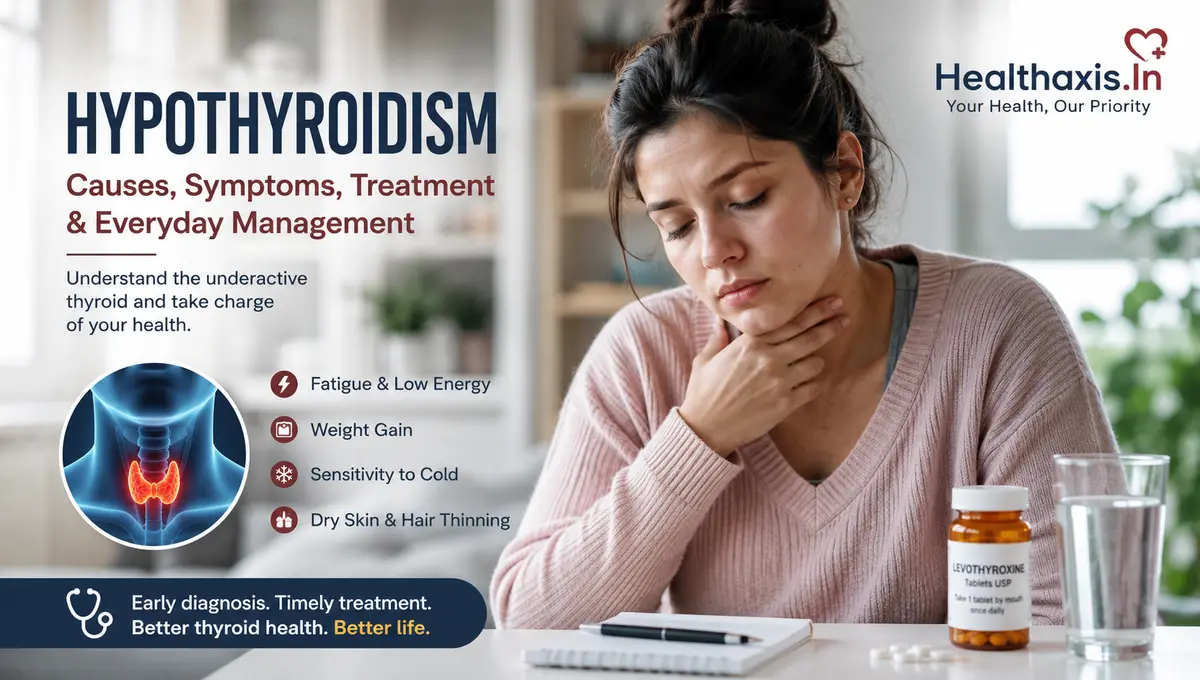
Thyroid Disorder (Hypothyroidism) occurs when the thyroid gland fails to produce enough essential hormones needed to regulate the body’s metabolism. This common condition leads to a slowdown of physical and mental functions, often resulting in unexplained weight gain, chronic fatigue, and sensitivity to cold. Recognizing the symptoms early is crucial for effective management and preventing long-term complications. With timely diagnosis and appropriate medical intervention, most people with an underactive thyroid can manage the condition effectively and maintain a normal, healthy, and active lifestyle.
Key Highlights / Quick Facts
- Hypothyroidism is a medical condition where the thyroid gland is underactive and produces insufficient hormones.
- Common early symptoms include persistent fatigue, unexplained weight gain, and unusually dry skin.
- Hashimoto’s disease, an autoimmune condition, is the most common cause of the disorder globally.
- In certain regions of India, severe dietary iodine deficiency remains a significant contributing factor.
- Women are substantially more likely to develop an underactive thyroid than men.
- Diagnosis relies on straightforward blood tests that measure TSH, T3, and T4 hormone levels.
- Standard treatment involves a daily synthetic thyroid hormone replacement medication.
- Untreated conditions can lead to severe health complications like heart disease and neuropathy.
- Proper management requires continuous medical supervision, especially before and during pregnancy.
Understanding Thyroid Disorder: What is Hypothyroidism?
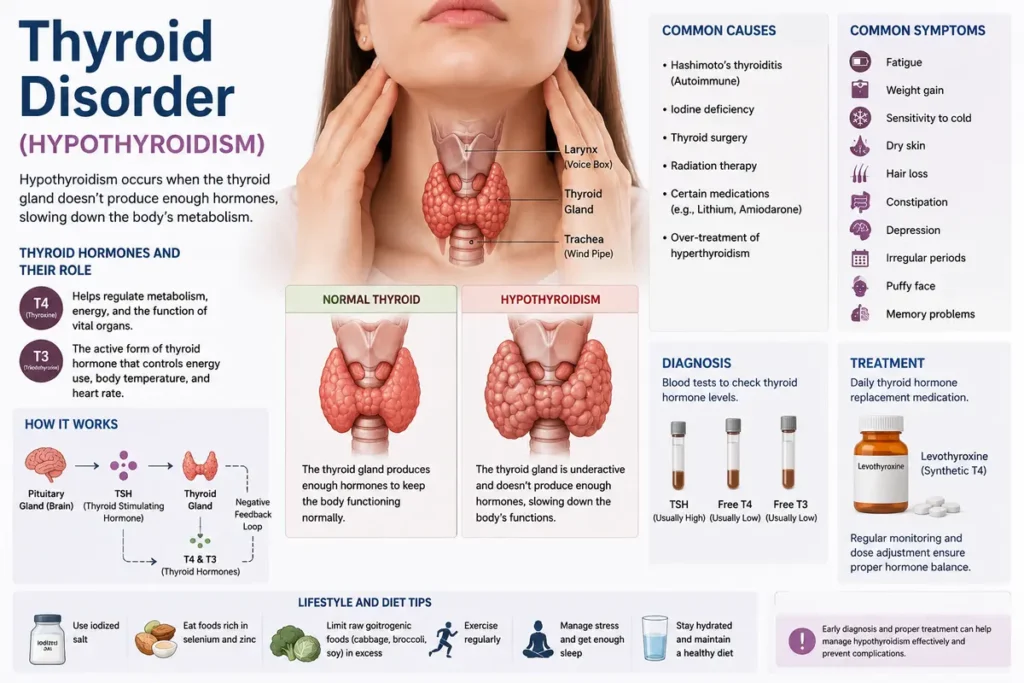
Thyroid Disorder (Hypothyroidism) is a condition where your thyroid, a small butterfly-shaped gland located in your lower neck, does not release enough hormones into your bloodstream. These essential hormones control how your body uses energy, meaning a deficiency slows down your entire metabolism. When your metabolism slows down, it affects critical functions like your heart rate, body temperature, and how efficiently you burn calories. This condition typically develops slowly over several years, often going unnoticed in its early stages before symptoms become disruptive.
Early and Advanced Symptoms of an Underactive Thyroid
The symptoms of Thyroid Disorder (Hypothyroidism) vary significantly depending on the severity of the hormone deficiency and usually develop gradually. Early signs are frequently mistaken for normal aging, temporary fatigue, or daily stress.
- Early symptoms: Persistent fatigue, increased sensitivity to cold, constipation, dry skin, and mild weight gain.
- Advanced symptoms: Hoarseness, ongoing muscle weakness, elevated blood cholesterol levels, thinning hair, and depression.
- Severe signs: An enlarged thyroid gland (goiter), dangerously slowed heart rate, and impaired memory function.
If left unmanaged without medical intervention, these symptoms will progressively worsen and can severely impact a person’s daily functioning and quality of life.
Primary Causes of Hypothyroidism: Hashimoto’s Disease to Iodine Deficiency
Several distinct factors can interfere with your thyroid’s ability to produce adequate hormones for your body. The most prevalent cause is Hashimoto’s disease, an autoimmune disorder where your immune system mistakenly produces antibodies that attack your own thyroid gland. Another prominent cause, particularly in specific geographic regions within India, is a severe lack of dietary iodine, a mineral strictly essential for hormone production.
Additional causes include structural damage from thyroid surgery (thyroidectomy) or radiation therapy used to treat neck cancers. Certain prescription medications, such as lithium, can also disrupt hormone synthesis. Furthermore, sometimes treatments intended for an overactive thyroid can inadvertently overcorrect and cause hypothyroidism.
Key Risk Factors for Developing a Thyroid Condition
While anyone at any age can develop a thyroid condition, certain underlying risk factors significantly increase your likelihood of experiencing an underactive thyroid. Women are much more susceptible to developing Thyroid Disorder (Hypothyroidism) compared to men, particularly women over the age of 60.
- A direct family history of thyroid disease or other autoimmune disorders.
- Having an existing autoimmune condition, such as type 1 diabetes, rheumatoid arthritis, or celiac disease.
- Past medical treatment involving radioactive iodine or anti-thyroid medications.
- A history of radiation exposure targeted to your neck or upper chest area.
- Recent pregnancy, as a percentage of women develop postpartum thyroiditis within a year of delivering a baby.
Diagnostic Tests for Hypothyroidism: Understanding TSH, T3, and T4
Doctors effectively diagnose an underactive thyroid through a physical examination combined with specific blood tests that accurately measure hormone levels. The most critical and common diagnostic tool is the Thyroid-Stimulating Hormone (TSH) test. High TSH levels indicate that your pituitary gland is working overtime, trying to stimulate a sluggish thyroid to produce more hormones.
Following a TSH test, doctors will frequently check the specific levels of thyroxine (T4) and triiodothyronine (T3), which are the primary hormones produced directly by the thyroid. A high TSH level combined with a noticeably low T4 level definitively confirms a clinical diagnosis of hypothyroidism.
Standard Treatments and Medication for Thyroid Disorder Hypothyroidism
The standard, most effective treatment for Thyroid Disorder (Hypothyroidism) involves the daily use of a synthetic thyroid hormone medication called levothyroxine. This oral medication safely and accurately restores adequate hormone levels, effectively reversing the debilitating symptoms of the condition. Within just a few weeks of starting this treatment regimen, most patients experience a noticeable improvement in energy levels and a steady reduction in other symptoms.
Finding the precise correct dosage takes time, and doctors will periodically monitor your TSH levels to adjust the medication dose as needed over time. For the vast majority of diagnosed patients, this is a highly successful, lifelong treatment plan.
Dietary Guidelines and Lifestyle Changes for Managing Thyroid Health
While taking prescribed medication is the primary treatment, adopting healthy lifestyle choices actively supports overall thyroid function and general well-being. Consuming a balanced diet rich in fresh vegetables, whole fruits, and lean proteins helps manage weight and naturally boosts energy levels.
- Ensure you maintain adequate iodine intake through iodized table salt, dairy products, and seafood.
- Consume foods high in beneficial minerals like selenium and zinc, which chemically support thyroid hormone synthesis.
- Avoid excessive consumption of processed soy products and large amounts of raw cruciferous vegetables (like cabbage and broccoli), as they can potentially interfere with medication absorption.
- Engage in regular, moderate physical exercise to combat persistent fatigue, support a healthy metabolism, and improve mood.
Potential Complications of Leaving Hypothyroidism Untreated
Ignoring the warning symptoms and failing to adequately treat an underactive thyroid can slowly lead to a range of severe and complex health issues. The continuous biological stimulation of the thyroid to release more hormones may cause the gland to enlarge significantly, resulting in a visible goiter.
Untreated Thyroid Disorder (Hypothyroidism) is also strongly linked to an increased long-term risk of heart disease and heart failure, primarily due to elevated levels of low-density lipoprotein (LDL) cholesterol. In rare but extreme clinical cases, long-term unmanaged hypothyroidism can trigger myxedema, a life-threatening medical emergency characterized by intense cold intolerance and profound lethargy leading to unconsciousness.
Managing an Underactive Thyroid Before and During Pregnancy
Proper, proactive management of Thyroid Disorder (Hypothyroidism) is absolutely critical during pregnancy for both maternal safety and healthy fetal development. Untreated or poorly managed hypothyroidism during this sensitive time dramatically increases the risk of miscarriage, premature delivery, and preeclampsia for the mother.
Because a developing baby relies almost entirely on the mother’s thyroid hormones during the critical first trimester, women with an underactive thyroid usually require an increased dosage of levothyroxine. Expectant mothers should urgently have their thyroid hormone levels tested as soon as a pregnancy is confirmed and must be frequently monitored throughout the gestational period.
When to Consult a Doctor for Thyroid Symptoms
You should schedule a consultation with a qualified healthcare professional if you experience unexplained, persistent fatigue alongside other common symptoms of an underactive thyroid. Look out for sudden and unexplained weight gain, severe dry skin, a noticeably pale or puffy face, or an unusually hoarse voice that does not improve.
If you are already receiving treatment for a thyroid condition, it is vital to attend regular follow-up appointments to definitively ensure your hormone levels remain stable. Always consult your primary doctor or an endocrinologist before making any independent changes to your medication dosage or starting new over-the-counter supplements.
Frequently Asked Questions (FAQs)
Can hypothyroidism be cured completely?
Currently, there is no permanent cure for most cases of Thyroid Disorder (Hypothyroidism), particularly when caused by Hashimoto’s disease. However, the condition is highly manageable with daily prescribed thyroid hormone replacement medication, allowing patients to live completely normal, symptom-free lives.
Does an underactive thyroid cause permanent weight gain?
The condition slows down your resting metabolism, which often causes mild to moderate weight gain. Once proper medical treatment begins and your hormone levels normalize, most patients find it much easier to manage their diet and shed the excess weight gained due to the hormonal imbalance.
Can I stop taking my thyroid medication if I feel better?
No, you should never abruptly stop taking your thyroid medication without explicitly consulting your doctor. Feeling better simply means the prescribed levothyroxine is working correctly to normalize your hormone levels; stopping the medication will inevitably cause your symptoms to return.
Is it safe to take natural thyroid supplements instead of prescribed medication?
Medical professionals strongly advise against replacing prescribed levothyroxine with over-the-counter natural thyroid or iodine supplements. These dietary supplements are not strictly regulated for potency and can provide inconsistent or dangerous amounts of hormones, potentially worsening your condition.
How often should I get my thyroid hormone levels checked?
Once a stable, effective dosage of medication is established, most doctors recommend a routine TSH blood test once a year. However, if your daily dosage changes, if you experience returning symptoms, or if you become pregnant, you will require much more frequent clinical testing.
Read More: Thyroid Diet: Foods to Avoid with a Thyroid Condition

1 Comment
Pingback: Thyroid Disorder Symptoms In Women | Healthaxis.In