


The thyroid cartilage is the largest piece of cartilage making up your larynx, or voice box. It sits at the front of your neck and is responsible for protecting your vocal cords while helping to shape your human voice. Understanding the structure and function of the thyroid cartilage is essential because it plays a critical role in your daily ability to breathe, swallow, and speak safely. Maintaining the health of this vital neck structure prevents severe throat complications and ensures long-term vocal health.
Key Highlights / Quick Facts
- It is the largest of the nine different cartilages that form the laryngeal skeleton.
- Its primary anatomical role is to house and protect the delicate vocal cords from internal and external damage.
- In men, the front peak of this structure creates the visible neck protrusion commonly known as the Adam’s apple.
- It is completely distinct from the thyroid gland, which is a hormone-producing endocrine organ sitting just below it.
- Common symptoms of damage or disease include hoarseness, difficulty swallowing, and persistent neck pain.
- Direct physical trauma to the front of the neck is the leading cause of fractures in this specific area.
- As people grow older, this soft tissue naturally begins to calcify and harden into solid bone.
- Ear, Nose, and Throat (ENT) specialists rely on laryngoscopy and CT scans to diagnose disorders in this region.
What is the Thyroid Cartilage and Where is it Located?
This specific cartilage serves as a vital, rigid protective shield for your lower respiratory tract. It is located in the anterior or front part of the neck, situated exactly above the thyroid gland and just below the hyoid bone.
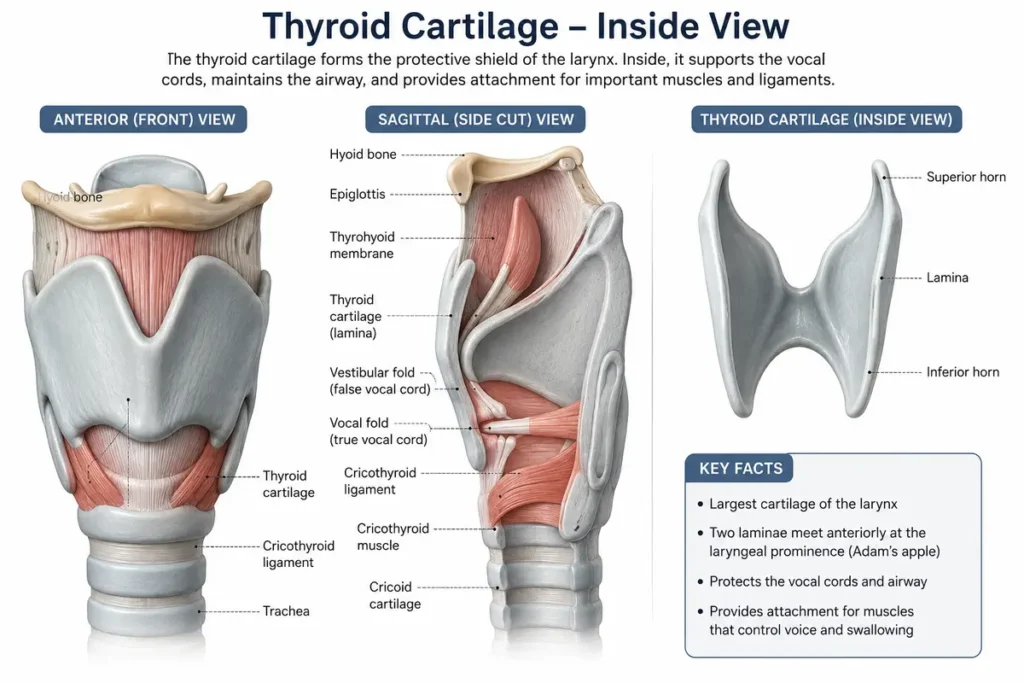
Structurally, it consists of two distinct, flat halves called laminae that merge in the middle to form a V-shaped peak. This central peak creates the firm, visible lump you can feel on the front of your throat. Behind this tough cartilaginous shield lie the vocal cords, which rely entirely on this framework for structural support and daily protection.
The Connection Between the Thyroid Cartilage and the Adam’s Apple
Many people wonder if the thyroid cartilage is the exact same thing as the Adam’s apple. The Adam’s apple is simply the common name for the laryngeal prominence, which is the very front-most point where the two halves of the cartilage meet.
During puberty, an increase in testosterone causes the entire larynx to grow significantly in males. This rapid biological growth alters the resting angle of the cartilage, pushing it outward to create a much more prominent bump. While both men and women possess this structural tissue, the sharper angle in men makes it visually obvious.
Key Functions: How the Cartilage Protects Your Voice and Airway
The most critical biological function of the thyroid cartilage is to act as a secure, rigid housing for the vocal cords and the upper airway. By providing a strong structural anchor, it allows the vocal cords to stretch, tense, and vibrate properly, which is how human speech is mechanically produced.
Additionally, it serves as a central attachment point for several important neck muscles. During the act of swallowing, these muscles automatically pull the entire larynx upward. This rapid movement helps the epiglottis safely close over the windpipe, preventing food and drinking liquids from accidentally entering your lungs.
Thyroid Cartilage vs. Thyroid Gland: Understanding the Difference
A frequent point of medical confusion is mixing up the thyroid cartilage with the thyroid gland. While they share a similar name and are located intimately close together in the neck, their bodily functions are entirely unrelated.
The cartilage is a rigid, supportive tissue forming the physical voice box and guarding the airway. In sharp contrast, the thyroid gland is a soft, butterfly-shaped endocrine organ located just below the voice box. The gland produces vital hormones that regulate your metabolism, resting heart rate, and body temperature. Treating an issue with the cartilage involves ENT specialists, whereas gland disorders are managed by endocrinologists.
Common Conditions and Diseases Affecting Laryngeal Cartilage
Several distinct medical conditions can negatively affect the structural integrity of your voice box. Perichondritis is a highly painful bacterial infection of the tissue immediately surrounding the cartilage, often caused by trauma or severe untreated throat infections.
Autoimmune diseases, such as relapsing polychondritis, can cause chronic internal inflammation that gradually attacks and destroys the cartilaginous framework. Furthermore, benign tumors or laryngeal cancer can develop within the larynx itself. These unnatural growths can physically alter the shape and function of the throat, requiring prompt medical intervention to prevent breathing blockages.
Symptoms of Throat Cartilage Inflammation and Infection
When the thyroid cartilage or its surrounding laryngeal tissues become inflamed or infected, the body sends clear warning signals. Recognizing these early symptoms can prevent permanent damage to your speaking voice and respiratory airway.
Common signs requiring medical evaluation include:
- Persistent daily hoarseness or a sudden, unexplained change in your voice quality.
- Noticeable physical swelling, warmth, or redness on the front of the neck.
- Sharp pain or severe discomfort when swallowing solid food or liquids.
- Extreme tenderness when gently touching or pressing the throat area.
- A low-grade fever accompanied by localized neck pain.
- Stridor, which is a high-pitched, strained wheezing sound during normal breathing.
Recognizing Signs of Trauma and Fracture in the Neck
Blunt physical trauma to the front of the neck is a serious medical emergency that can easily fracture the thyroid cartilage. This dangerous type of injury usually results from major motor vehicle accidents, high-impact sports collisions, or physical assaults.
A fractured voice box severely compromises the airway and demands immediate hospital care. Key indicators of a severe fracture include intense difficulty breathing, coughing up fresh blood, and a total inability to speak. You might also notice dark bruising over the neck or a strange crackling sensation under the skin, which indicates air has abnormally escaped into the surrounding neck tissues.
How Aging and Calcification Change Your Throat Structure
Like many parts of the human skeleton, the throat undergoes significant physical changes as you naturally age. Starting as early as a person’s late twenties, the once highly flexible thyroid cartilage begins a normal physiological process called calcification.
Over several decades, this soft, pliable tissue slowly turns into rigid, dense bone. This steady hardening is a completely normal part of the human aging process and is frequently visible on routine neck X-rays in older adults. While calcification is completely harmless, the increased rigidity can slightly alter an older person’s vocal pitch and make the voice box slightly more prone to fractures if falls occur in later life.
Diagnosing Disorders of the Larynx and Vocal Cords
If you experience ongoing throat pain or prolonged voice changes, an ENT specialist will need to conduct a thorough clinical evaluation. The most common diagnostic procedure used is a laryngoscopy, where a thin, flexible lighted camera is passed safely through the nose to visually inspect the inner voice box.
If a structural defect or traumatic fracture is suspected, a standard CT scan is highly effective for generating detailed 3D imaging of the neck. Routine blood tests may also be ordered if the doctor suspects an underlying systemic autoimmune condition or a severe bacterial infection attacking the neck tissues.
Medical Treatments and Surgical Options for Cartilage Issues
Medical treatment for conditions affecting the thyroid cartilage depends entirely on the correct underlying diagnosis. Severe bacterial infections like perichondritis are aggressively treated with high-dose intravenous or oral antibiotics.
Autoimmune-related inflammation may require prescription corticosteroids or advanced immunosuppressant medications to successfully halt ongoing tissue damage. In cases of severe neck trauma, surgical intervention is almost always necessary to save the airway. A specialized surgeon may need to carefully insert tiny metal plates or use specialized medical sutures to repair a fractured larynx and permanently stabilize the patient’s breathing tube.
Expert Tips to Protect Your Voice Box and Maintain Throat Health
Preventing structural damage to your laryngeal structures is always far easier than attempting to treat a severe neck injury. By adopting a few smart daily habits, you can protect your vulnerable airway and easily maintain a strong, healthy voice.
- Always securely wear proper protective gear during high-contact sports to prevent blunt neck trauma.
- Stay consistently well-hydrated with water to ensure the vocal cords remain adequately lubricated.
- Strictly avoid smoking cigarettes and secondhand smoke, which heavily irritate and inflame laryngeal tissues.
- Actively manage acid reflux disease, as powerful stomach acid can travel upward and burn the structures of the voice box.
- Always actively rest your voice when you are suffering from a cold or flu to prevent straining weakened laryngeal muscles.
Frequently Asked Questions (FAQs)
Can a damaged thyroid cartilage heal completely on its own?
Minor surface bruising might heal naturally with proper rest, but a true fracture or severe deep infection requires immediate medical attention. Delaying proper treatment can easily lead to permanent voice changes or life-threatening airway blockages.
Is it ever normal to have a painful Adam’s apple?
No, experiencing persistent pain in the direct front of your neck is never normal. It could strongly indicate localized inflammation, chronic acid reflux irritation, an active infection, or a swollen lymph node that requires a doctor’s evaluation.
Does removing the thyroid gland physically affect the thyroid cartilage?
Thyroid gland surgery is performed very close to the external voice box. While the cartilage itself is never removed during this procedure, there is always a very small surgical risk of temporarily irritating the nearby recurrent laryngeal nerve, which directly controls the vocal cords.
Can a human survive without their thyroid cartilage?
If the entire structure must be surgically removed due to advanced laryngeal cancer, a person can still survive the procedure. However, they will permanently breathe through a surgically created opening in the neck and will need professional therapy to learn new ways to produce speech.
Read More: Thyroid Dysfunction Symptoms In Men: 10 red flags you’re missing

1 Comment
Pingback: Thyroid Symptoms You Cannot Ignore: 7 Hidden Signs | Healthaxis.In