

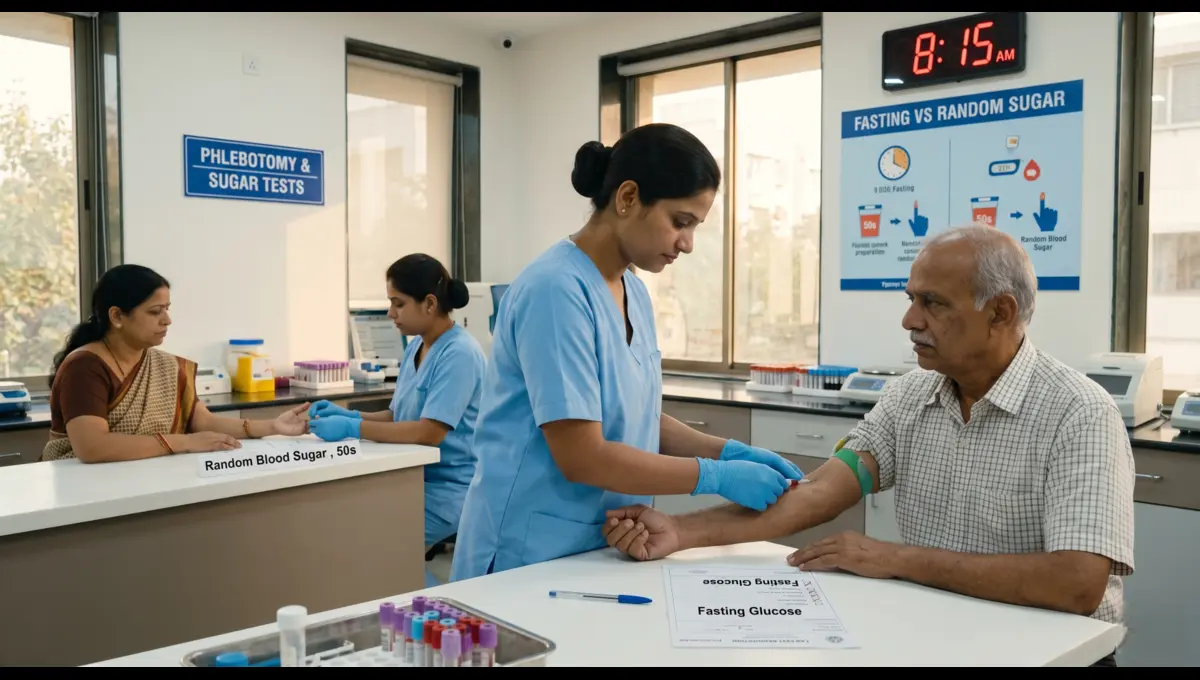
Understanding the difference between Fasting vs Random Sugar is crucial for effectively managing and diagnosing diabetes. A fasting test measures your baseline glucose levels after an overnight fast, while a random test checks your blood sugar at any time of the day, regardless of your meals. Together, these tests provide a comprehensive view of how well your body processes glucose. This guide explains what these tests mean, normal ranges in India, and how to interpret your results accurately.
Key Highlights / Quick Facts
- A fasting blood test requires an 8 to 10-hour overnight fast before blood collection.
- A random blood test can be done at any time of the day, requiring no fasting or preparation.
- Normal fasting levels for healthy Indian adults should be less than 100 mg/dL.
- Normal random levels are typically less than 140 mg/dL, heavily depending on your last meal.
- Fasting tests are the primary diagnostic tool used by doctors to identify diabetes and prediabetes.
- Random tests are ideal for emergency evaluations to check for sudden, dangerous glucose spikes.
- Regular screening is recommended for Indian adults over the age of 30, especially those with a family history of diabetes.
What Is Fasting vs Random Sugar in Diabetes and Why Does It Matter?
Tracking blood glucose is the cornerstone of metabolic health and diabetes management. Comparing Fasting vs Random Sugar provides healthcare professionals with two completely different sets of data regarding your body. The fasting metric reveals your body’s baseline ability to manage insulin without the direct influence of recent food intake.
Conversely, the random metric shows how your body handles glucose fluctuations throughout an active day. Analyzing Fasting vs Random Sugar together helps doctors create targeted treatment plans and adjust daily medications effectively. Knowing the difference empowers patients to make better dietary and lifestyle choices.
What Is a Fasting Blood Sugar Test and How Is It Done?
A fasting blood test measures the concentration of glucose in your blood after a period of restricted calorie intake. You must not eat or drink anything except plain water for at least 8 to 10 hours before taking the test. This is almost always done first thing in the morning to ensure an accurate, rested baseline reading.
During the procedure, a healthcare professional will draw a small sample of blood from a vein in your arm or via a simple finger prick. Because you have not eaten, evaluating Fasting vs Random Sugar in this state shows if your liver is releasing appropriate amounts of glucose.
What Is a Random Blood Sugar Test and When Is It Used?
A random blood test measures your blood glucose level at any given moment, irrespective of your daily schedule. It does not matter what you recently ate or how long it has been since your last meal. This total flexibility makes it a highly useful tool for immediate clinical evaluations.
Doctors frequently use this test when a patient presents with severe diabetes symptoms like excessive thirst, frequent urination, or unexplained weight loss. While looking at Fasting vs Random Sugar, the random test acts as a rapid diagnostic tool to identify dangerous spikes requiring urgent intervention.
Fasting vs Random Sugar: Key Differences Explained Clearly
The primary difference between Fasting vs Random Sugar lies in patient preparation and the specific physiological state being measured. A fasting test requires strict abstinence from food to accurately assess your resting insulin efficiency. A random test requires absolute zero preparation, capturing a snapshot of real-time glucose handling during normal daily activities.
Another major difference is their distinct diagnostic value in clinical settings. Fasting tests are the gold standard for diagnosing diabetes during routine health checkups. Random tests are mostly utilized for monitoring known diabetic patients or in emergency rooms to rule out acute complications.
Normal Fasting vs Random Sugar Levels in Diabetes (Indian Standards)
Understanding normal ranges is essential for preventing long-term metabolic complications. According to Indian medical guidelines, a normal fasting reading for a non-diabetic adult is between 70 to 99 mg/dL. A fasting result between 100 to 125 mg/dL indicates prediabetes, while 126 mg/dL or higher strongly suggests clinical diabetes.
For random testing, a normal reading is generally below 140 mg/dL. A random result between 140 to 199 mg/dL may indicate impaired glucose tolerance or prediabetes. A random level of 200 mg/dL or higher, especially with classic symptoms, indicates diabetes. It is important to evaluate Fasting vs Random Sugar levels together for a complete assessment.
What Do High or Low Fasting vs Random Sugar Results Mean?
High readings in either category generally point to insulin resistance or insufficient insulin production by the pancreas. A consistently high fasting level means your liver is overproducing glucose overnight, or your body cannot use insulin efficiently. High random levels suggest your system struggles to process carbohydrates consumed during daily meals.
Conversely, abnormally low levels indicate hypoglycemia, which can be immediately dangerous. A reading below 70 mg/dL causes dizziness, sweating, and confusion, often resulting from skipping meals or taking excess medication. Both extremes in Fasting vs Random Sugar results require prompt medical evaluation.
Which Is More Accurate: Fasting vs Random Sugar for Diabetes Diagnosis?
When formally diagnosing diabetes, fasting tests are universally considered more reliable and standardized by medical boards. Because the fasting state eliminates the unpredictable variable of recent food consumption, it provides a highly stable baseline. It remains the preferred initial screening test for prediabetes and diabetes across India.
While random tests are excellent for rapid assessment, they are far less accurate for an initial diagnosis unless the reading is exceptionally high. If a random test suggests diabetes, doctors will almost always mandate a fasting test to confirm the diagnosis. Analyzing Fasting vs Random Sugar alongside an HbA1c test ultimately provides the highest diagnostic accuracy.
How Food, Timing, and Lifestyle Affect Fasting vs Random Sugar Levels
Your daily habits and dietary choices play a massive role in blood glucose fluctuations. Heavy, carbohydrate-rich meals late at night can severely elevate your morning fasting levels, even if you fast for the required hours. Lack of quality sleep and high stress also trigger the release of cortisol, which naturally forces blood sugar upward.
For random tests, the exact timing and composition of your last meal drastically impact the final reading. Regular physical activity generally lowers random blood sugar by moving glucose directly into your muscles for energy. Sedentary routines and poor hydration can cause both Fasting vs Random Sugar readings to remain dangerously elevated over time.
Common Mistakes While Taking Fasting vs Random Sugar Tests
One of the most frequent clinical errors is failing to fast for the correct duration before a test. Fasting for less than 8 hours or more than 12 hours can heavily skew the results, leading to misdiagnosis. Consuming tea or coffee with milk or sugar during the fasting window will instantly invalidate the test results.
For random tests, a common mistake is panicking over a single high reading immediately following a heavy, sweet meal. Blood sugar naturally spikes after eating carbohydrates, which is a normal physiological response. A comprehensive view of Fasting vs Random Sugar helps prevent unnecessary anxiety over isolated post-meal spikes.
When Should You Take Fasting vs Random Sugar Tests?
Healthy adults over the age of 30 should take a fasting test at least once a year as part of a comprehensive health checkup. If you have risk factors like obesity, high blood pressure, or a family history of diabetes, your doctor will likely recommend more frequent testing. Pregnant women are also routinely tested to rule out gestational diabetes.
You should take a random test if you experience sudden, severe symptoms like blurred vision or extreme fatigue. Diabetics on active insulin therapy often use random testing throughout the day to adjust dosages and prevent hypoglycemic drops. Knowing exactly when to check Fasting vs Random Sugar is key to avoiding sudden medical emergencies.
How to Control Blood Sugar Based on Fasting vs Random Results
If your fasting levels are routinely high, you must focus on improving your evening routine and overall sleep quality. Eating a lighter, low-carb dinner and taking a brisk 15-minute walk after eating can significantly reduce morning spikes. Your healthcare provider might also adjust your basal insulin or evening oral medications.
If your random levels are high, you need to closely evaluate your daytime carbohydrate intake and meal portions. Incorporating more dietary fiber, lean proteins, and engaging in regular daytime physical activity helps stabilize unpredictable glucose spikes. Consistent monitoring of Fasting vs Random Sugar trends helps tailor these lifestyle interventions for maximum effectiveness.
When to Consult a Doctor Based on Fasting vs Random Sugar Levels
You must consult a doctor if your fasting blood sugar consistently exceeds 100 mg/dL or your random blood sugar repeatedly crosses 140 mg/dL. These are the critical early warning signs of prediabetes that can often be reversed with prompt, professional medical guidance. Do not attempt to self-medicate or drastically alter your diet without speaking to a specialist first.
Seek immediate emergency medical care if your random sugar exceeds 250 mg/dL or drops dramatically below 60 mg/dL. This is especially critical if these readings are accompanied by confusion, severe vomiting, or breathlessness. A doctor can accurately interpret your Fasting vs Random Sugar results and prescribe the necessary treatment to protect your long-term health.
Read More: Diabetes Diagnosis Tests: Types, Results, and Normal Levels

1 Comment
Pingback: Best Diet For Diabetes: Indian Foods, Meal Plan, And Tips | Healthaxis.In